
Audemars Piguet returns to Watches and Wonders Geneva in 2026 and showcases new in-house movements, new models in the iconic Royal Oak Collection, the Neo Frame Jumping Hour which debuted earlier this year and the Atelier des Établisseurs project.
Audemars Piguet left the Salon International de la Haute Horlogerie (SIHH), the predecessor of Watches and Wonders in 2020. Since then the Le Brassus Manufacture organised private events and exhibited at art fairs such as Art Basel, or at the Dubai Watch Week.
Last autumn Watches and Wonders Geneva 2026 announced the arrival of Audemars Piguet alongside ten exciting new brands, raising the total to 66 exhibitors.
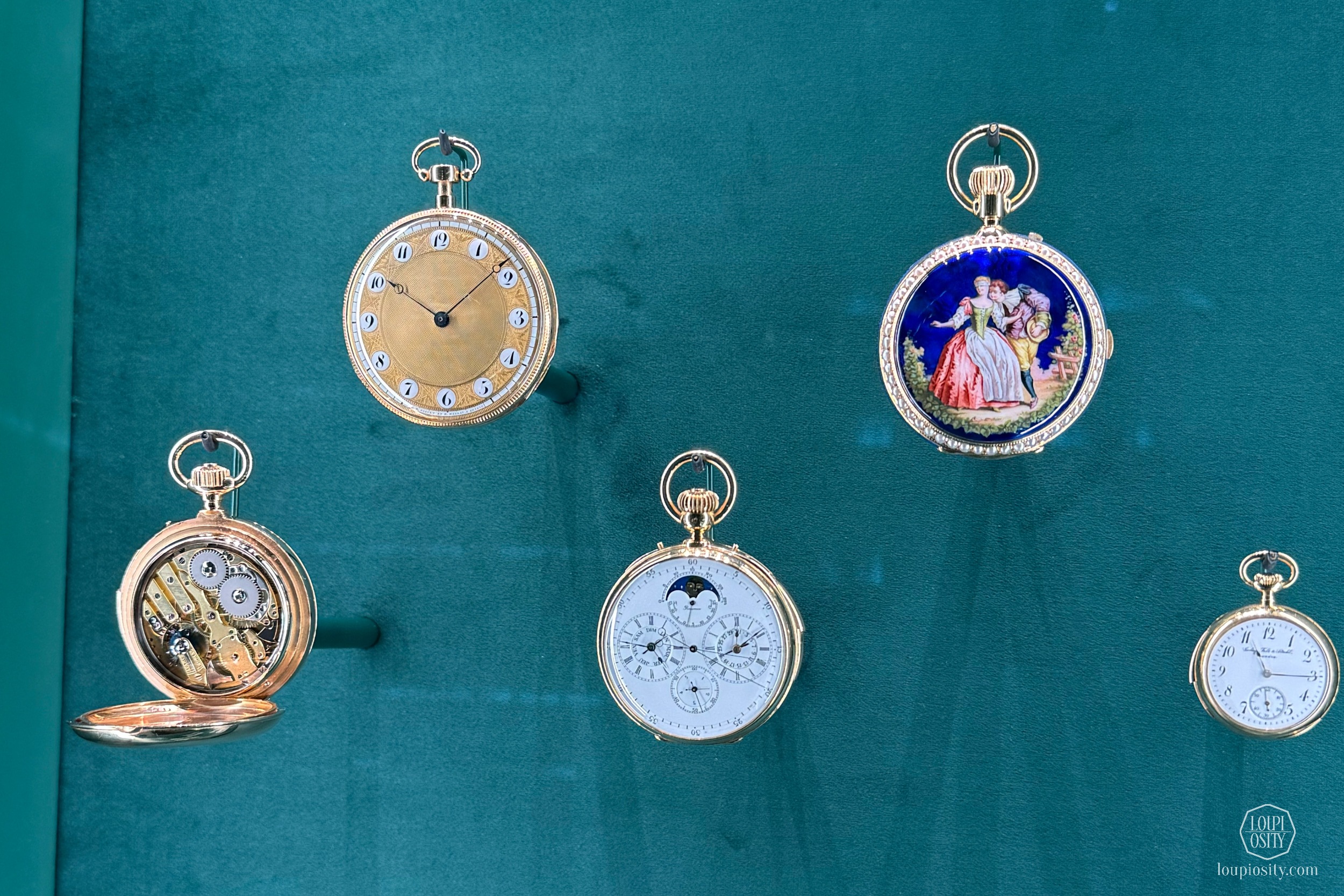
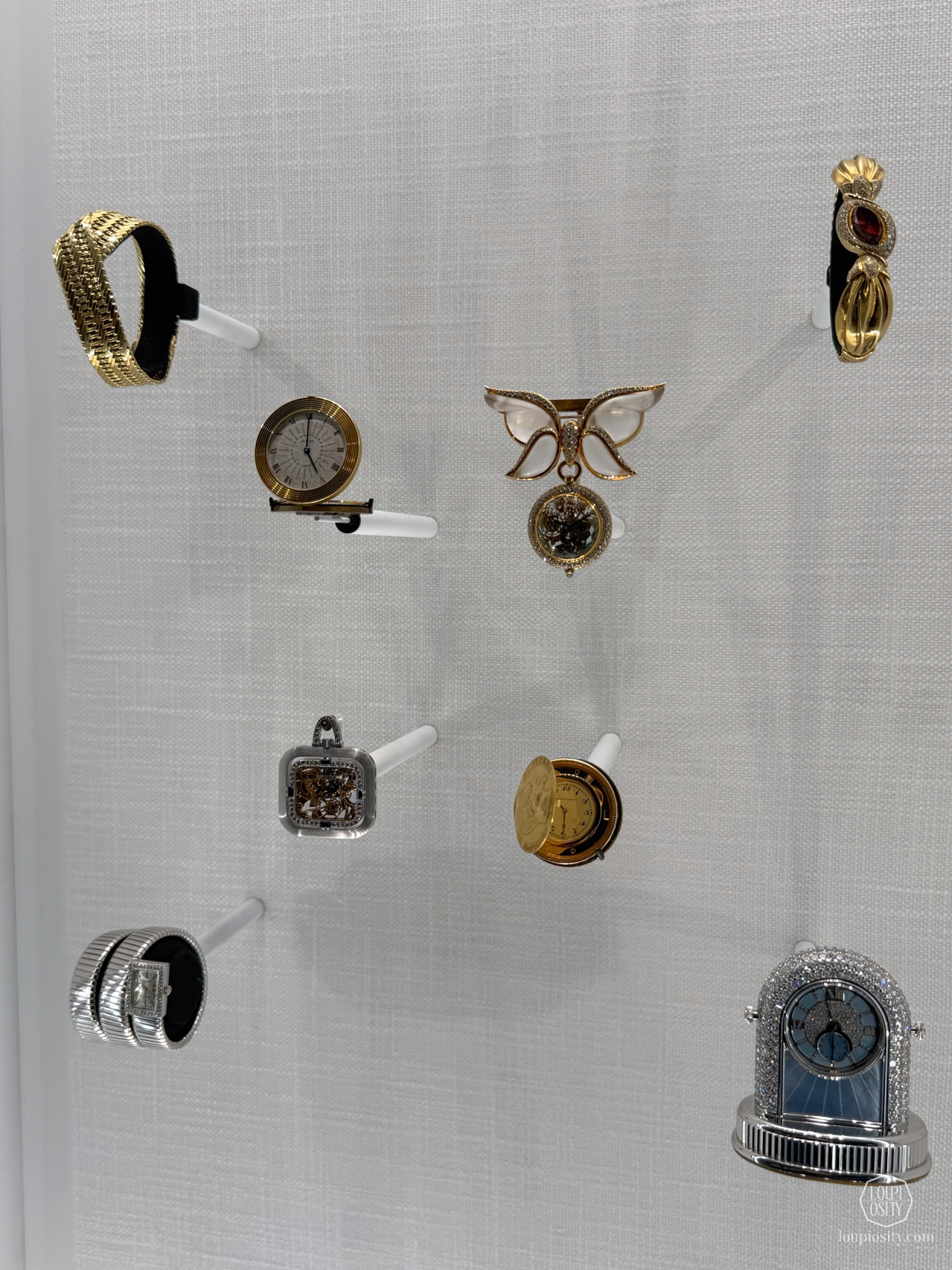
Although predominantly known about their icon the Royal Oak, Audemars Piguet has had a lot more depth to watchmaking. Their aesthetic repertoire includes enamel pocket watches even from the 1980s (like this ref. 35715BA yellow gold piece auctioned by Phillips in 2019), skeletonized timepieces (such as ref. BA 5666, another pocket watch with nephrite from the 1970s), elegant wrist watches with extraordinary shape (like this oval ref. 5419BC from the ’70s), or masterfully gem-set models (like the ref. 5057 double signed with Gübelin).
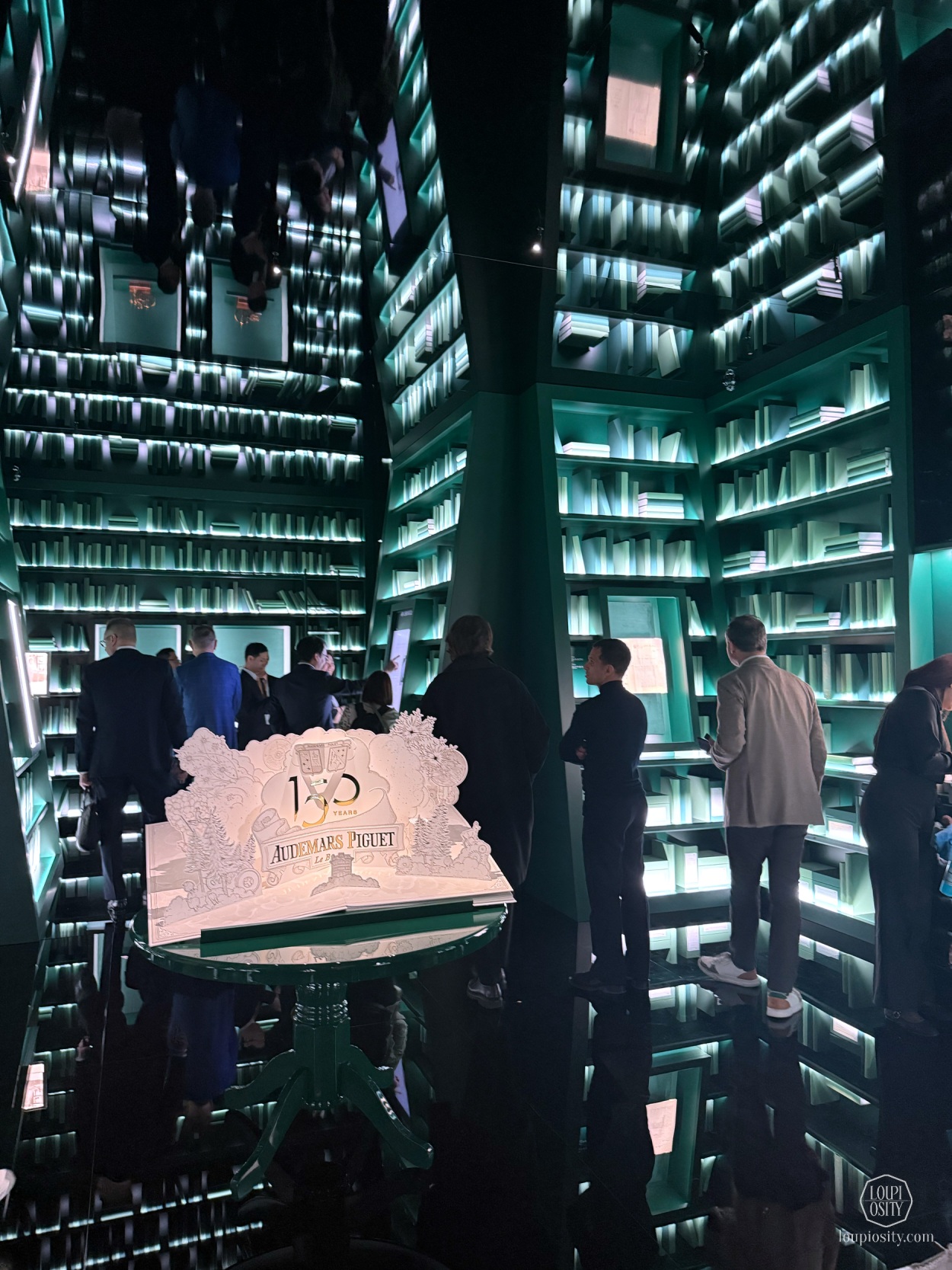
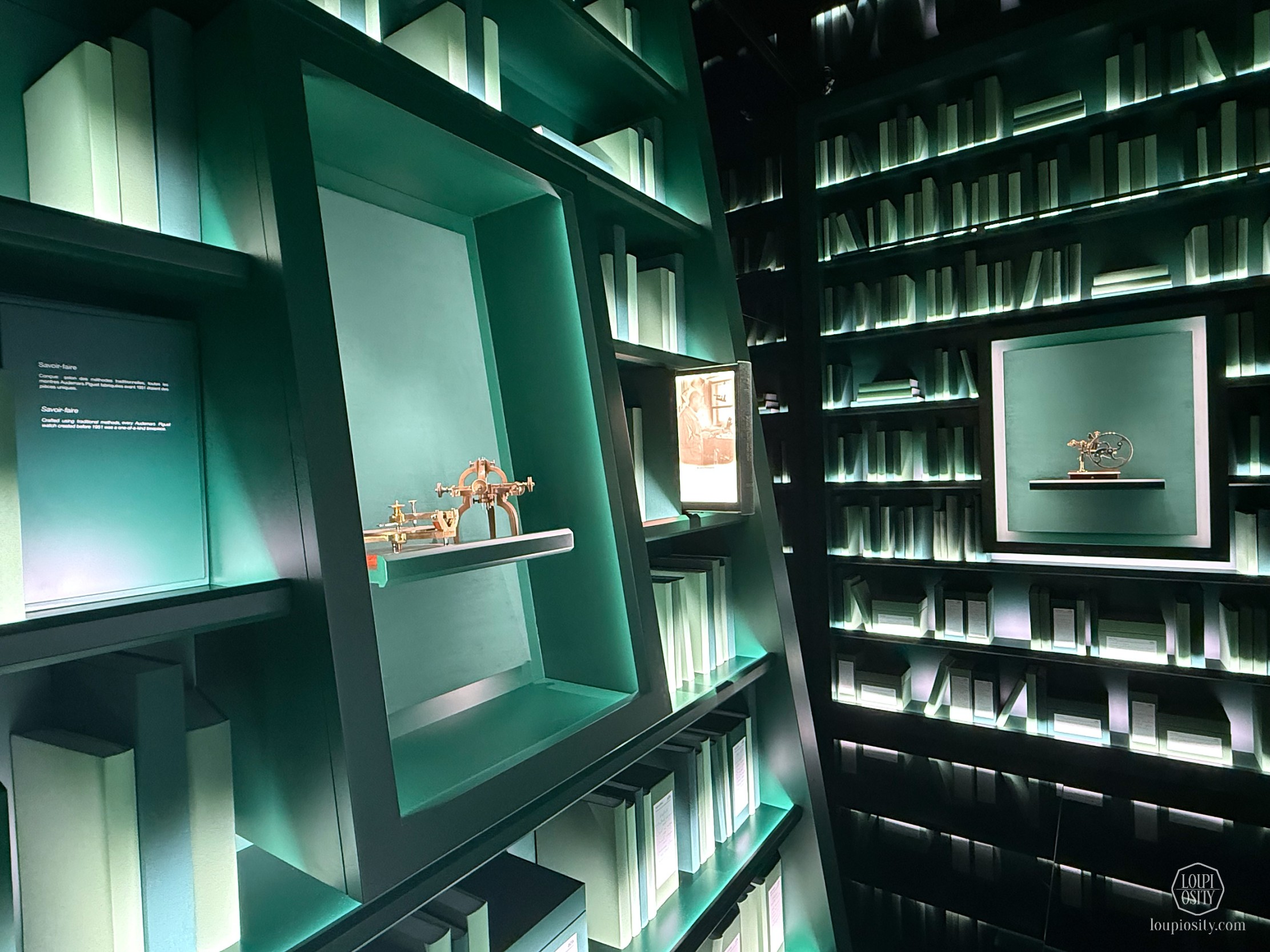
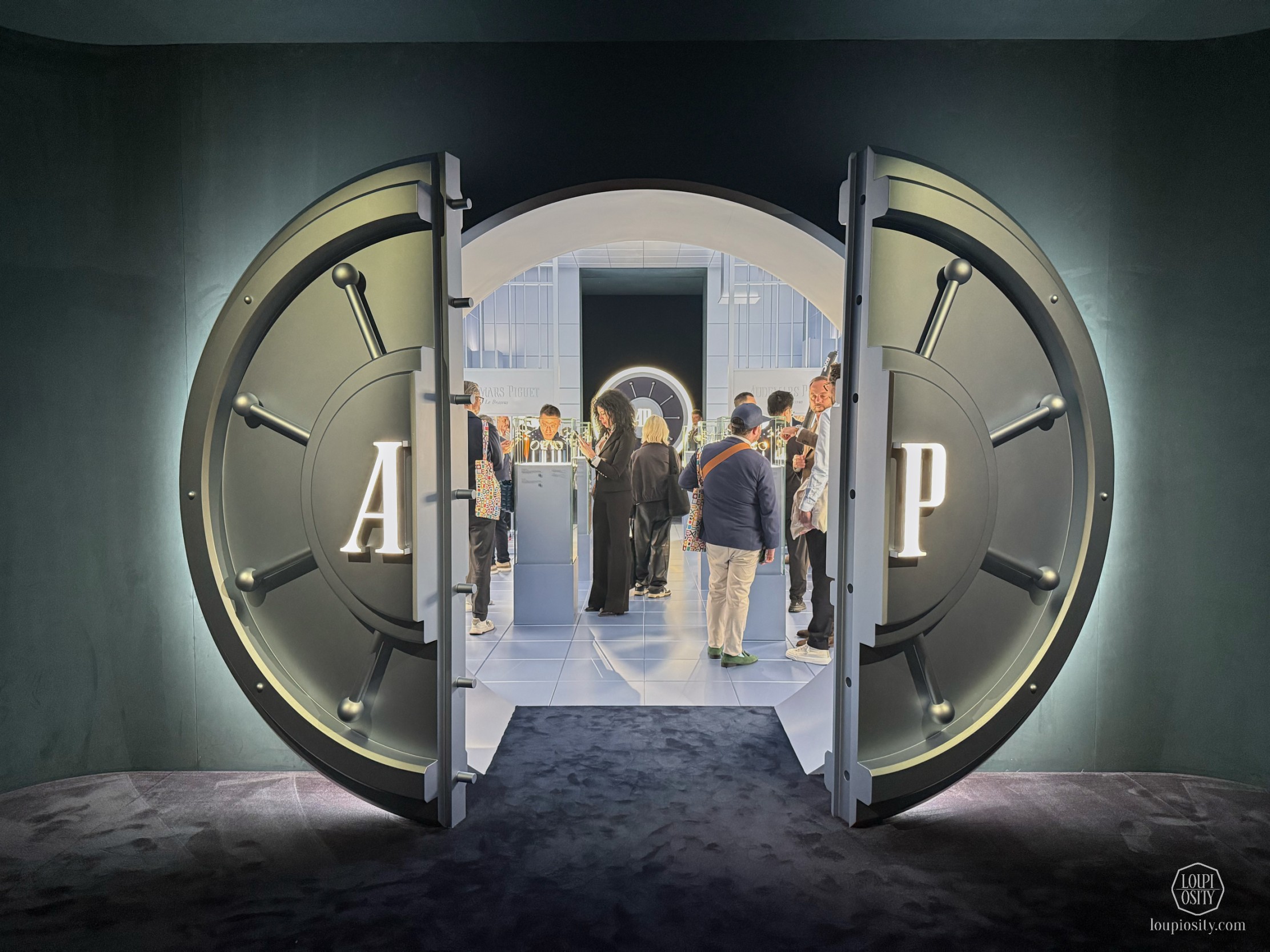
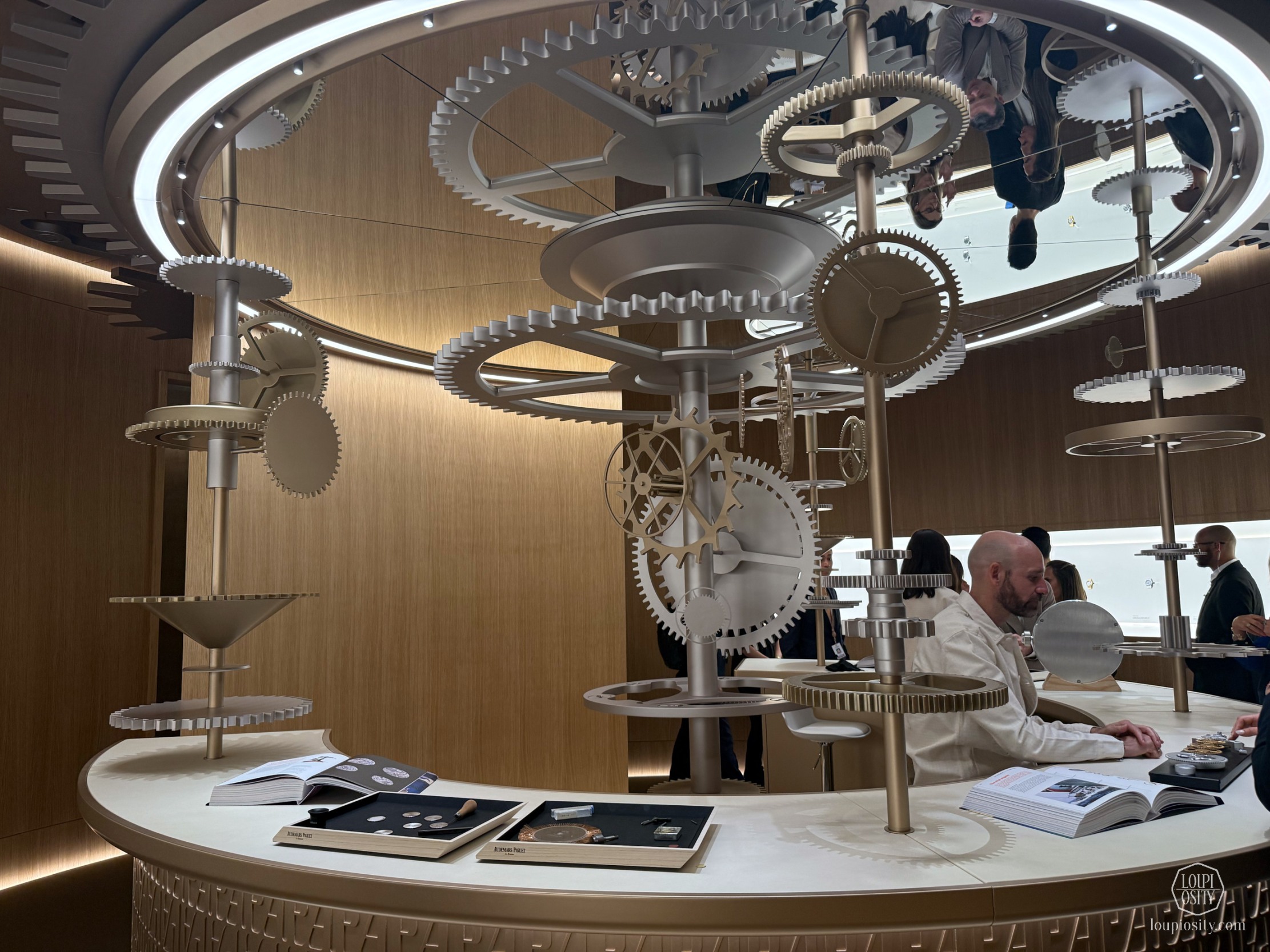
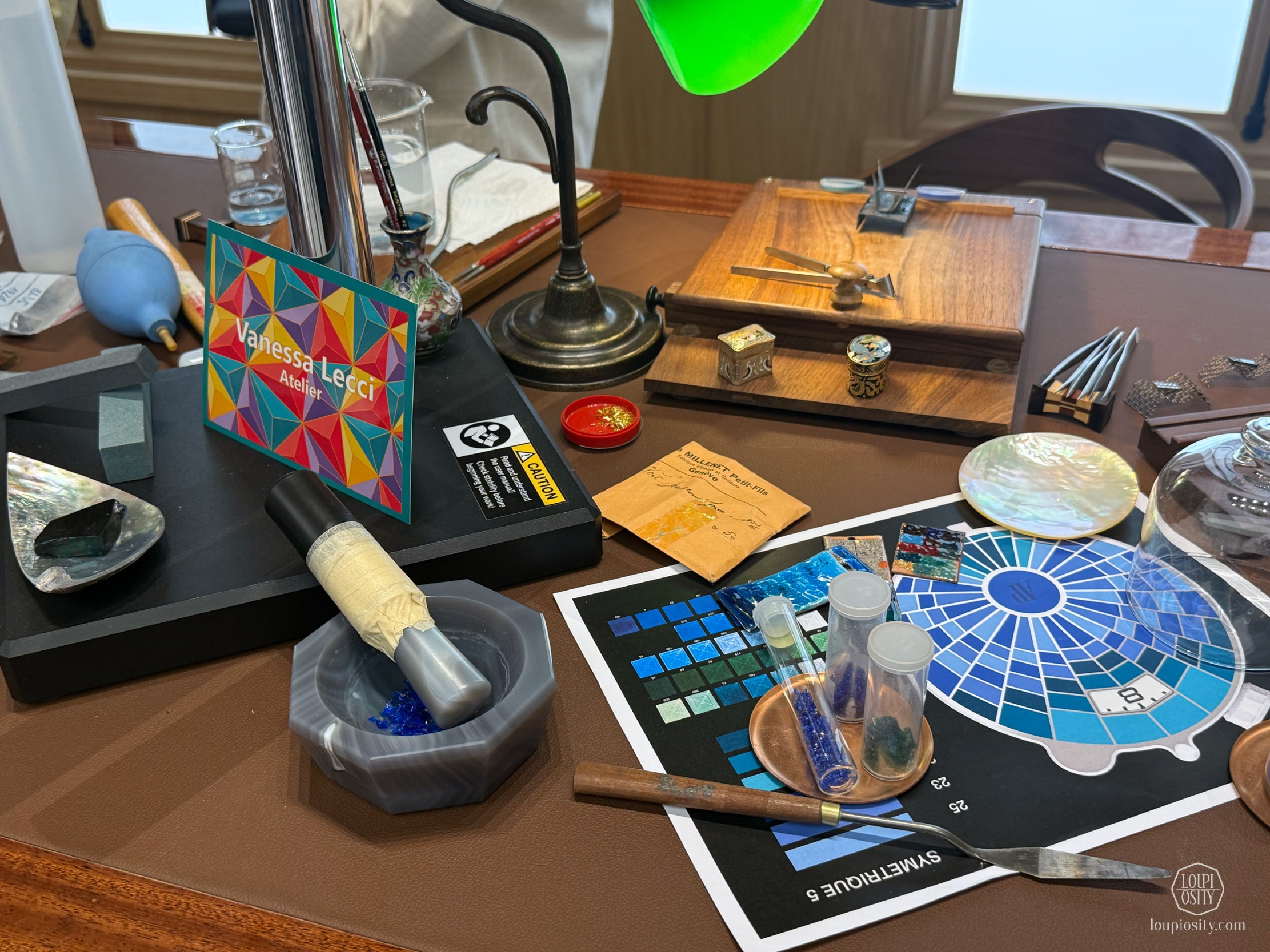
On the occasion of their return to the Watches and Wonders, the Le Brassus Manufacture let their visitors enter their artisanal workshops for a glimpse and even a trial of various techniques. They offered educational activities for both enthusiasts and newcomers to explore the craftsmanship, creativity and enduring legacy of the company.
‘We are thrilled to celebrate our shared passion and collaborative heritage with our peers at Watches and Wonders and highlight the artistry, precision and cultural significance of watchmaking both within and beyond the Salon. The experiences we have created will engage the public in new and unexpected ways.’ – Ilaria Resta, Chief Executive Officer, Audemars Piguet
CEO of Audemars Piguet since January 2024, Ilaria Resta took her chair as the first woman to lead Audemars Piguet. Like every other appointment from outside the industry, her background in the beauty, fragrance and consumer goods sector has raised some eyebrows. Her approach and her leadership style certainly differ from her predecessor, François-Henry Bennahmias. She is an advocate of the philosophy of circular leadership. Instead of power being concentrated at a single point at the top, it treats the organization as an ecosystem where leadership is distributed, fluid, and focused on collective growth. Although it could bring decision paralysis, accountability or scalability challenges, a more distributed decision system can easily increase the orgnization’s ability to react faster and becomes less exposed to individual blindspots.
Ilaria Resta is also pushing Audemars Piguet further into culture, experiences, and community-building and intends to broaden the collector base.
Atelier des Établisseurs
AP’s program reactivates the deeply collaborative roots of Swiss watchmaking while embracing contemporary creative freedom. As Audemars Piguet defines, ‘The Etablissage is a way to work in small independent entities by very specialized craftspeople who each produce part of the watch.’
The original concept of Établissage in Swiss Watchmaking emerged in the 17th–18th centuries in the Jura region, particularly in the Vallée de Joux. It represented a fundamental division of labor that shaped the early Swiss watch industry, before the advent of fully integrated factories. The term comes from the French word ‘établir’ (to establish/set up), and the person who performed this work was called an établisseur (establisher/assembler). The production of a timepiece was divided among a network of specialized craftsmen, each creating individual components. These individual components were then brought together by an établisseur who assembled them into a complete watch.
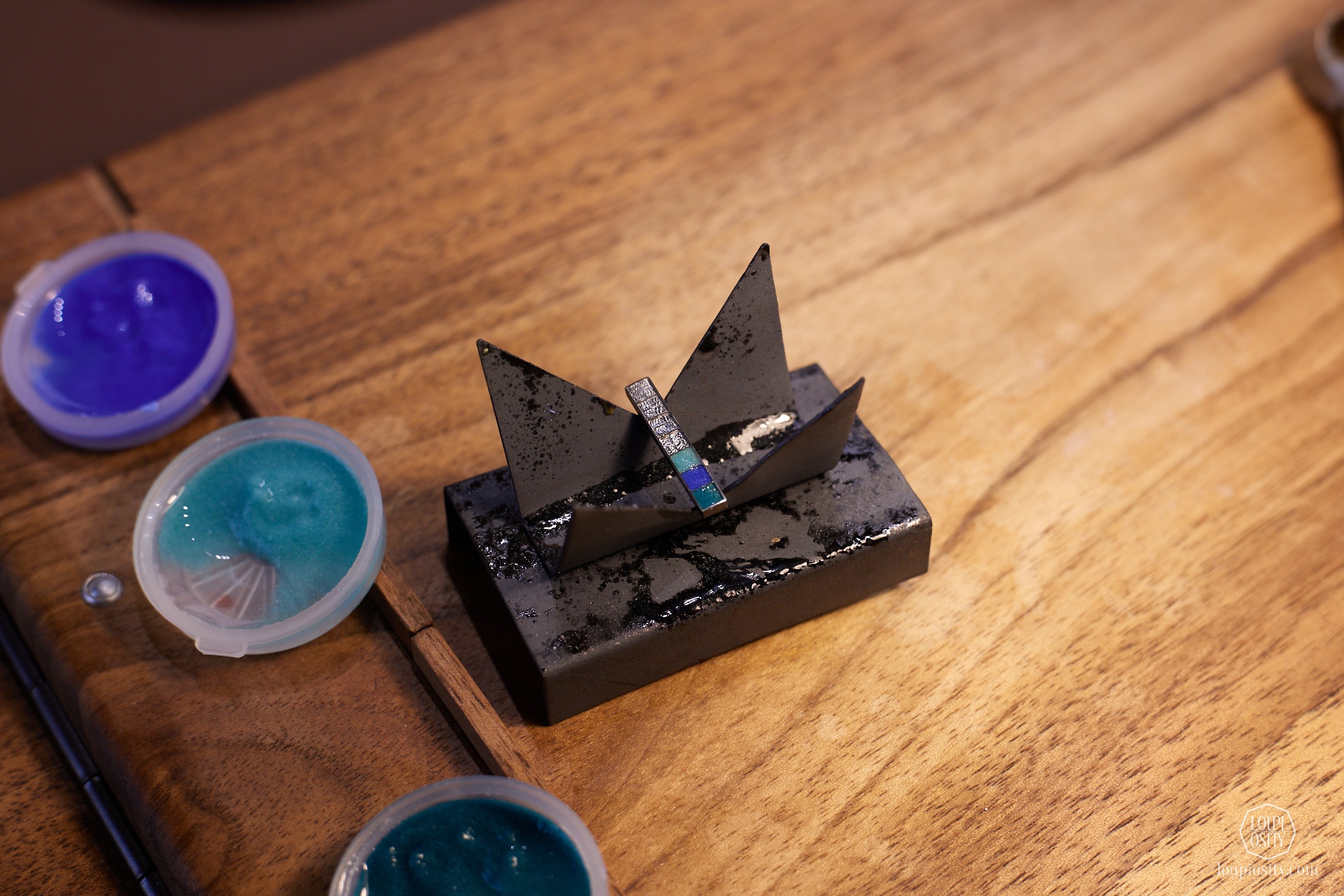
The project pays tribute to the Manufacture’s collaborative roots, inspired by this tradition. The program operates from the historic Musée Atelier in Le Brassus, bringing together artisans like engravers, enamellers, lapidarists, and watchmakers to create highly limited or unique timepieces.
At Watches and Wonders 2026, Sébastian Vivas, Heritage and Museum Director and the team of the Atelier presented the first three creations of the program and some of the artisans also joined the event to showcase their craft.
‘… every piece is a testament to the enduring dialogue between tradition and innovation, where each gesture carries forward a legacy shaped by time and reimagined for the future.’
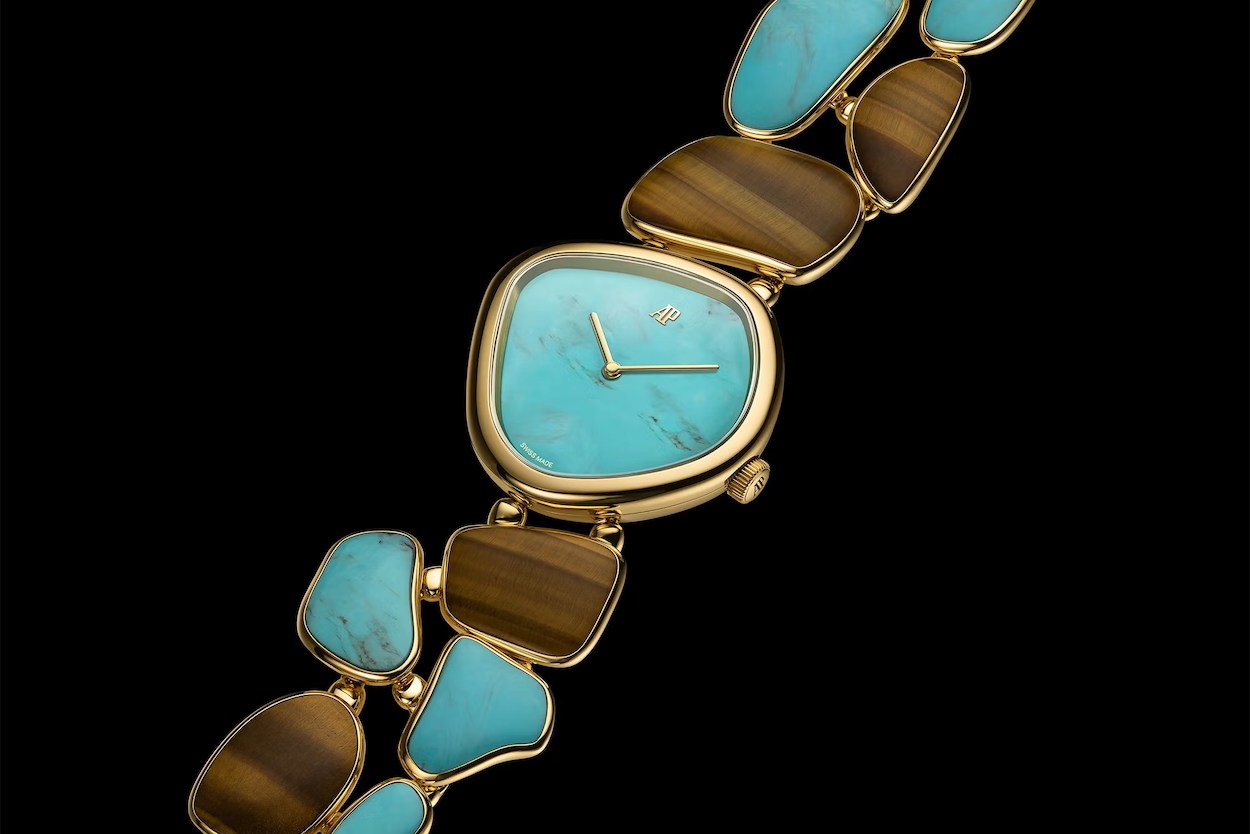
The Établisseurs Galets creation draws its inspiration from a former AP model and the natural surroundings of the Vallée de Joux, translating the softness and irregularity of water-shaped stones into a watch design. The piece integrates genuine stone elements not only on the dial but also throughout the bracelet, giving each example a distinct identity shaped by the materials themselves. The hand‑finished Calibre 3098 also perfectly follows the curves of the case.
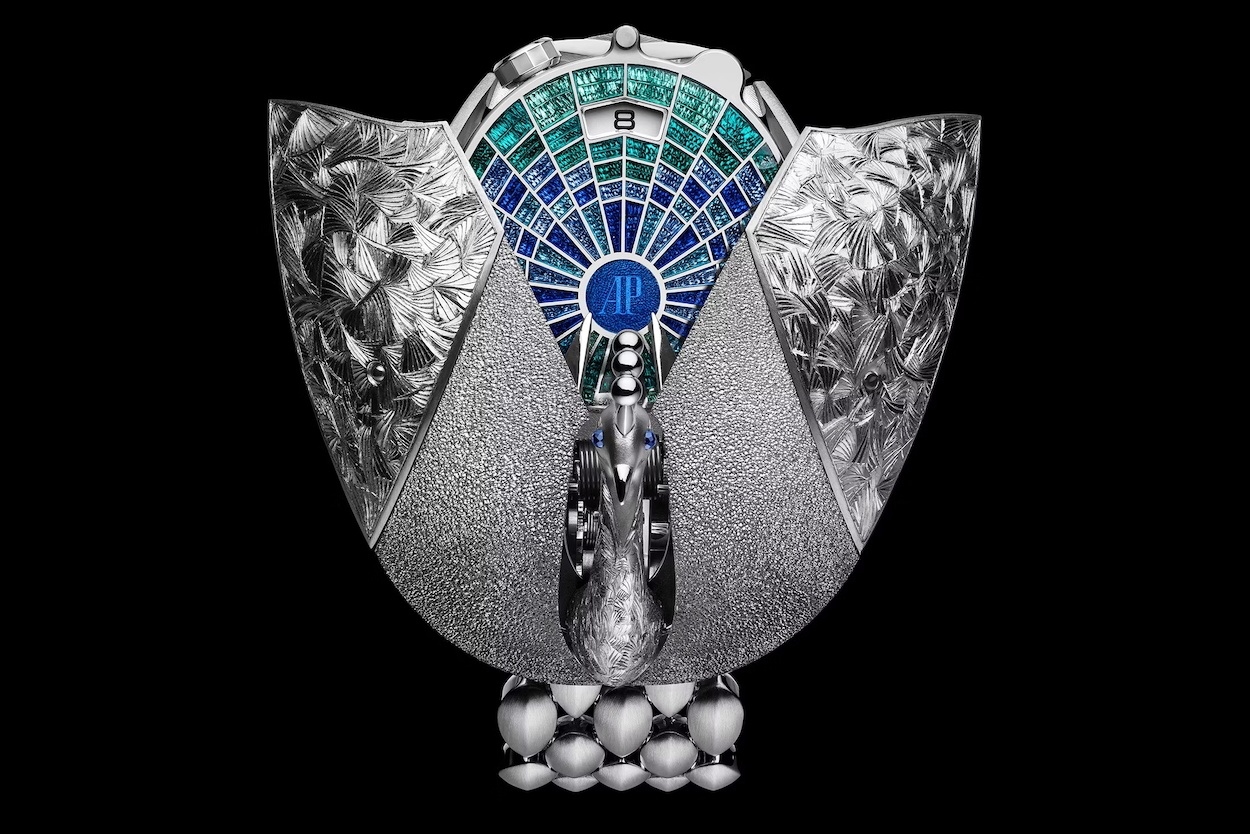
The Établisseurs Peacock revisits the concept of the hidden or “secret” watch, turning it into an elaborate artistic spectacle, designed internally by Kenan Geraud. At first glance, the exterior resembles a sculptural object, but a mechanical action reveals a richly decorated scene featuring a peacock. The piece combines jewellery techniques, miniature sculpture, enamelings, engraving and mechanical engineering.

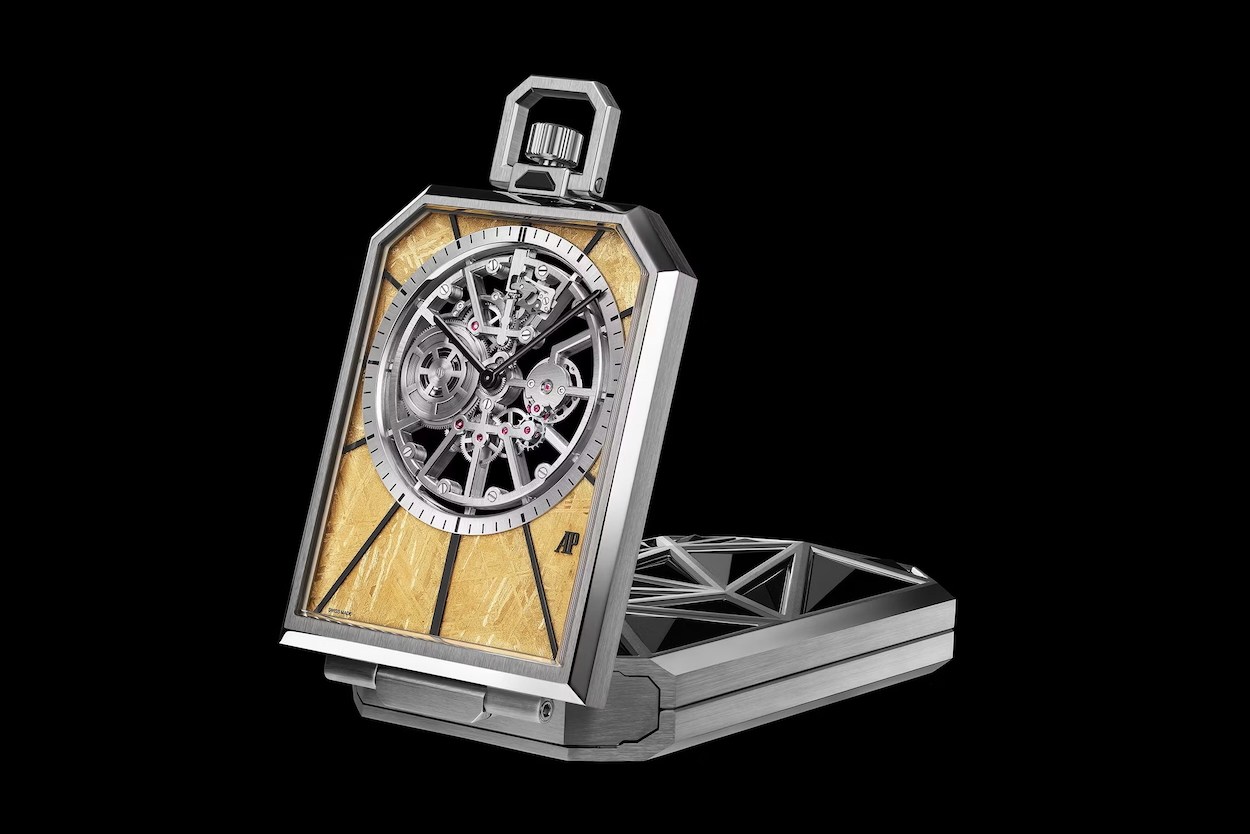
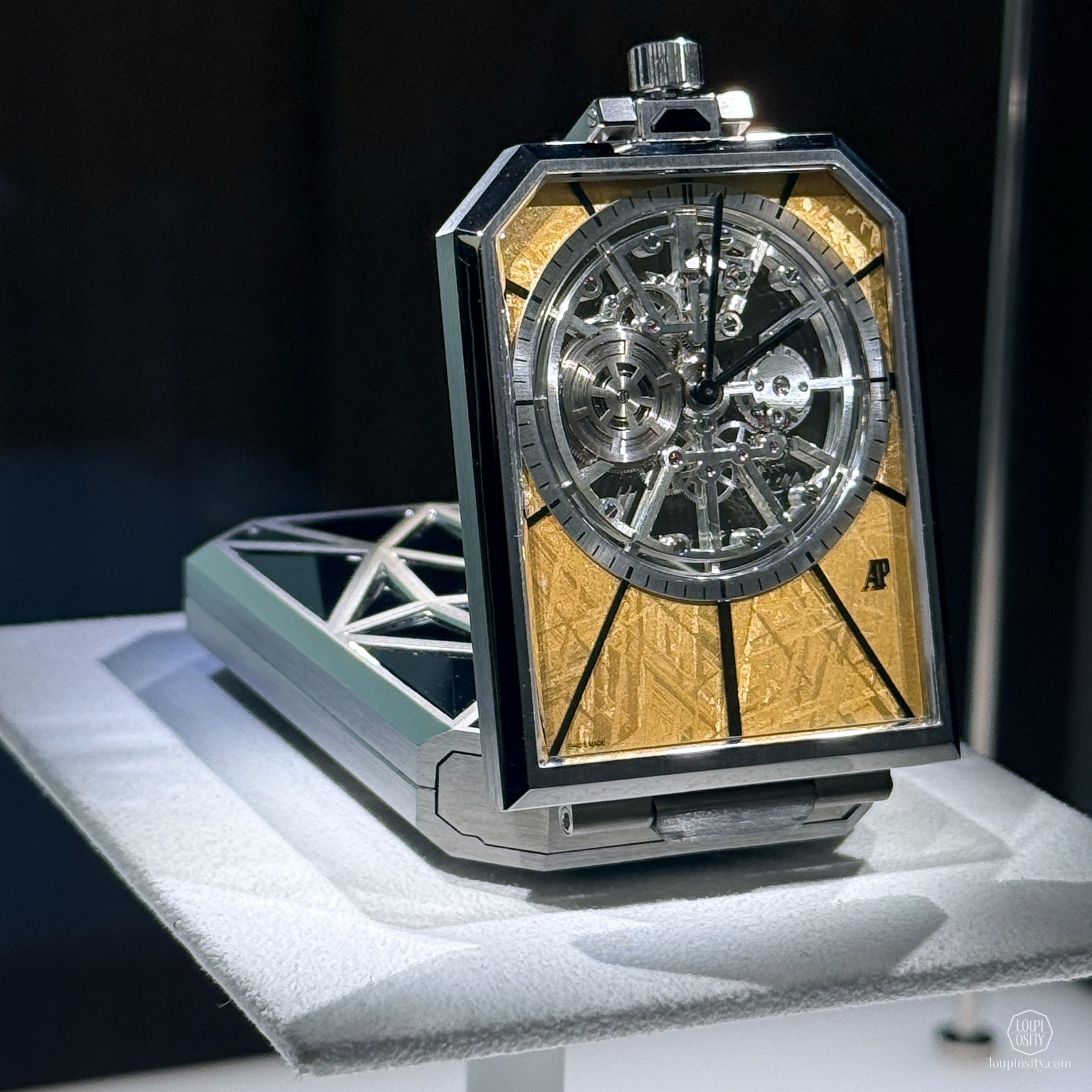
The Établisseurs Nomade in titanium case explores the idea of mobility and versatility in timekeeping. It is conceived as a transformable object that can shift between different uses—functioning as a portable watch, a pendant or a small display piece.

Audemars Piguet extends the joint experience to beyond the fair. Following its debut in Tokyo in 2023, AP Lab brings the Manufacture’s craft closer to visitors through playful, hands-on discoveries at Pont de la Machine in Geneva between 8 April and 28 June 2026. You can reserve your guided visit here.
The Neo Frame Jumping Hour
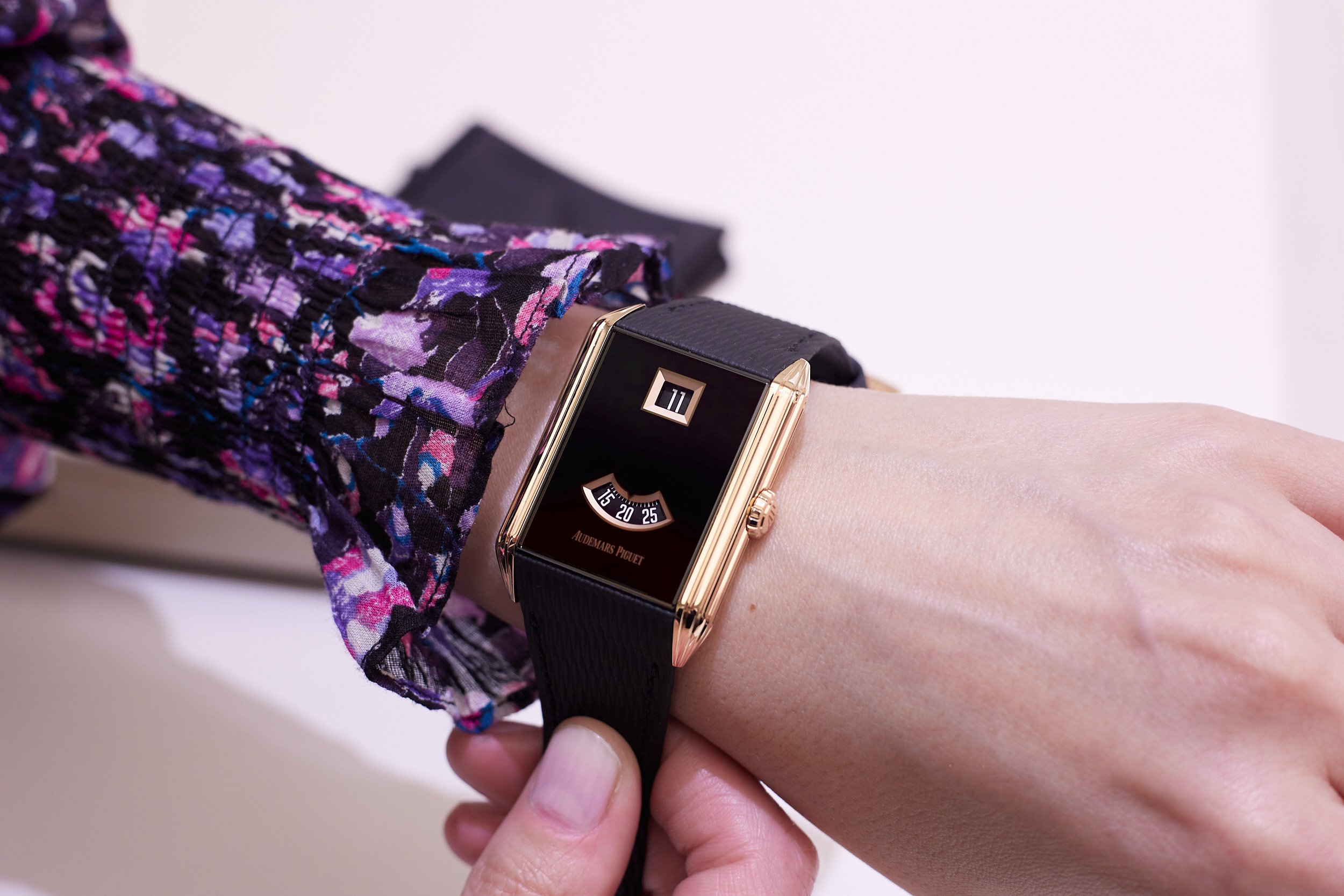
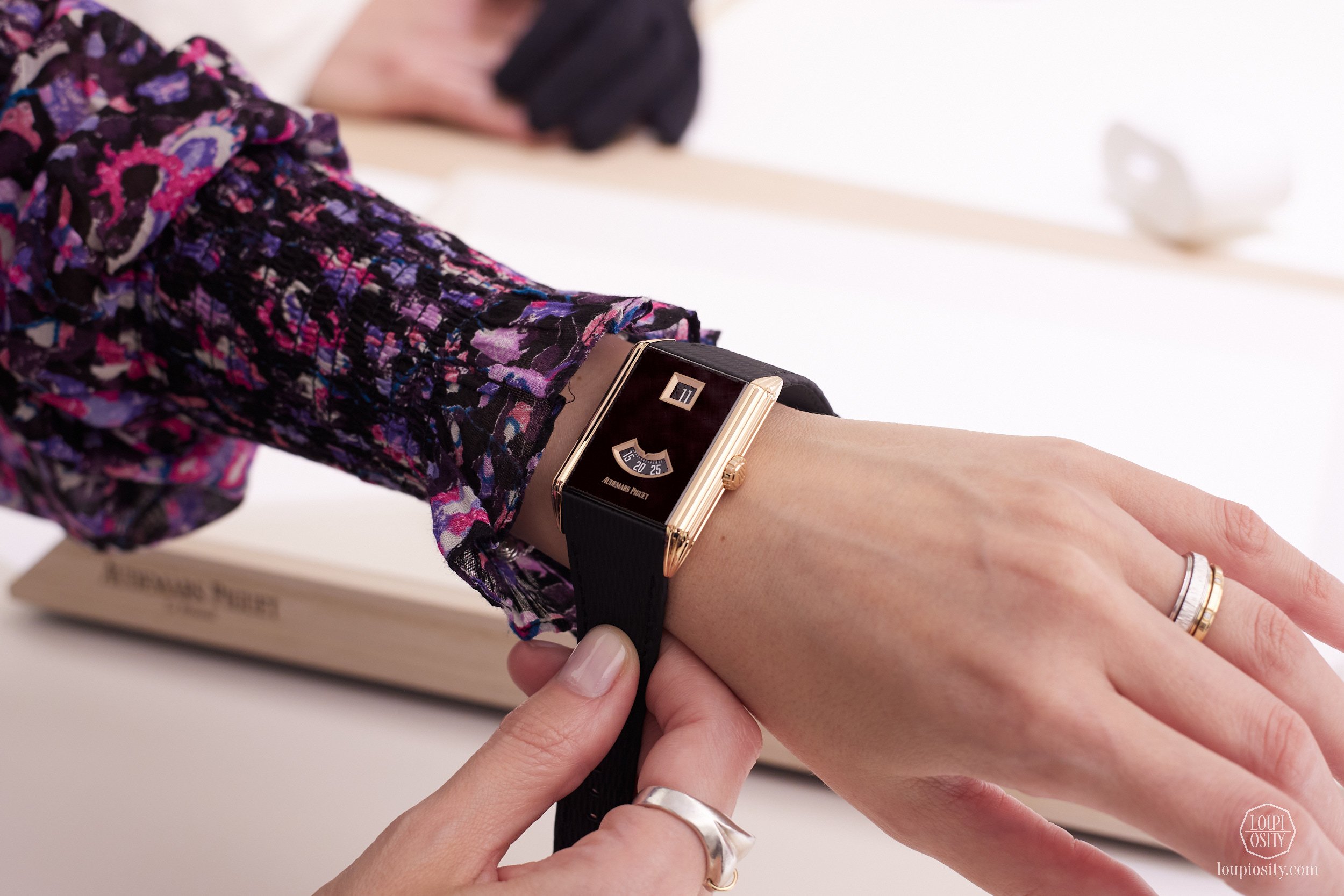
The two-toned Neo Frame Jumping Hour debuted earlier this year, inspired by the ‘guichet’ watches, popular in the 1930’s. These models had a covered ‘face’ with ‘windows’ that display the hours, minutes or seconds. (Probably the most well-known examples are the Cartier Tank à Guichets models.)
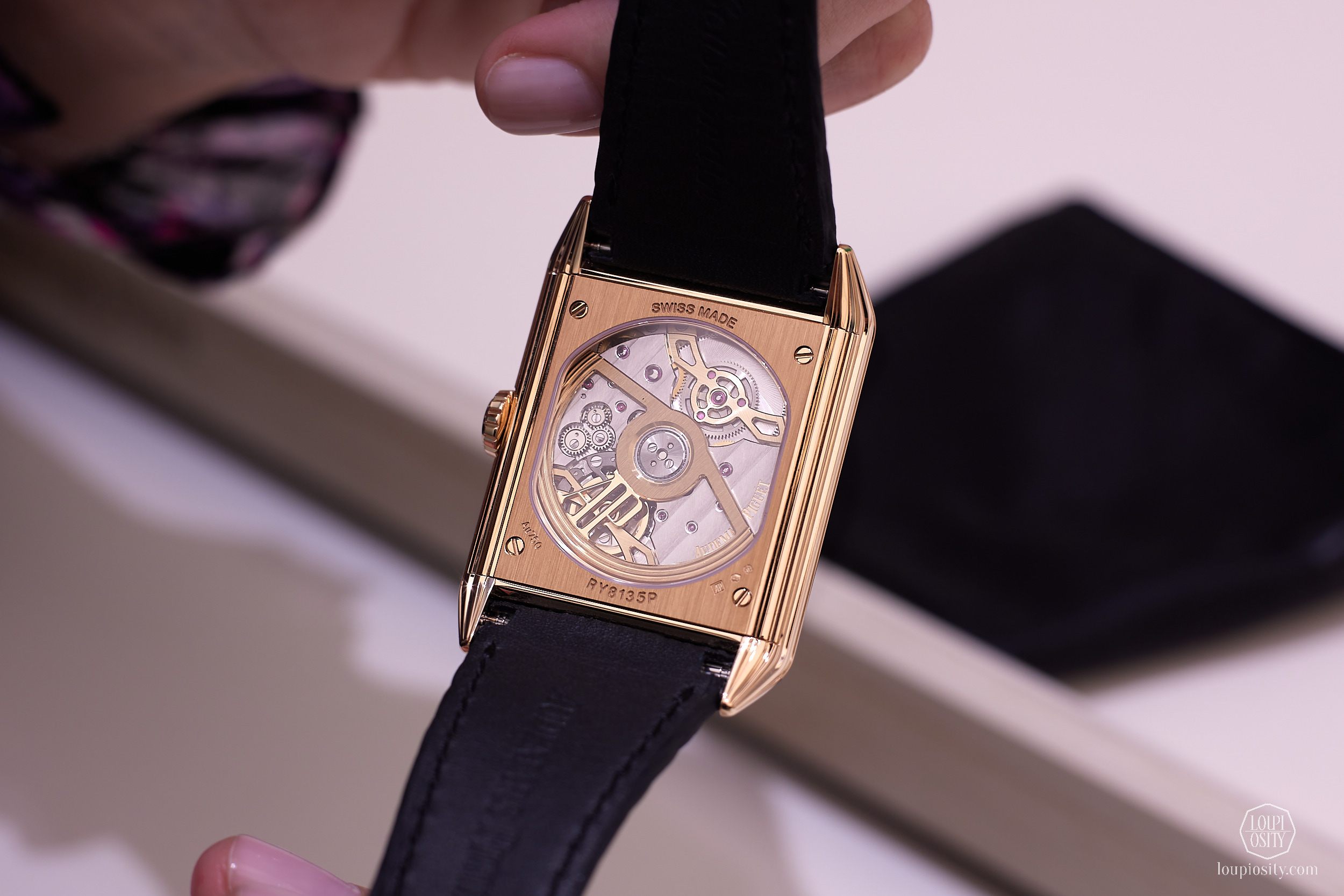
The Art Deco(ish) pink gold case is completed with a black PVD-treated sapphire dial and pink gold-toned microblasted apertures for the hours and minutes. Powered by Calibre 7122, this timepiece introduces the House’s first selfwinding jumping hour movement, with a 52-hour power reserve. The numbers leap every 60 minutes in place of traditional hands.
‘The Neo Frame Jumping Hour is a nod to Audemars Piguet’s pioneering role in developing the first jumping hour watches in the 1920s. Back then, the glass was so fragile that it had to be protected by metal. Today, it is rendered in sapphire, which takes centre stage.’ – Sébastian Vivas, Director, Museum and Heritage, Audemars Piguet
The Royal Oak novelties
The Royal Oak collection remains the backbone – one of the most iconic and recognisable timepiece in fine watchmaking. The 2026 follows the familiar AP formula: refine, upgrade, reinterpret.
The Royal Oak Selfwinding Chronograph in 38 mm stainless steel and 18k pink gold case debut with the new, and compact selfwinding 6401 movement. The caliber was presented this February – it is an integrated column wheel chronograph with a patented vertical clutch system. The movement operates at a frequency of 28,800 vibrations per hour (4 Hz) and comprises 350 components with 44 jewels. It measures 27 mm in diameter and has a thickness of 5.7 mm. The power reserve is approximately 55 hours.
The Royal Oak Double Balance Wheel Openworked in 18k yellow gold, 37 mm case features a glareproofed sapphire crystal and a skeleton dial, showing the intricate architecture of the self-winding 3132 caliber.
Stone dials are back at Audemars Piguet too – the 18k yellow gold Royal Oak Selfwinding with malachite dial comes in two sizes 37mm and 41mm. The natural malachite stone dial is complemented by 18k yellow gold hands and hour-markers filled with luminescent material, a yellow gold-toned inner bezel and the yellow gold integrated bracelet is fitted with a three-blade folding clasp.
The Royal Oak Offshore 43 mm Chronograph spotlights a deep blue “Bleu Nuit, Nuage 50” ceramic case and a beige Méga Tapisserie dial, extending the Offshore line with vibrant contrasts and innovative materials.
The Royal Oak Mini Quartz has a polished black onyx dial punctuated by brilliant-cut diamond hour-markers, showcasing a new play of materials and refined contrasts.

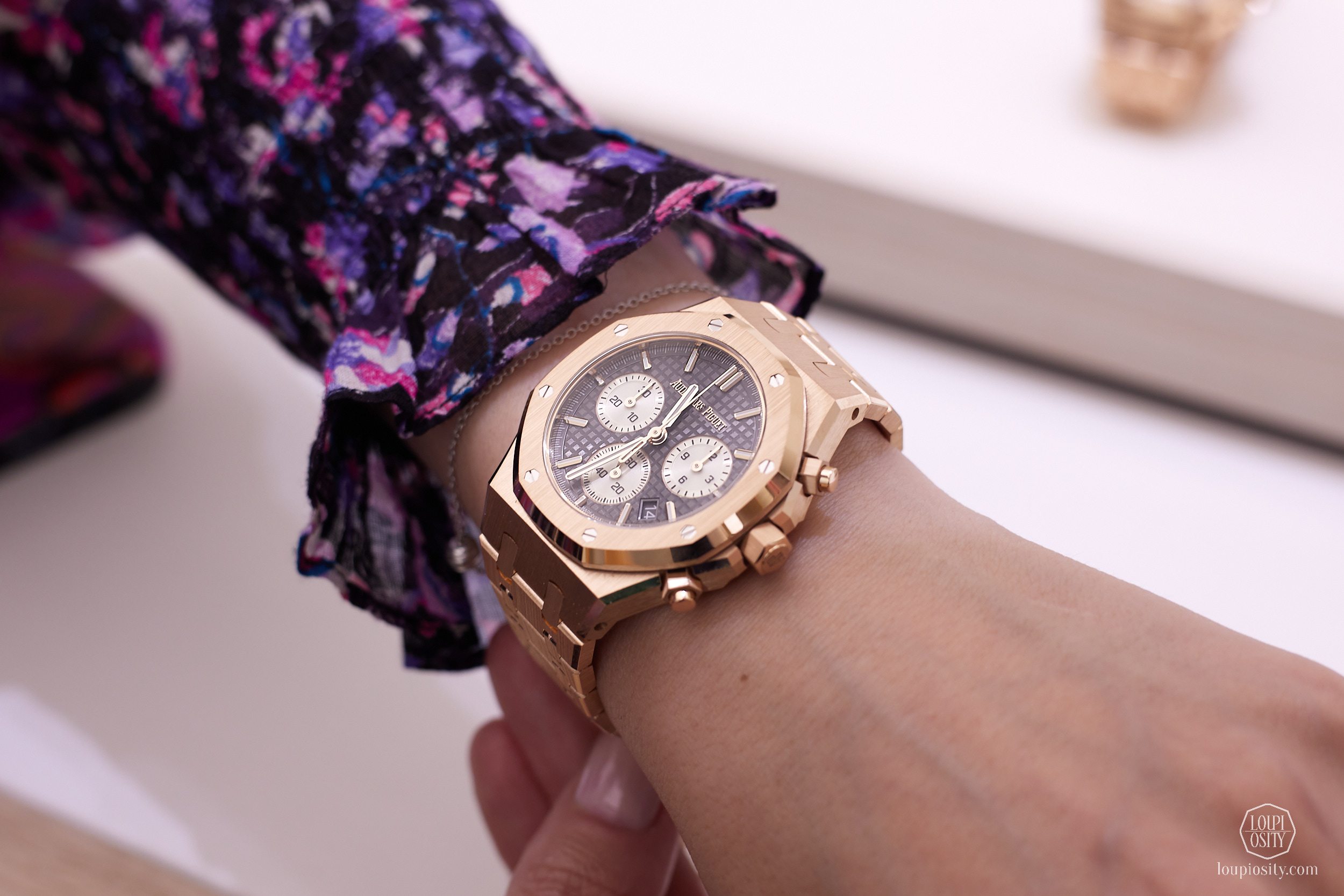
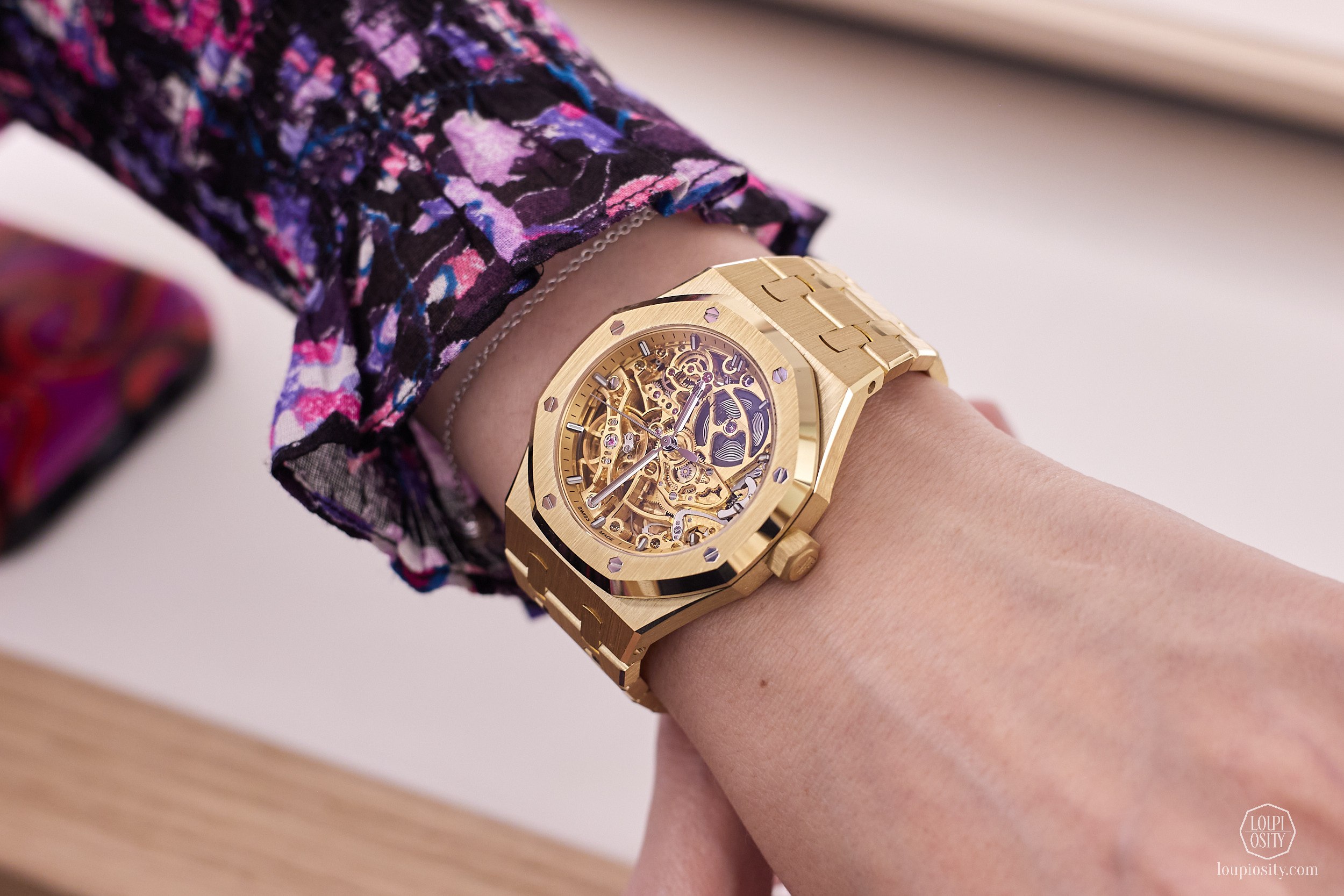
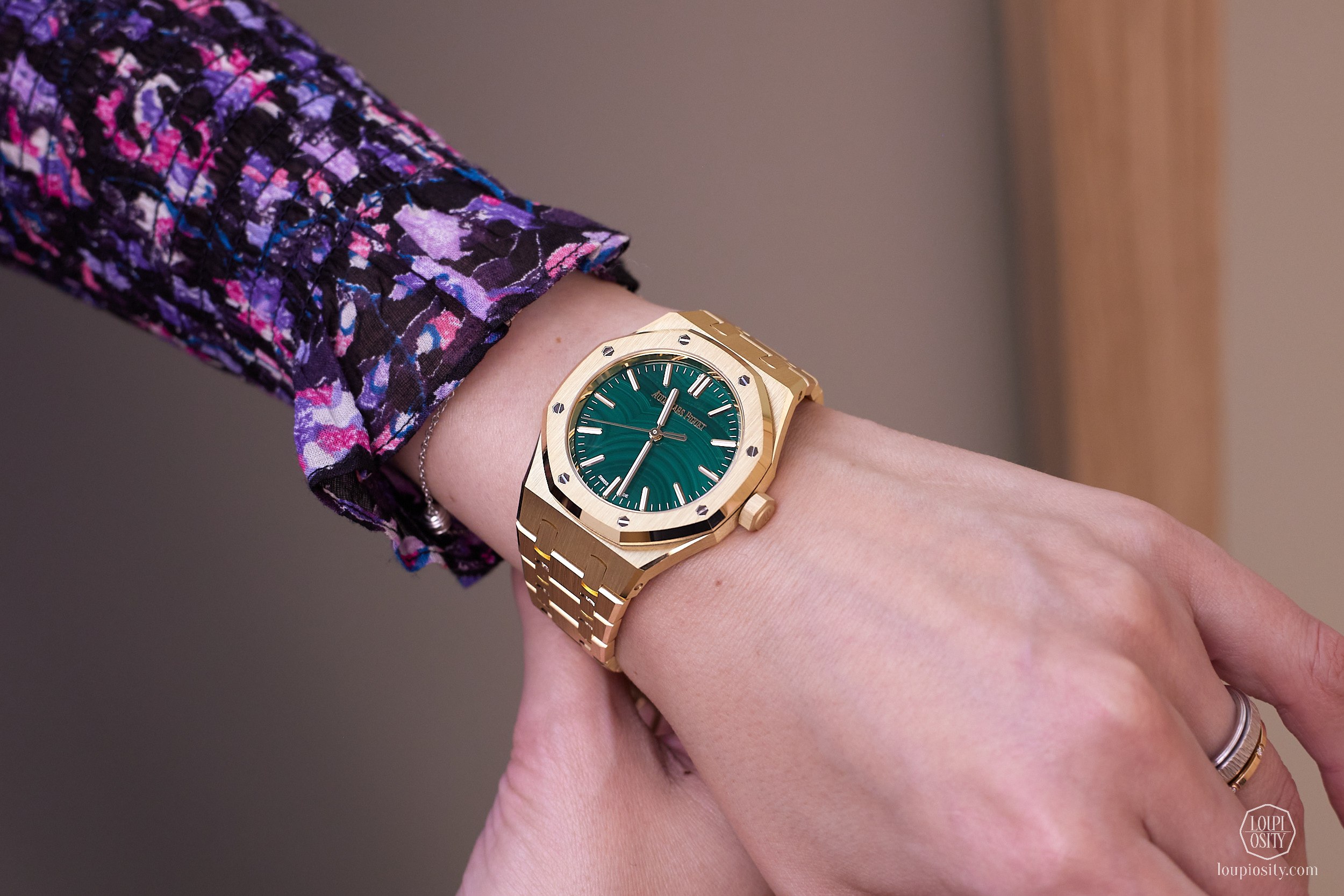

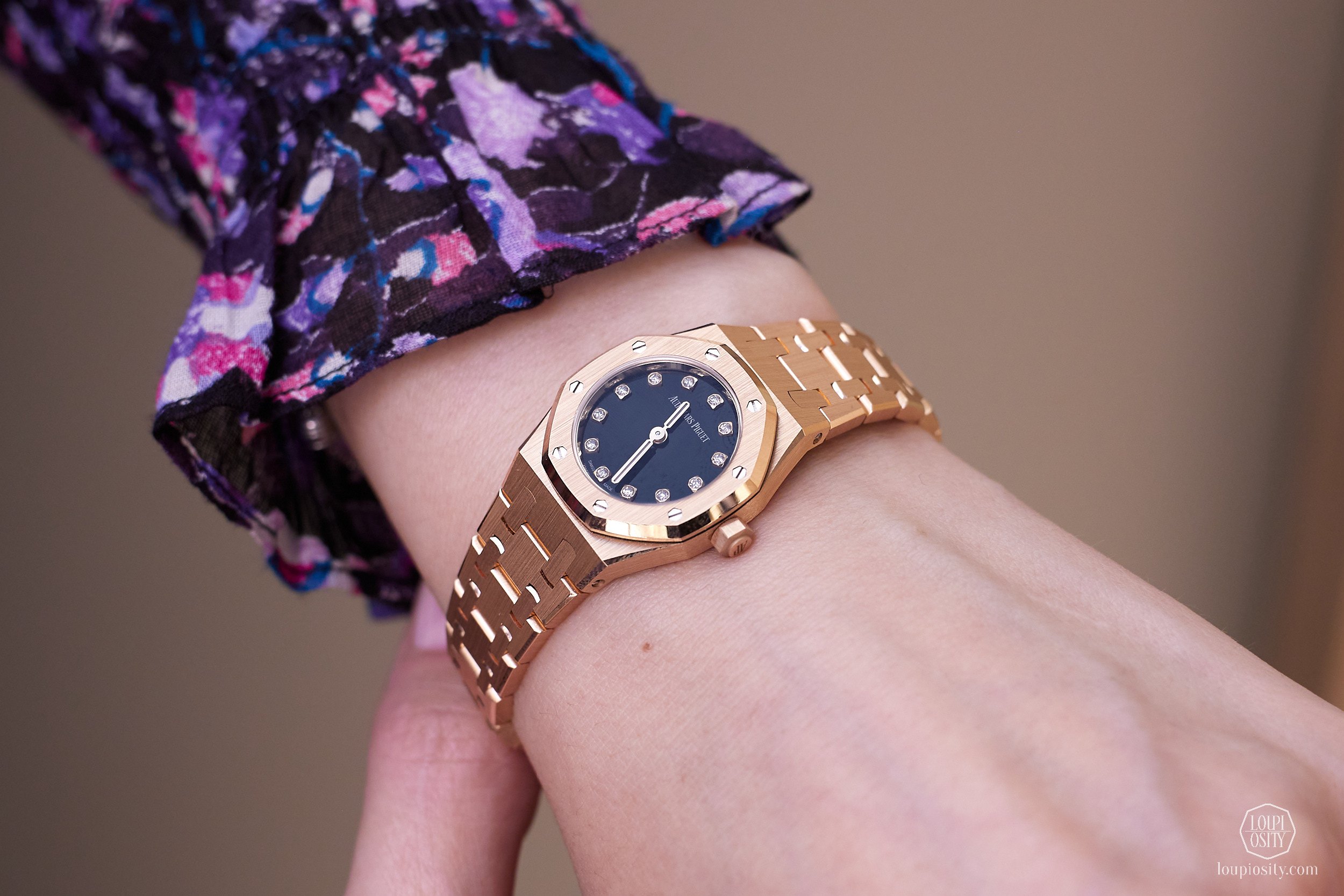
Photo credits: Audemars Piguet, Loupiosity.com
All registered trademarks are property of their respective owners.
All rights reserved.