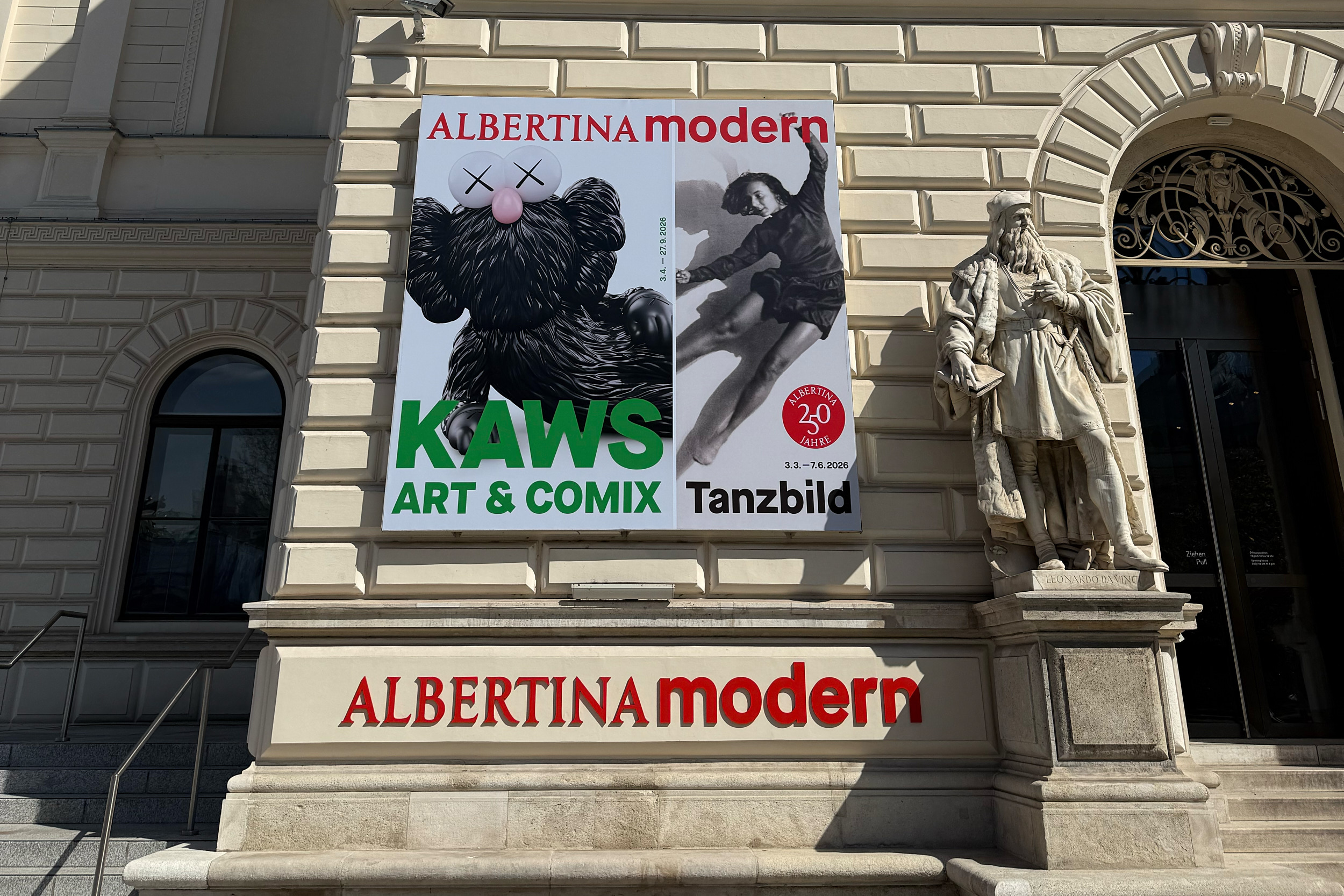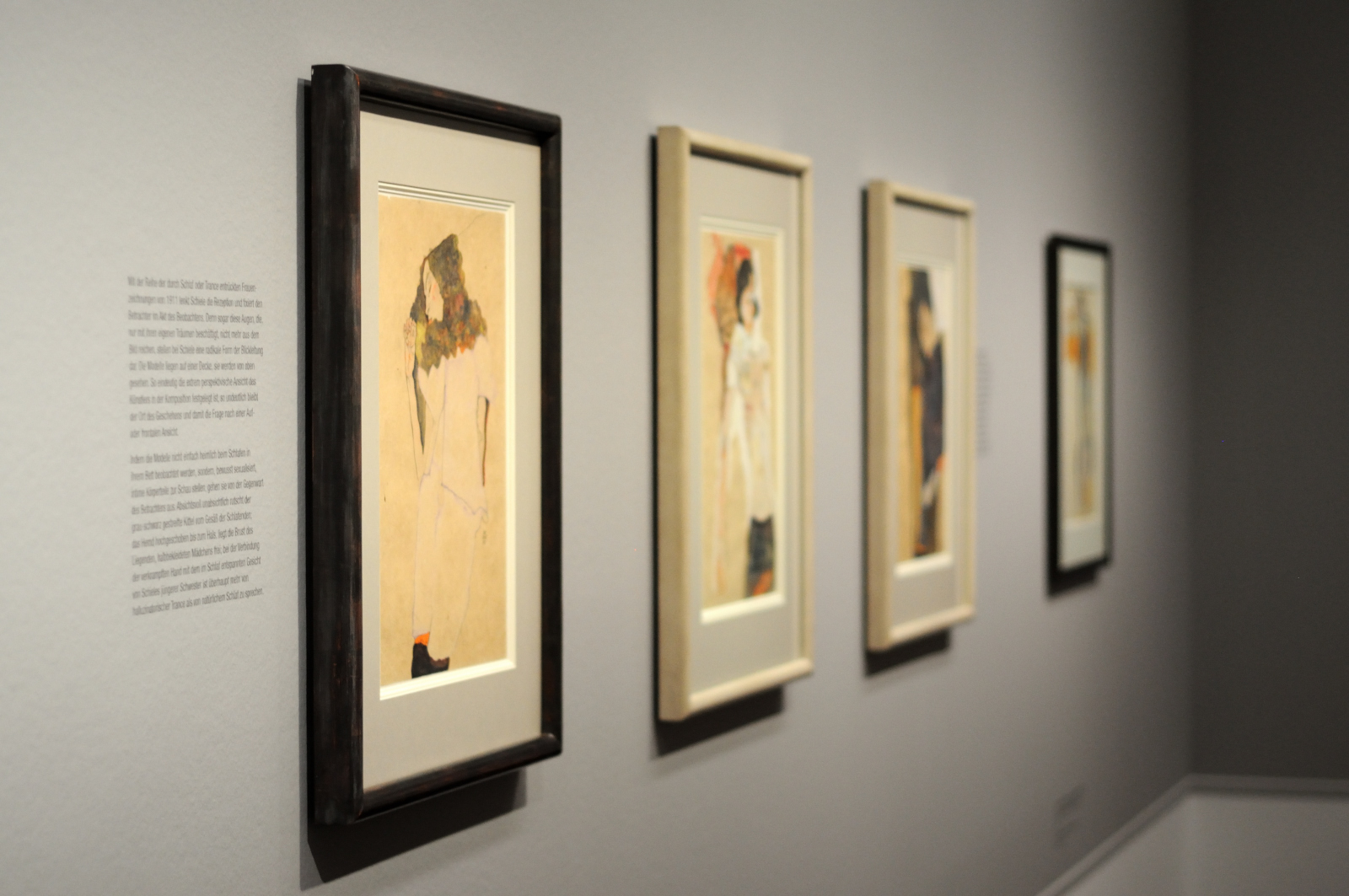
As the Albertina celebrates its 250th anniversary, Albertina Modern presents a pivotal exploration of the intersection between art and pop culture. Curated by Angela Stief and Florian Waldvogel, the exhibition ‘KAWS. Art & Comix’ features 192 works, tracing the evolution of comic aesthetics from the 1960s to the present day.
The Albertina Museum in Vienna is marking a significant milestone this year: its 250th anniversary. While the institution is historically renowned for its vast collection of graphic arts, the Albertina Modern branch is taking center stage with a contemporary dialogue that challenges traditional boundaries.
Discover more about the Albertina Modern and current and upcoming exhibitions here.
The ‘KAWS. Art & Comix’ exhibition, running from 3 April 2025 to 27 September 2026, is not merely a retrospective of a single artist but a comprehensive survey of how the ‘low’ art of comics has infiltrated and transformed the ‘high’ art of the museum. It posits that the gap between the two is not a chasm to be bridged, but a space to be explored, dismantled, and reimagined.
The Cultural Context of KAWS
Brian Donnelly (November 4, 1974, New Jersey, US), known globally as KAWS, occupies a unique position in the contemporary art landscape. Emerging from the graffiti scene of the 1990s, he began his career by altering public advertisements, painting over faces with his signature crossed-out eyes. This act of subversion laid the groundwork for a practice that seamlessly navigates the streets, the gallery, and the commercial marketplace.
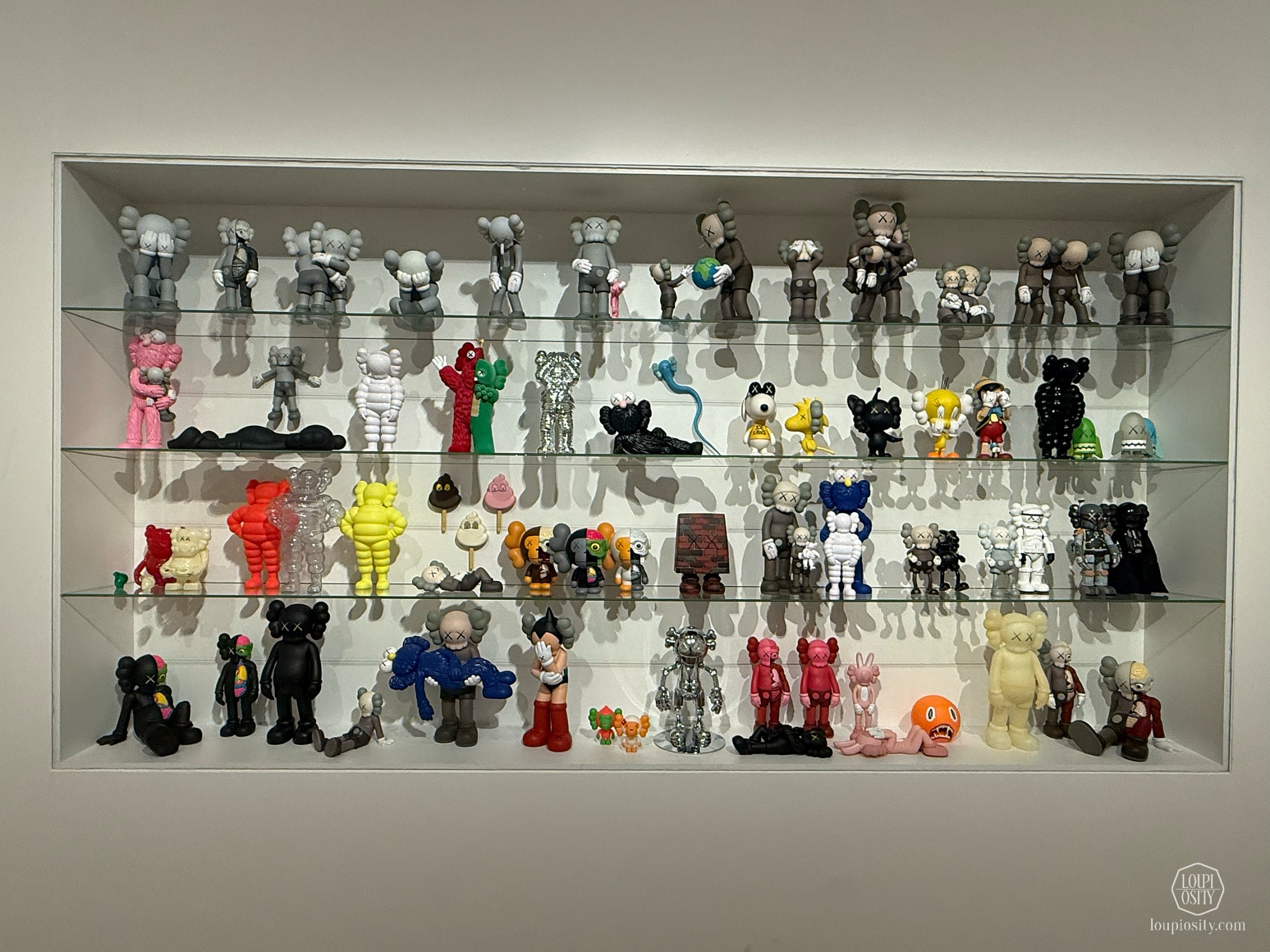
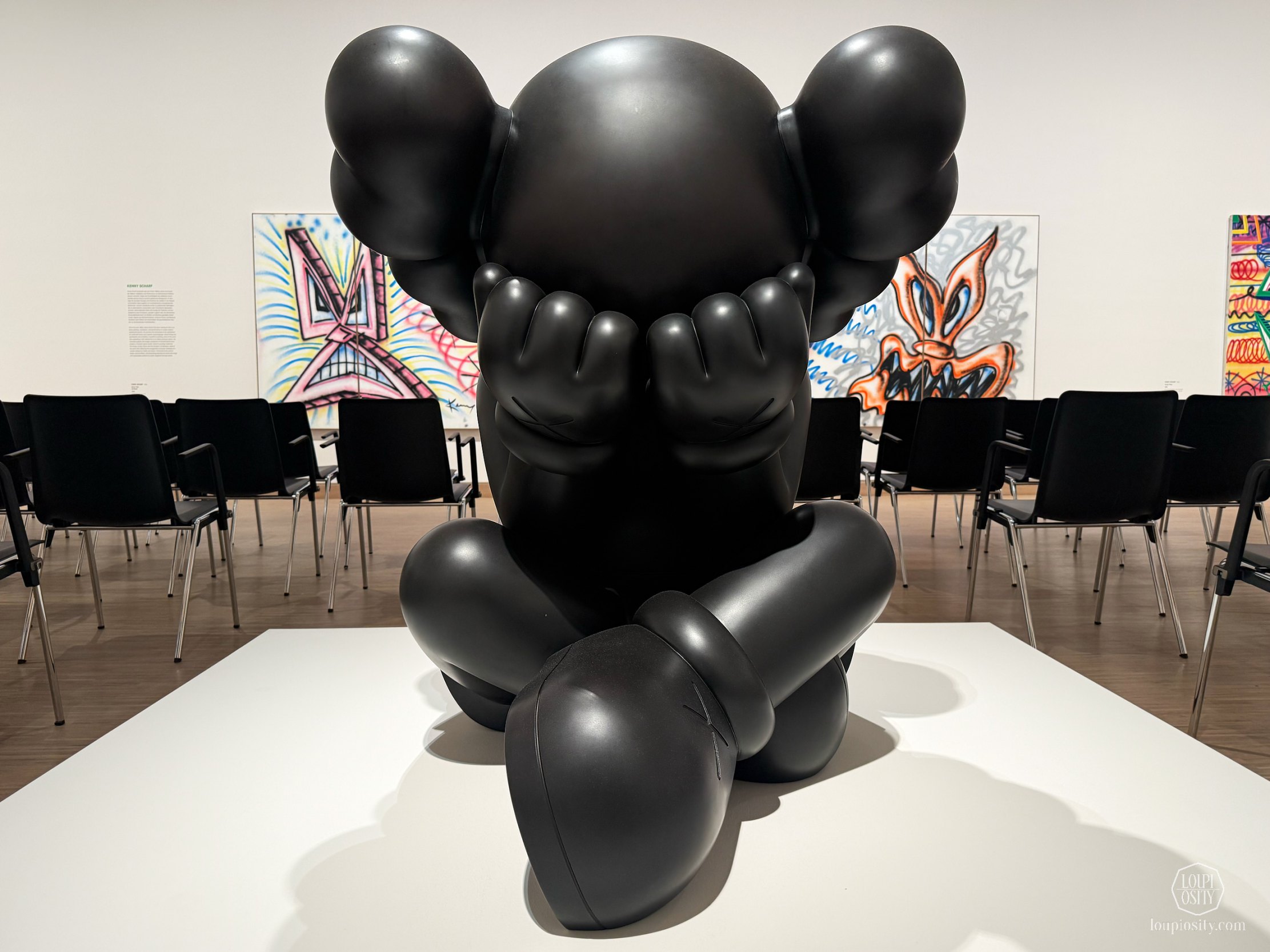
KAWS is perhaps best known for his COMPANION figures—sculptural entities that echo the rubber-hose animation of early American cartoons, specifically referencing Mickey Mouse’s silhouette with white gloves and clunky shoes. However, the defining characteristic of these figures is the replacement of eyes with an ‘X,’ a mark that functions simultaneously as a graffiti signature and a symbol of negation or erasure. As noted in the exhibition materials, these figures often exhibit self-confident, shy, or a melancholic isolation, sitting alone or hugging in groups, projecting an emotional resonance that transcends their pop-culture origins.
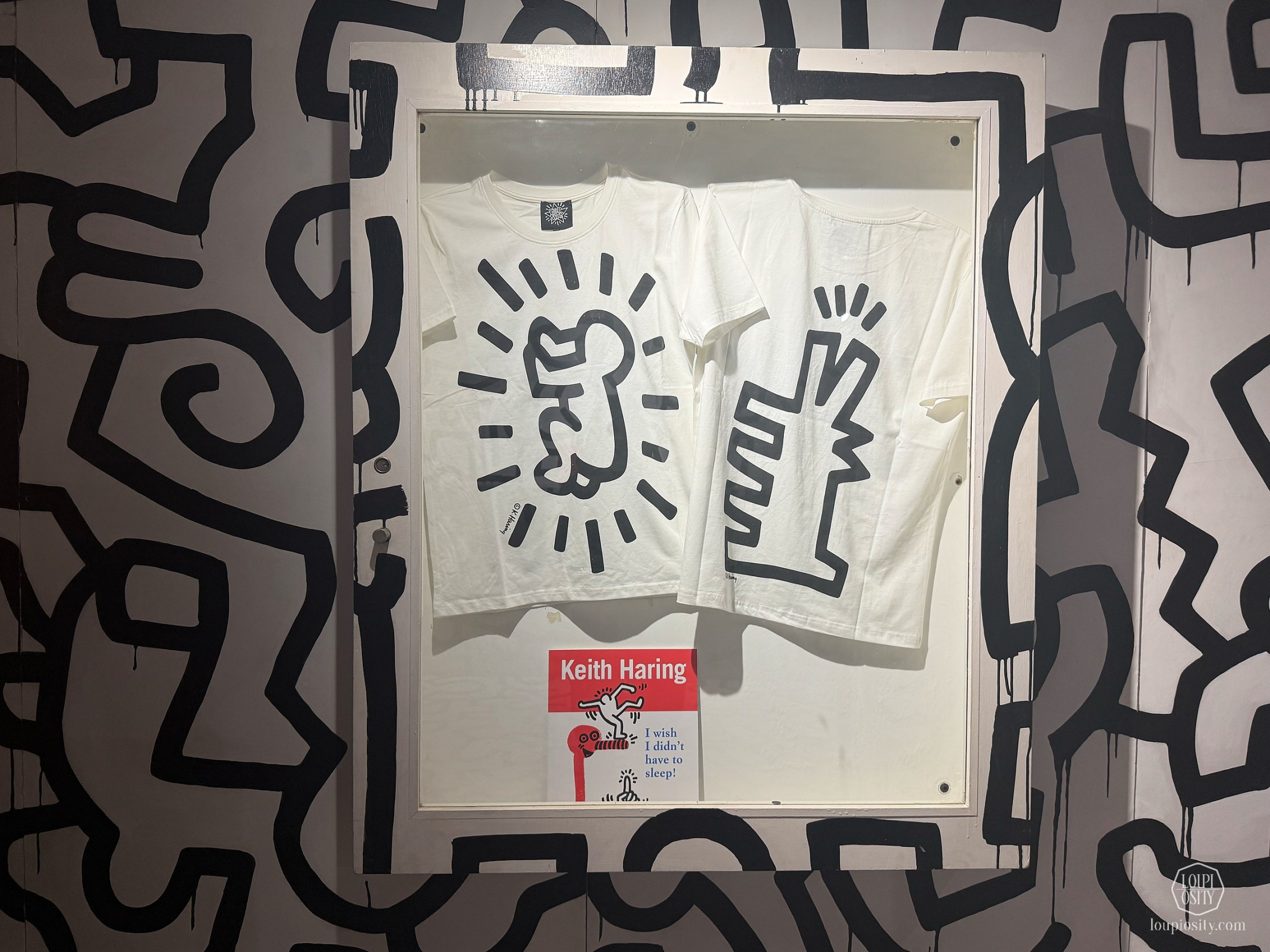
The artist’s trajectory mirrors the broader acceptance of street art and pop culture within the canon of fine art. Influenced by Keith Haring’s democratization of art through the Pop Shop, KAWS utilized vinyl toys and limited-edition merchandise to bypass the exclusivity of the traditional art market.
He is often compared to Keith Haring, Jean-Michel Basquiat, Roy Lichtenstein and Andy Warhol, who similarly appropriated the aesthetics of mass production and advertising. Yet, KAWS distinguishes himself by focusing on the emotional voids within these familiar icons, transforming cheerful mascots into vessels for themes of loneliness and loss.
His numerous and diverse commercial collaborations are as significant as his gallery work, serving as extensions of his artistic philosophy and driven his designs into worldwide recognition.
A prime example is his partnership with Audemars Piguet, resulting in the Royal Oak Concept Tourbillon “Companion”. This 43mm titanium timepiece features the artist’s signature skull-shaped head, gloved hands, and X-shaped eyes on both the dial and the movement’s ratchet wheel. This collaboration exemplifies KAWS’s ability to translate his visual language into luxury objects without losing its subversive edge.

For the Dior spring/summer collection in 2019, Kim Jones (Dior’s artistic director for menswear, 2018-2025) collaborated with KAWS. The pair worked on apparel items and signature doll toys, and later two capsule collections. COMME des GARÇONS launched the artist’s first scent, MIRROR in cooperation, with a bottle bottle design inspired by the artist’s iconic COMPANION character.
His partnership with Nike has produced some of the most coveted sneakers in recent history, the Air Jordan 4 ‘KAWS’. The KAWS x UNIQLO Winter Collection featured limited-edition knit sweaters and accessories designed by KAWS.
While these commercial projects are not the focus of the Albertina’s current curation, the exhibition acknowledges that KAWS’s work exists ‘simultaneously in public space, in the white cube of the museum, in commercial contexts, and on social media.’
KAWS. Art & Comix: Exhibition Overview
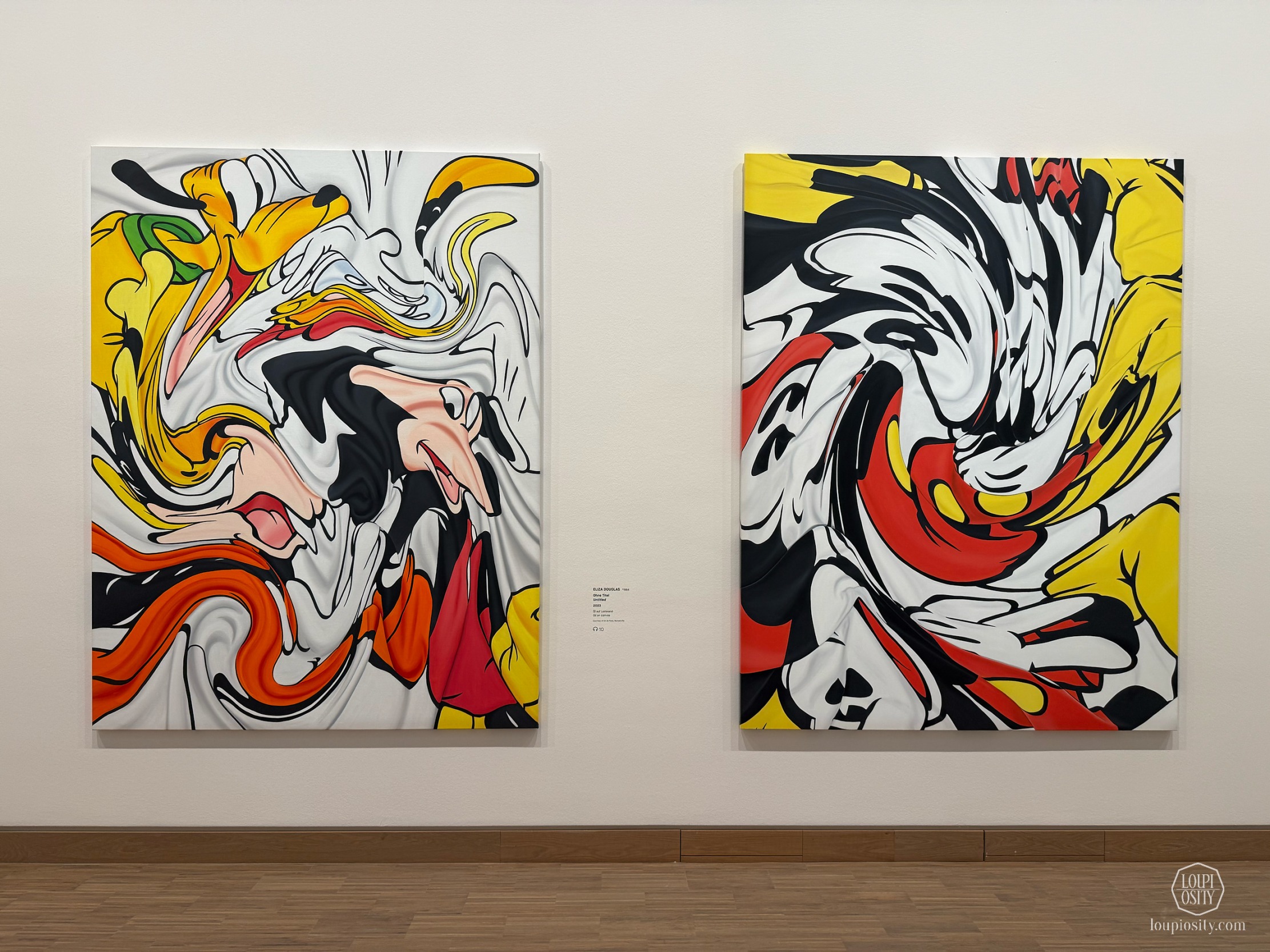
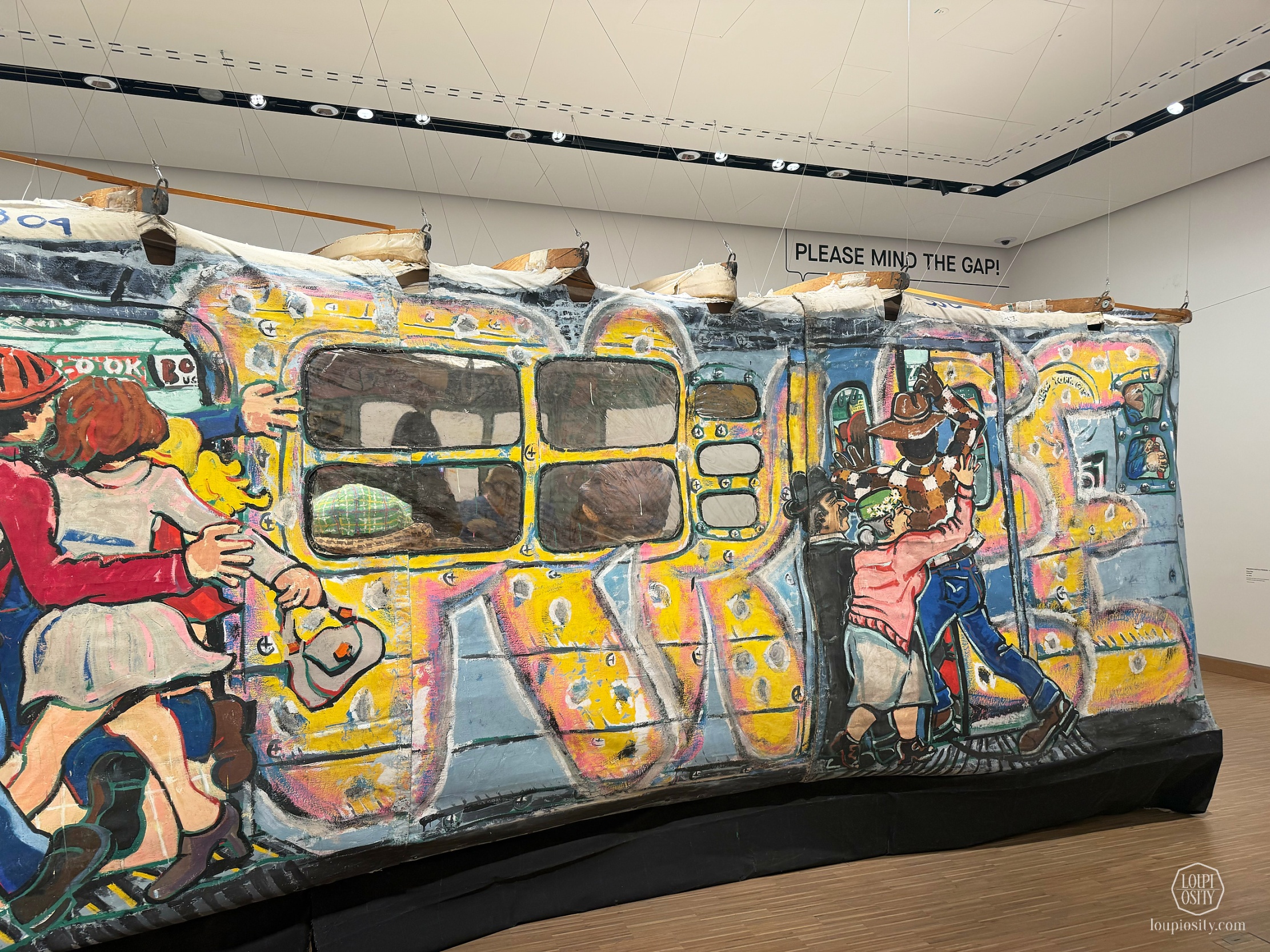
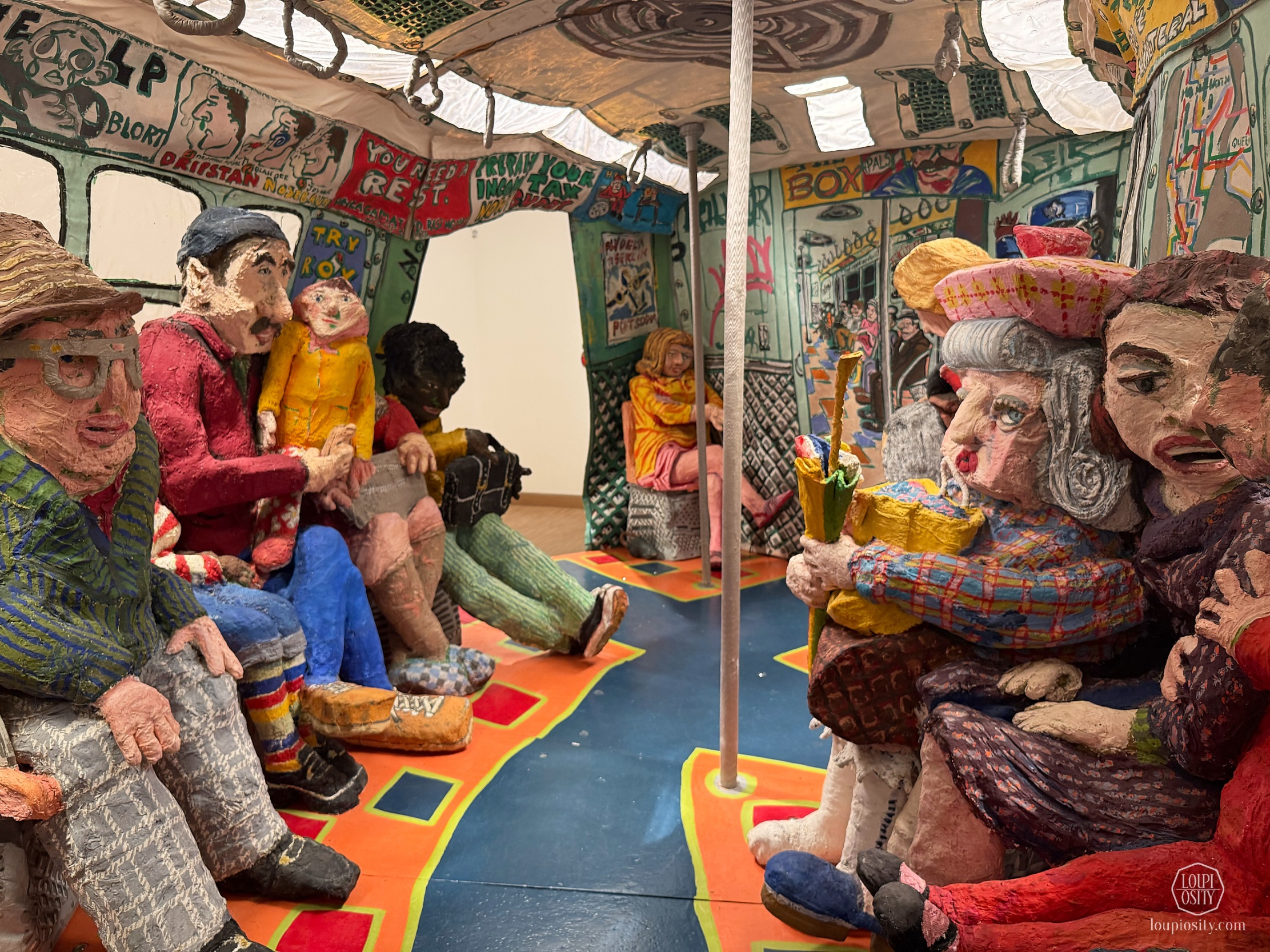
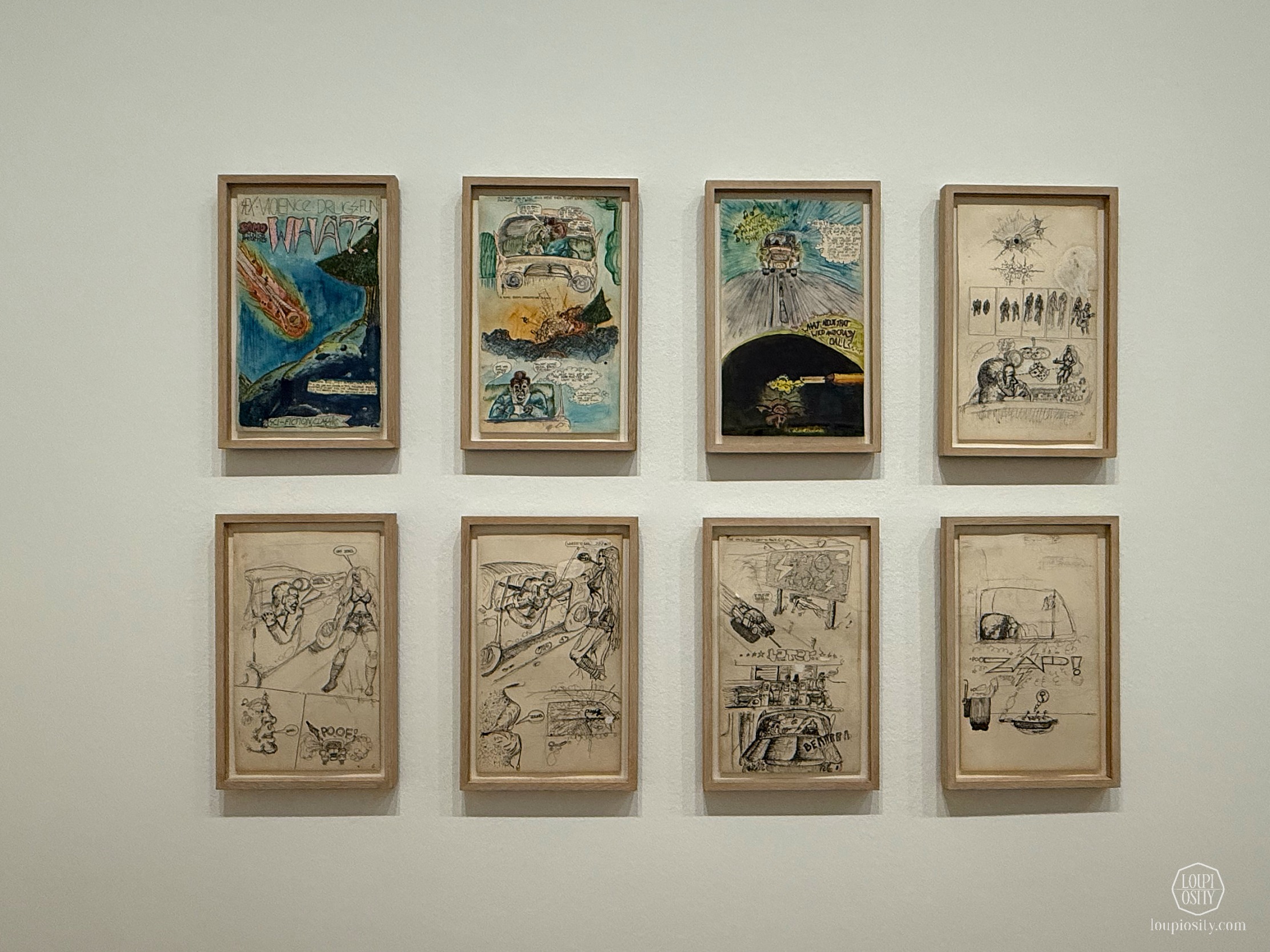
Curated by Angela Stief and Florian Waldvogel, ‘KAWS. Art & Comix’ presents 192 works that contextualize KAWS within a lineage of artists who have engaged with comic book aesthetics. The exhibition is structured as a dialogue, juxtaposing KAWS’s monumental sculptures and paintings with historical icons and contemporary peers.
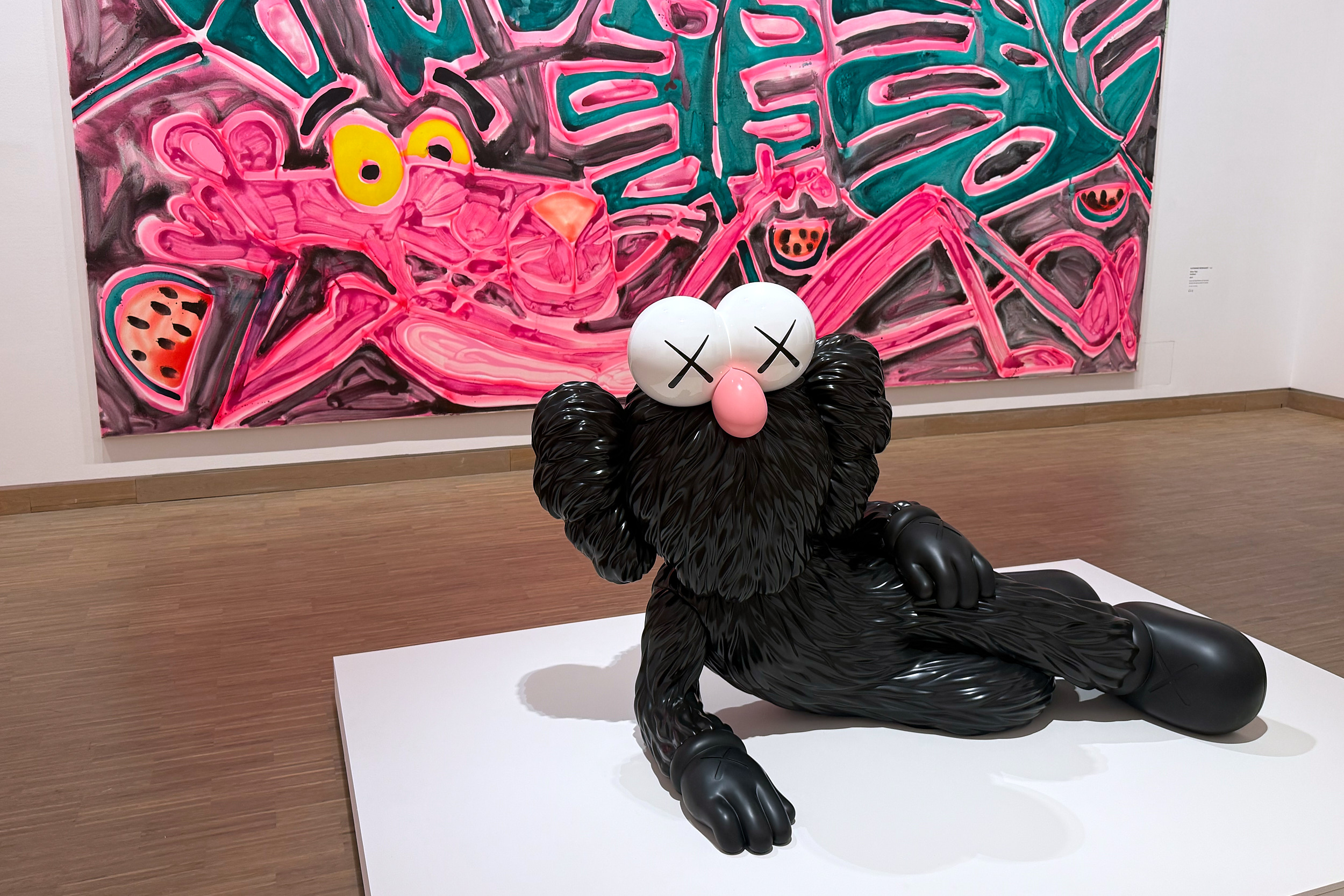
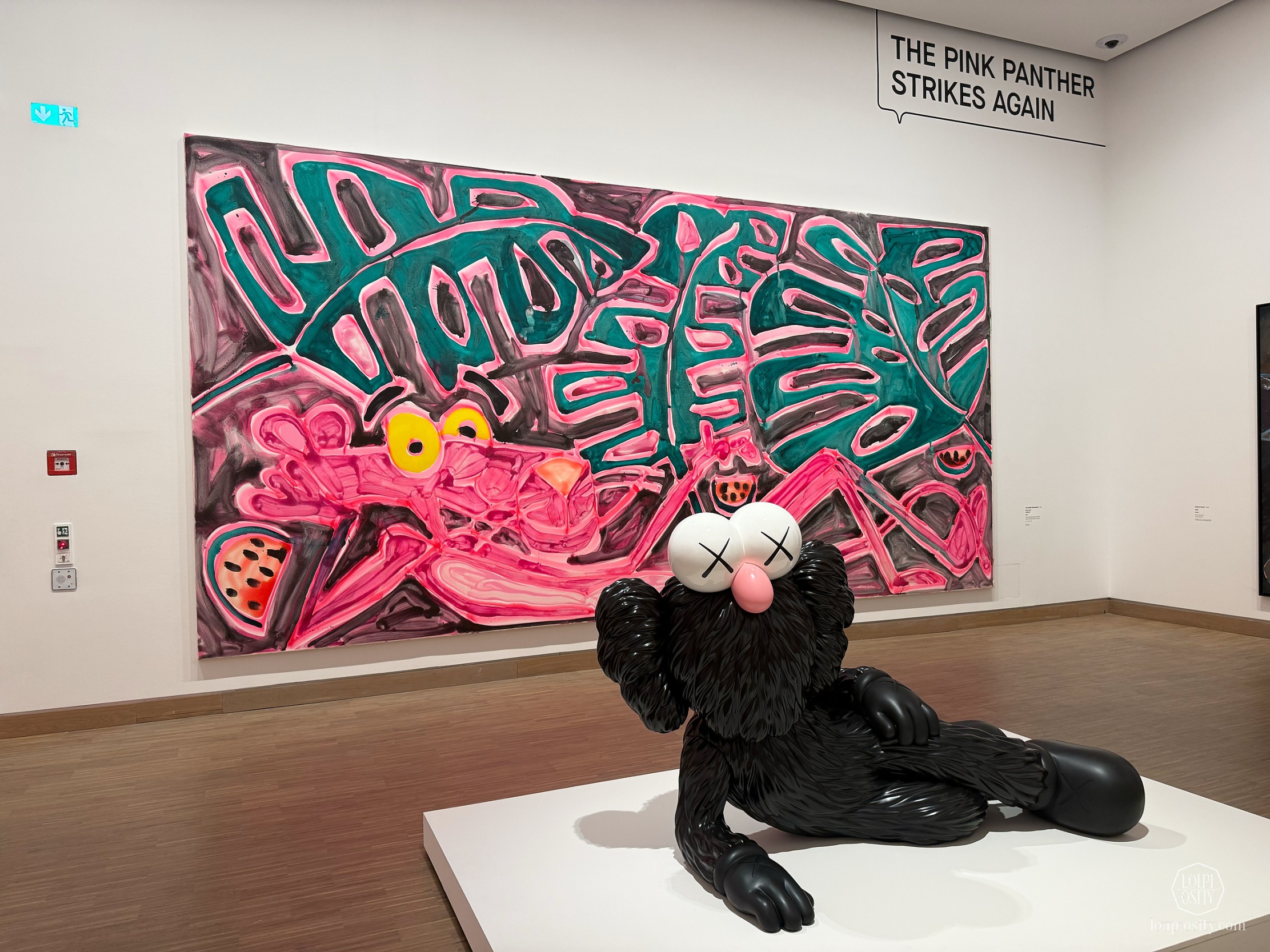
A central highlight is the sculpture TIME OFF (2021), a bronze figure painted in KAWS’s signature style. The work depicts a reclining BFF figure, propped on one arm with a bent leg. According to the press material, this pose deliberately references the classical tradition of the reclining Venus, creating a striking contrast between the high-art iconography of the past and the bulky, cartoon-like aesthetic of the present. This piece is displayed alongside large-format paintings of the Pink Panther by Katherine Bernhardt and Micha Wille, further exploring the translation of pop figures into fine art contexts. (See our featured image on the top.)
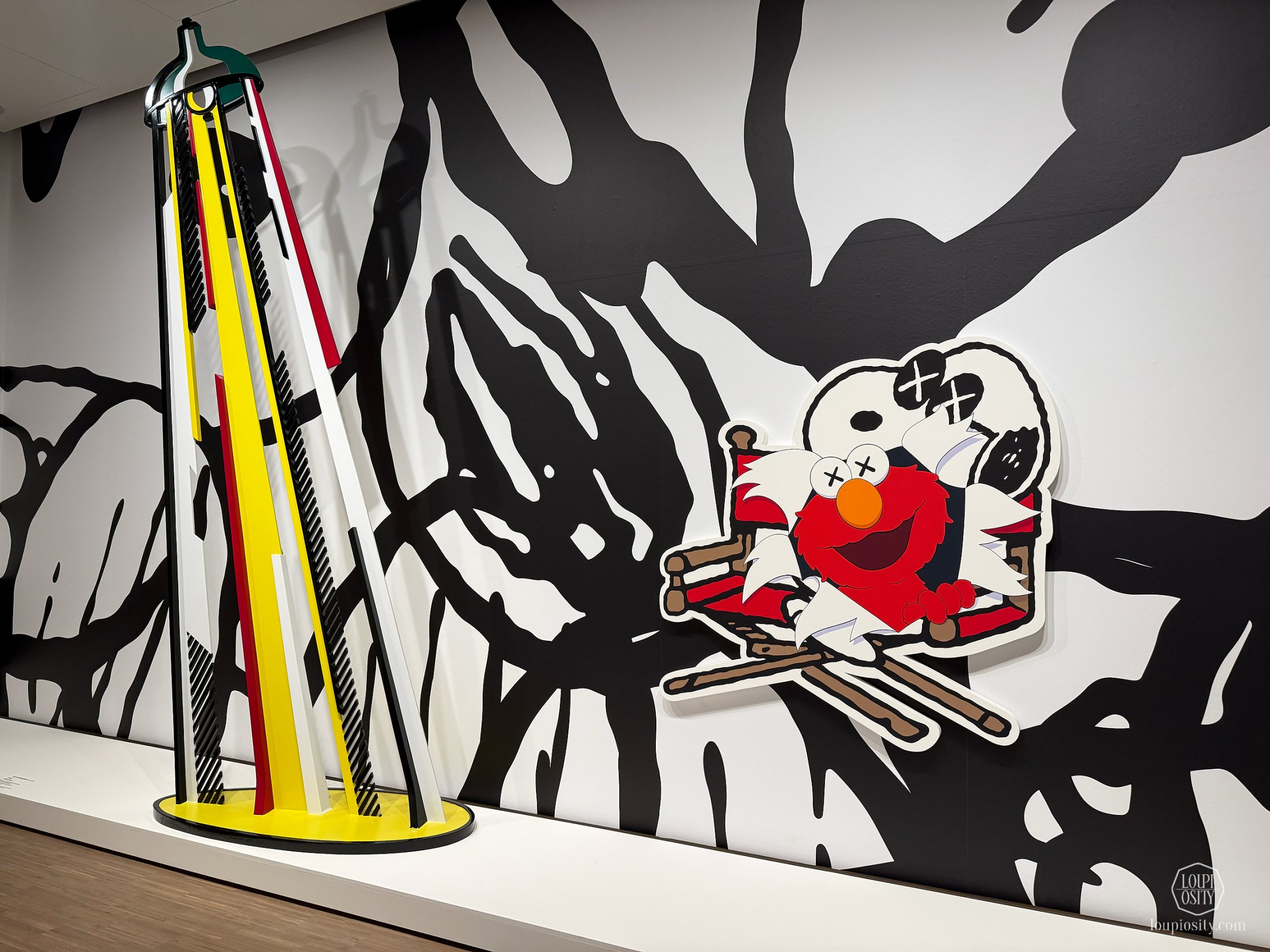
The exhibition traces the evolution of comic influence from the 1960s to the present. It features works by Roy Lichtenstein, whose Lamp sculpture translates the graphic flatness of advertising into three-dimensional form, and Keith Haring, whose Pop Shop artifacts are presented as a manifesto for accessible art.
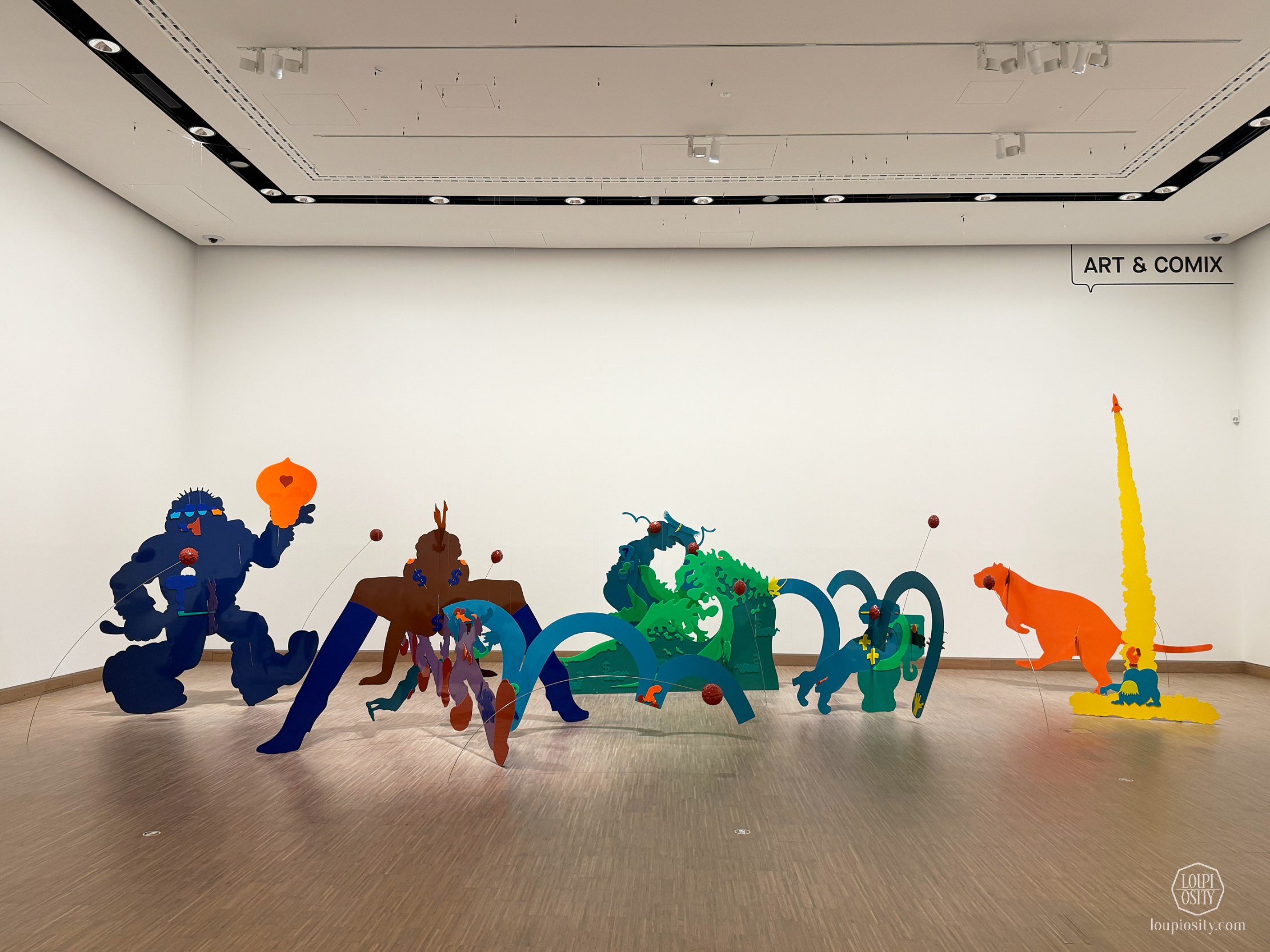
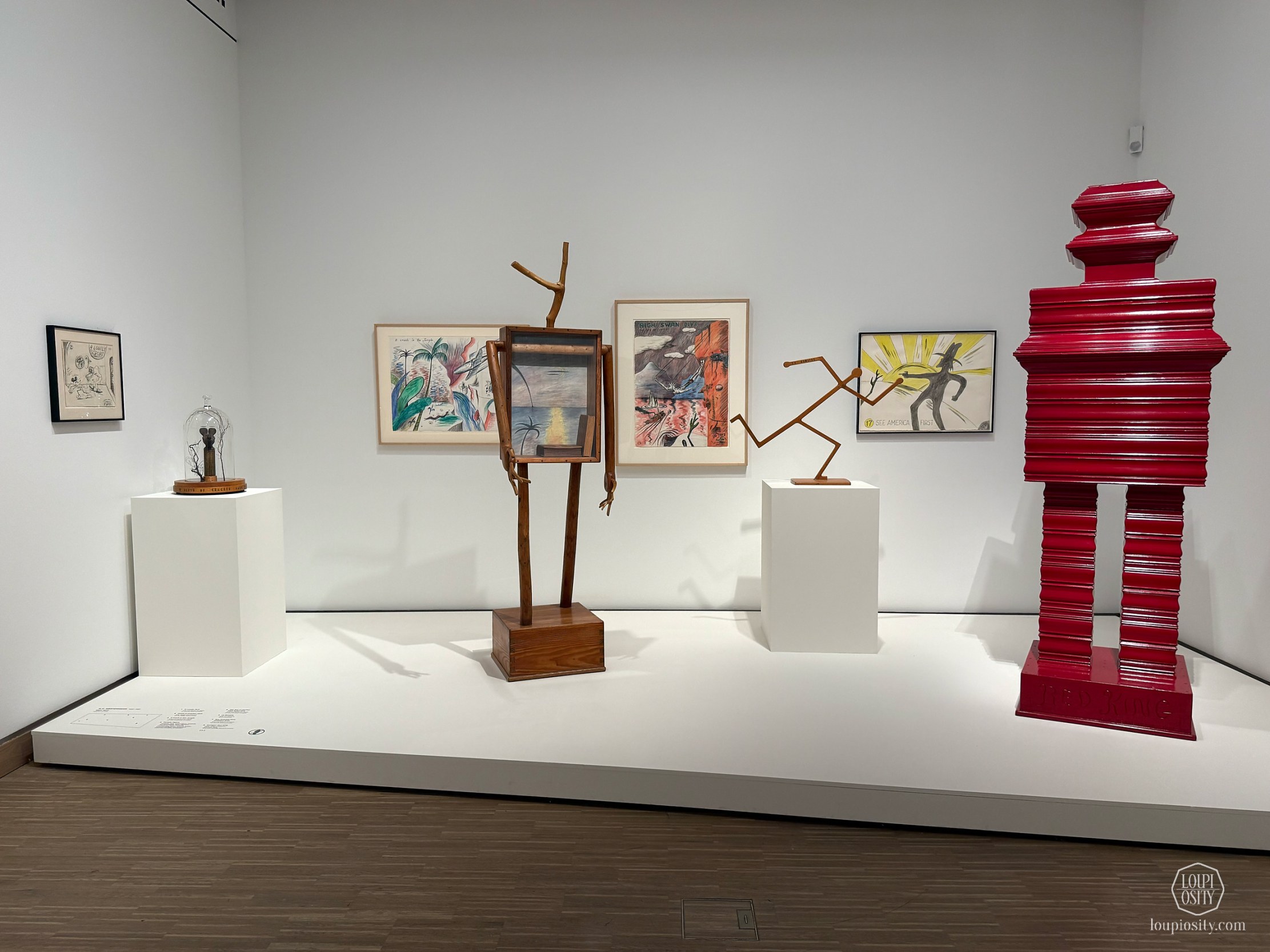
The show also delves into the underground ‘comix’ movement of the 1970s, represented by Öyvind Fahlström’s Meatball Curtain (for R. Crumb), an interactive installation based on Robert Crumb’s countercultural comic.
Other notable inclusions explore the darker, more subversive potential of comic imagery. Gottfried Helnwein’s unsettling depictions of Mickey Mouse transform the innocent icon into a figure of threat – his works were also part of the museum’s ‘LOOK! New Acquisitions‘ exhibition in 2017.
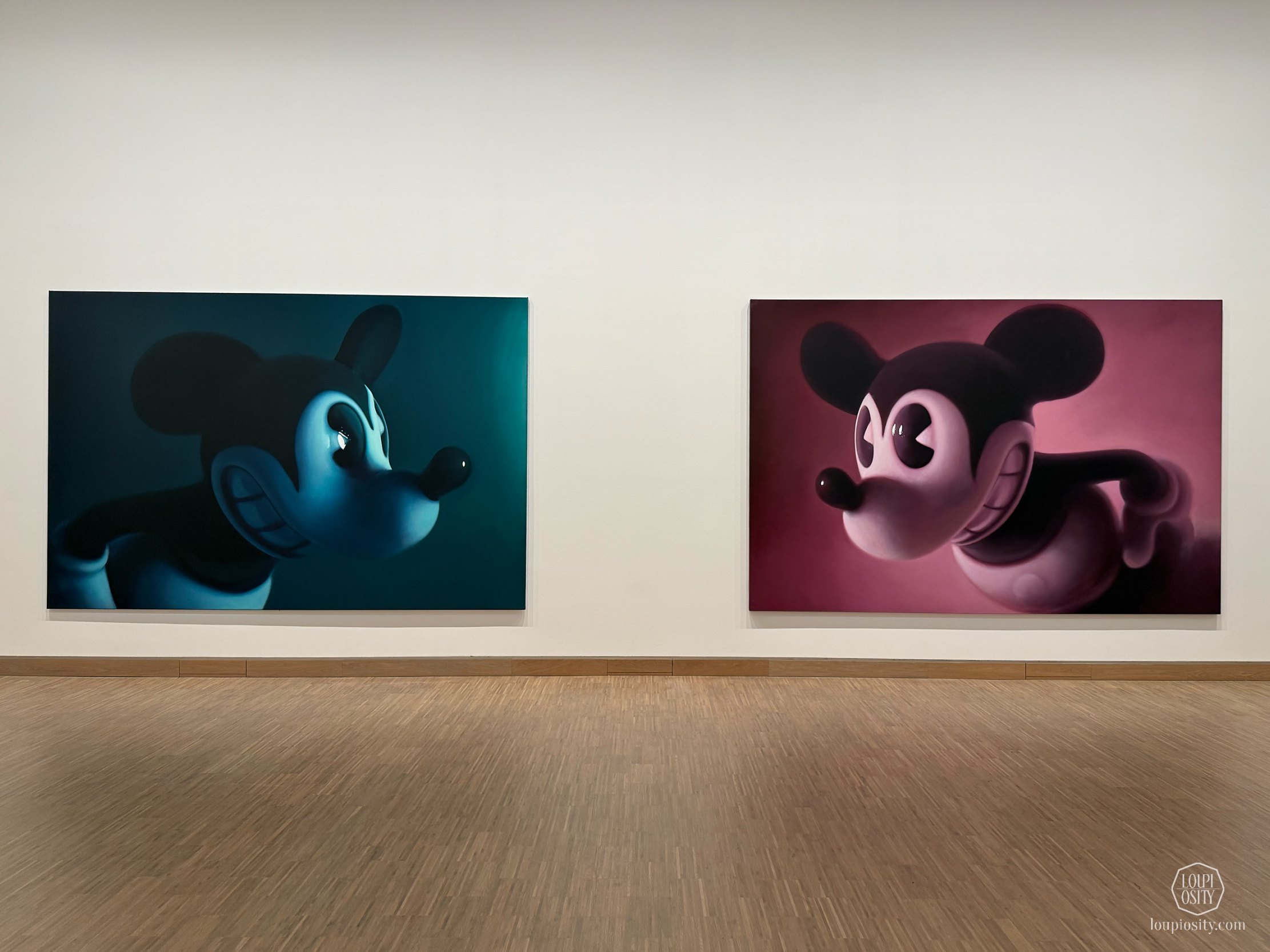
Isolde Maria Joham (1932–2022) was an Austrian painter and glass artist known for her distinctive blend of alpine landscape motifs with surreal, experimental elements. Born in Mürzzuschlag and passing away in Lilienfeld, she studied at the Hetzendorf Fashion School before continuing her education at the Academy of Applied Arts in Vienna. ‘Pandas emerge as central figures in her later works. Paintings such as Puzzle Panda take up motifs from the Panda-Z of Japanese anime and manga culture and combine them with futuristic pictorial spaces. The familiar animal figures appear embedded in mechanical, modular, or otherwise constructed forms, referring to the increasing technologization of contemporary life.’ – as Albertina Modern shares.


The curatorial approach investigates how artists have drawn upon the visual language of consumer culture—the bright colours, sharp contours, and flat representations—to critique and reflect on modern society.







Source: press release. Photo credits: Albertina Modern. Loupiosity.com
All registered trademarks are property of their respective owners.
All rights reserved.