At Watches and Wonders 2026, Cartier flashes its dual identity as a jeweller and watchmaker. The new Baignoire and Myst de Cartier collections reinterpret form and motif, making the timepieces function as wearable art.
Cartier has long operated at the intersection of horology and high jewellery, a duality that defines its creative DNA. While the Maison is often celebrated for its iconic watch shapes such as the Tank, the Santos, the Ballon Bleu, its jewellery watches have historically served as the canvas for its most daring artistic experiments. We have previously explored this territory in our coverage of the 2023 Baignoire Allongée, the 2025 Panthère and the Tressage de Cartier from the same year, where the focus clearly shifts from pure mechanics to the interplay of light, texture, and silhouette.
With this year’s Baignoire and Myst de Cartier editions, the Maison takes that philosophy further. First introduced in 1958 and officially named in 1973, the Baignoire returns with an unprecedented application of the Clous de Paris motif across its entire surface. Meanwhile, the Myst de Cartier, inspired by the sculptural works of Creative Director Jeanne Toussaint from the early 1930s, challenges the very notion of a watch’s construction with a clasp-less, bead-like design. Both pieces demonstrate Cartier’s commitment to “creative audacity,” a trait that has defined the brand since its inception.
Baignoire and the Architecture of the Clous de Paris
The Clous de Paris (Paris Nail) motif is a staple of Cartier’s stylistic repertoire, dating back to the early 1920s. Historically associated with the Tank and the more recent Clash de Cartier collection, the pattern is characterized by its grid of small, pyramidal studs that create a rhythmic, tactile surface. In previous iterations, such as the Baignoire Allongée, the motif was often confined to the bezel or the bracelet.
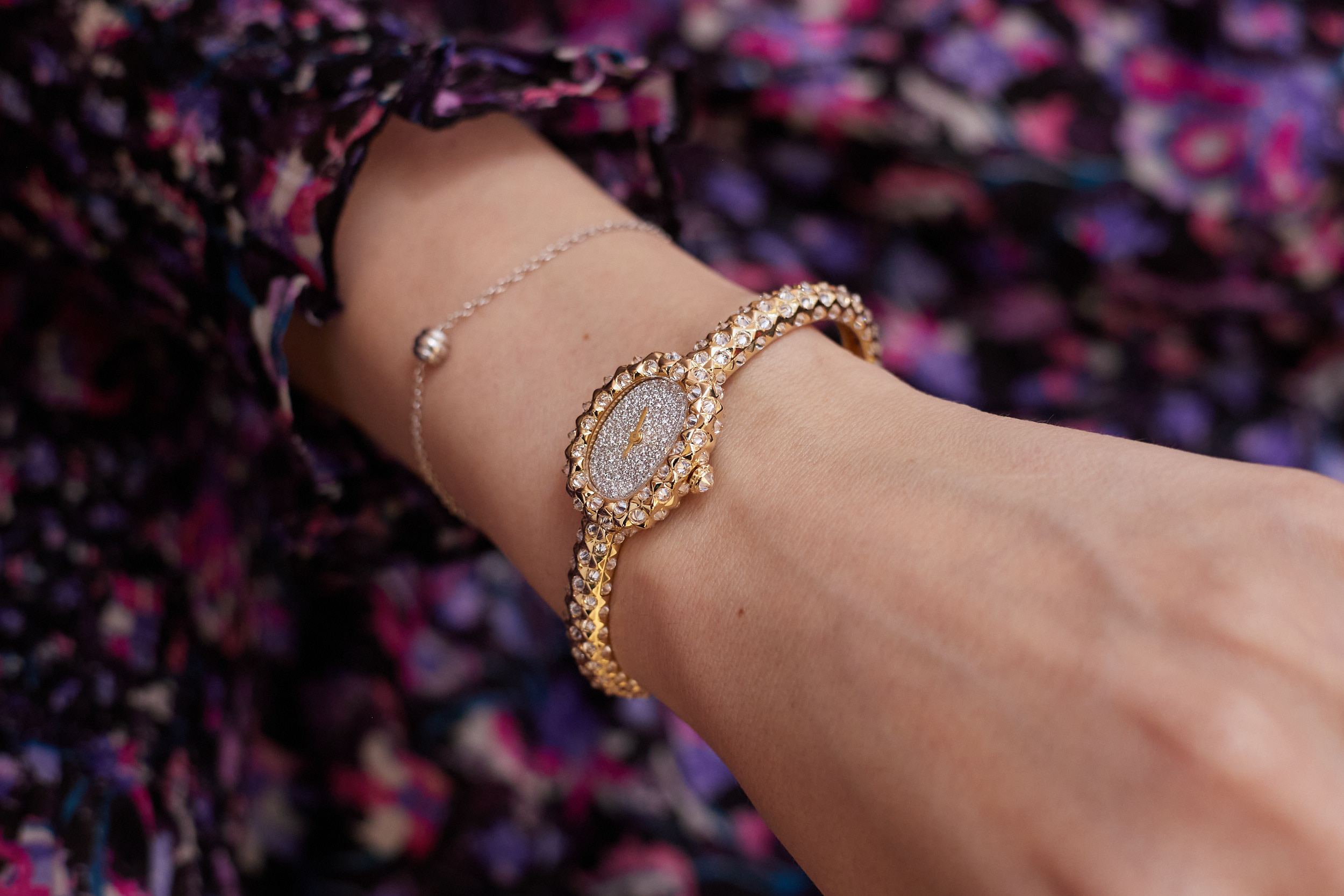
The 2026 novelty, however, is distinct in its totality as the hobnail pattern now adorns the case, the bracelet, and even the dial. This “sensorial motif” adds rhythm and structure to the watch, a geometry that magnifies the oval volumes of the Baignoire. The craftsmanship required to mold the gold while preserving the evenness of the shape and volume across such a continuous surface is significant. The proportions have been carefully adjusted to ensure the motif fits the curves as closely as possible, with even the yellow gold push-buttons on the clasp blending seamlessly into the bracelet’s curve.
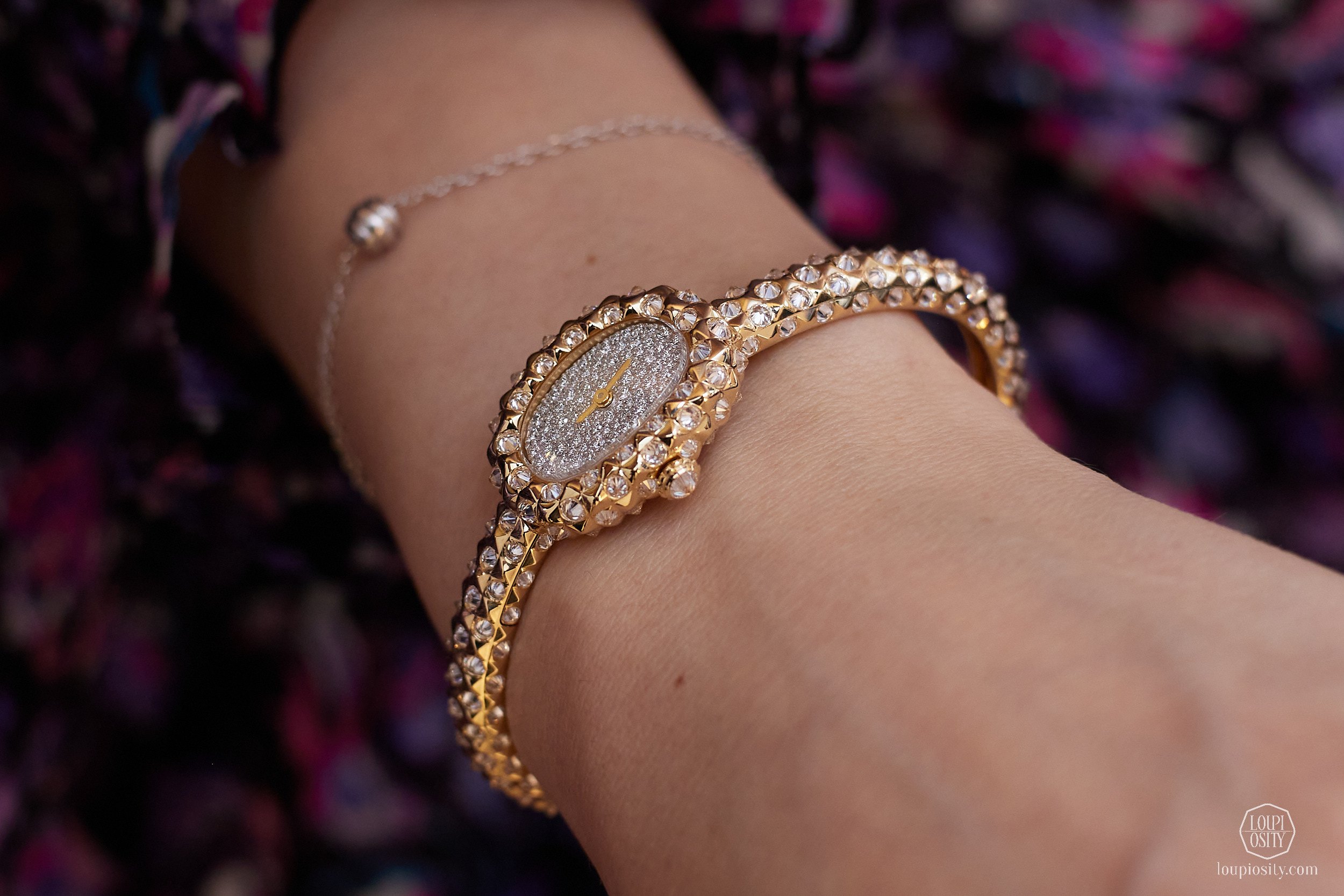
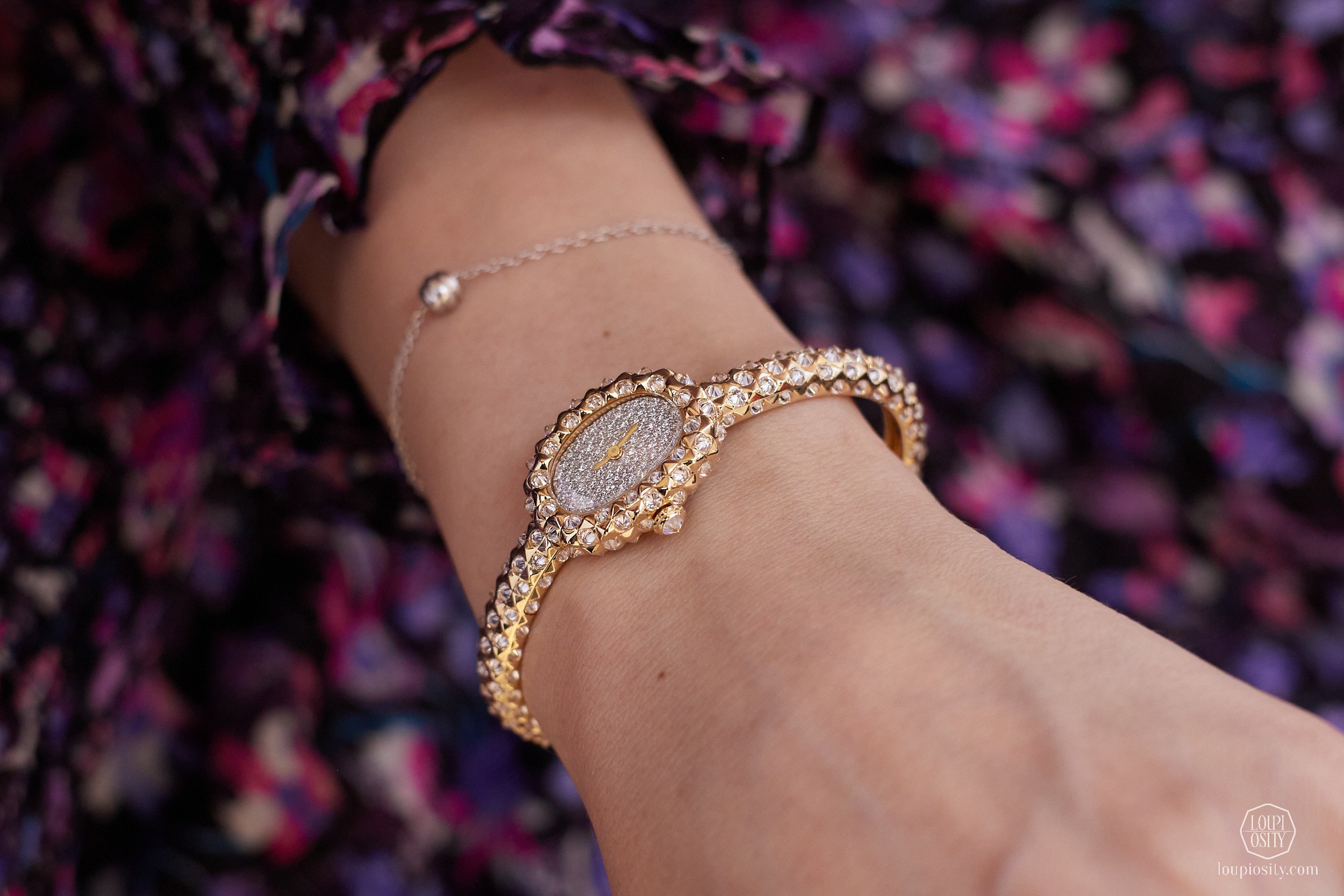
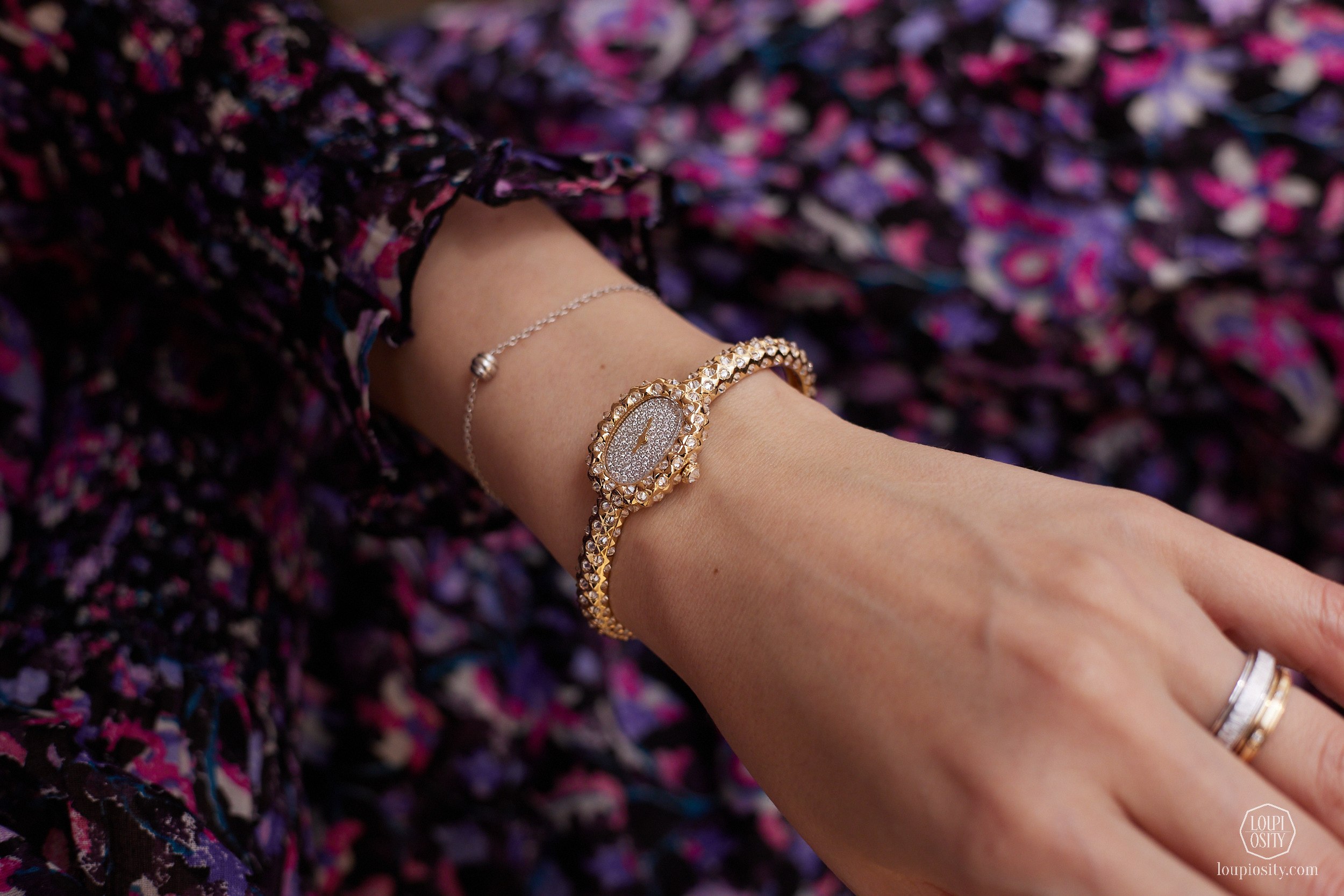
Two primary versions define this collection. The first is a monochrome gold edition, available in sizes 15, 16, and 17 (bracelet circumference in centimeters), featuring a golden dial and a quartz movement. This version emphasizes the texture and relief of the Clous de Paris pattern without distraction. The second is an “Ultra-Precious” edition, a technical feat of gem-setting. This version features a case and bangle set with 171 brilliant-cut diamonds (4.70 ct) and a dial paved with 100 brilliant-cut diamonds (0.37 ct) in a snow setting. The diamonds are arranged to create a harmony of volumes in relief with the Clous de Paris motif, resulting in a piece that breaks the rules of traditional watch design.
The design language here echoes the Art Deco movement’s fascination with geometric repetition and industrial precision. Just as the 1920s saw a shift towards machine-age aesthetics in architecture and furniture, the Baignoire’s uniform application of the Clous de Paris motif reflects a desire for order and structure, albeit executed with the fluidity of a jewellery piece.
Myst de Cartier
If the Baignoire is about architectural order, the Myst de Cartier is about playful subversion. The new iteration is described as a “sculpture of a watch,” embodying the link between Cartier’s jewellery and watchmaking heritage. Its design draws direct inspiration from the jewellery watches created under the direction of Jeanne Toussaint in the early 1930s—pieces that were both sculptural and flamboyant.
Jeanne Toussaint was a pivotal figure at Cartier, serving as the Creative Director of the Maison’s high jewellery department from 1933 until her retirement in 1970. Known affectionately as “La Panthère” (The Panther), she earned this nickname both for her fierce independence and for the iconic panther motif that became synonymous with her tenure.
Her active period spanned roughly from the late 1920s through the 1960s, during which she transformed Cartier’s jewellery design philosophy. Beyond the panther—her most celebrated motif—she championed bold, sculptural pieces that reflected the Art Deco and later Mid-Century Modern sensibilities of her era. She was also known for incorporating exotic materials and pushing the boundaries of what jewellery could express.
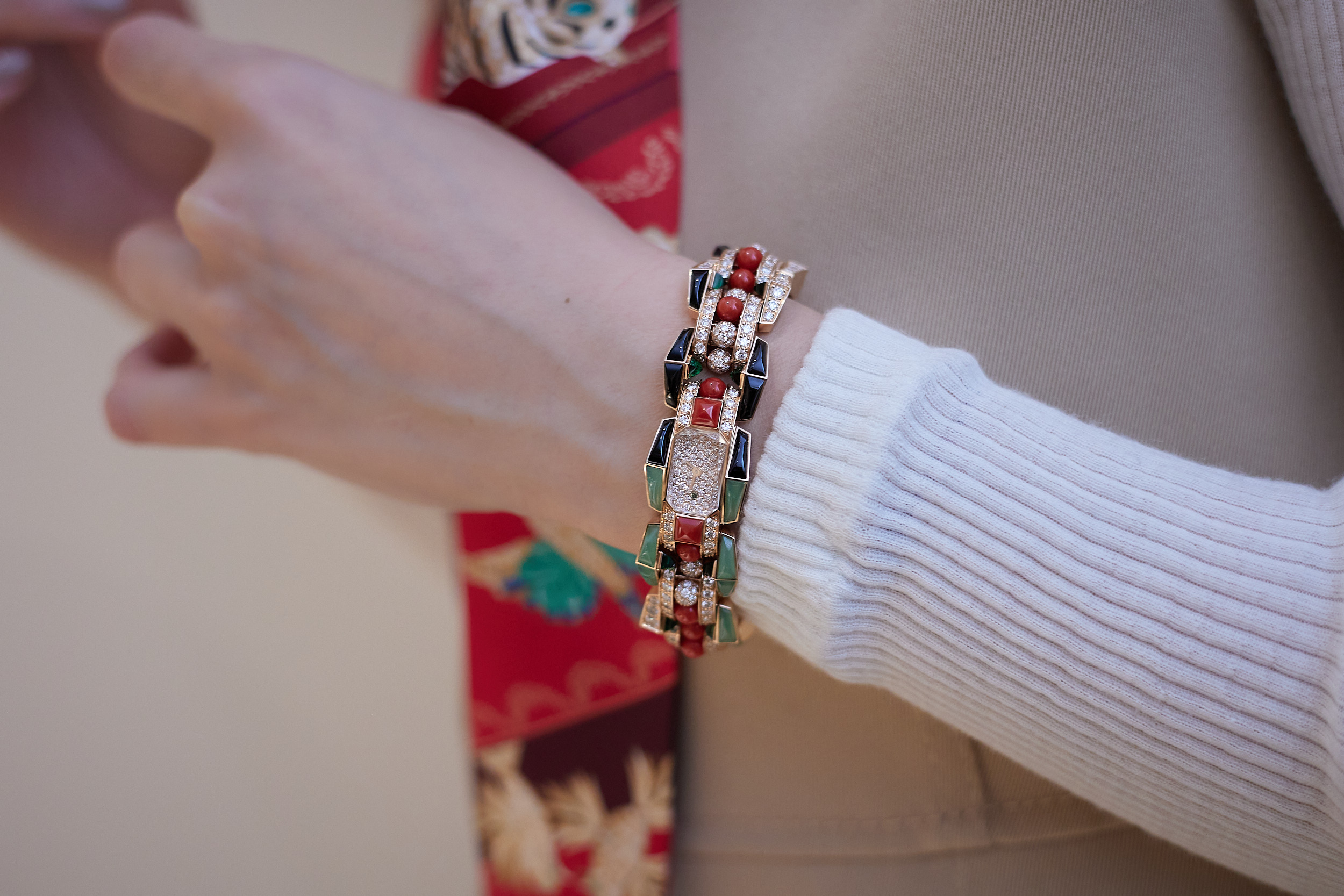
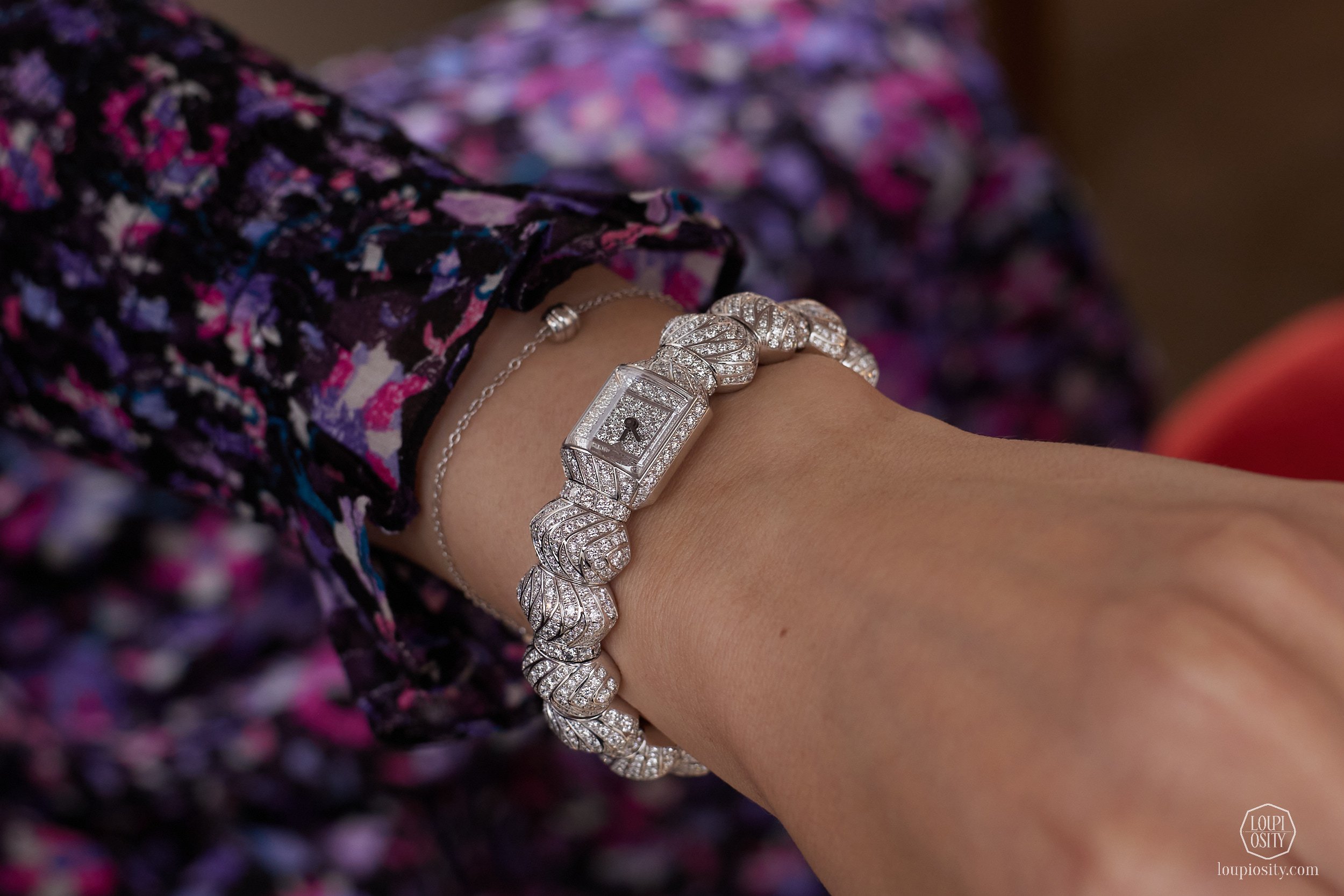
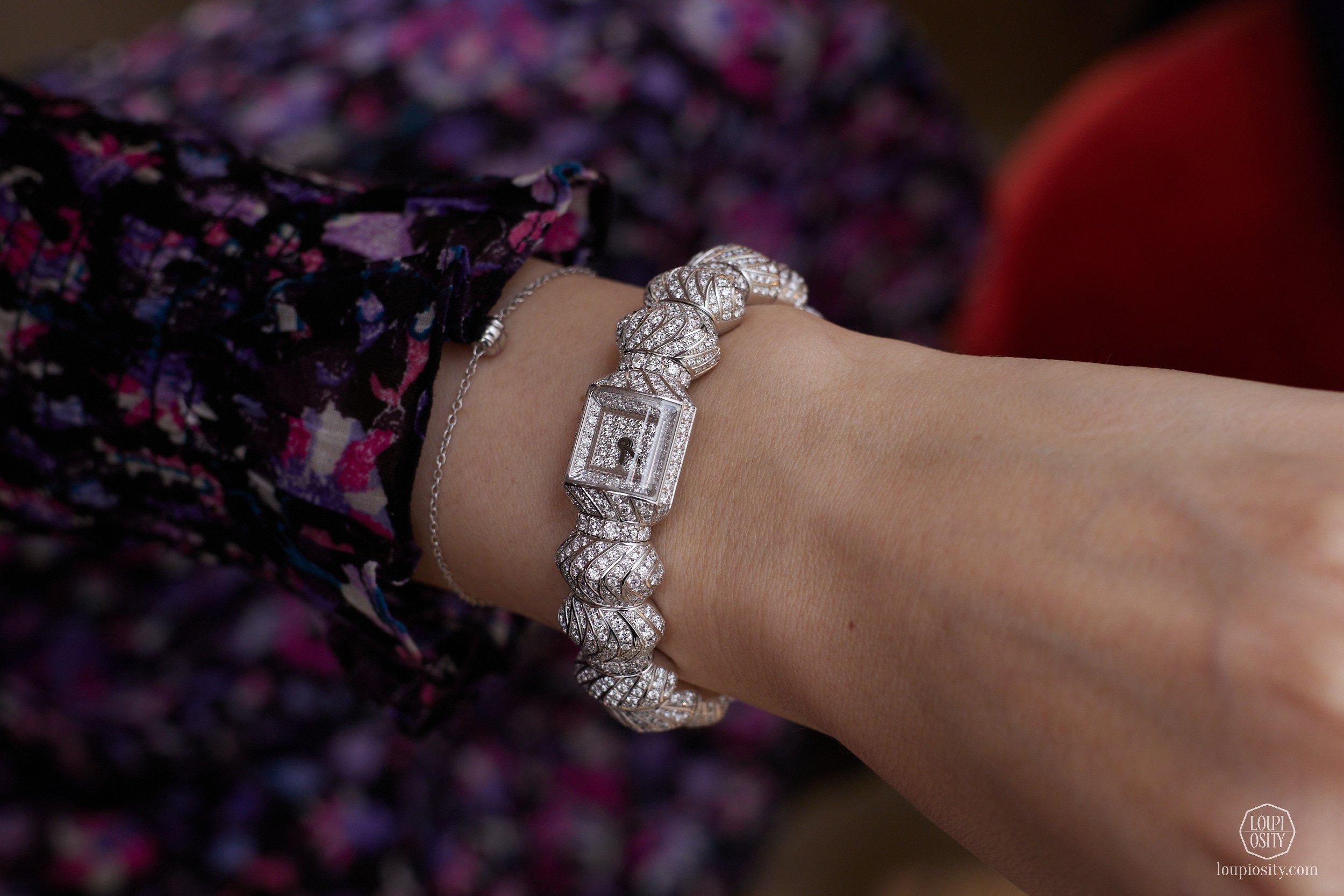
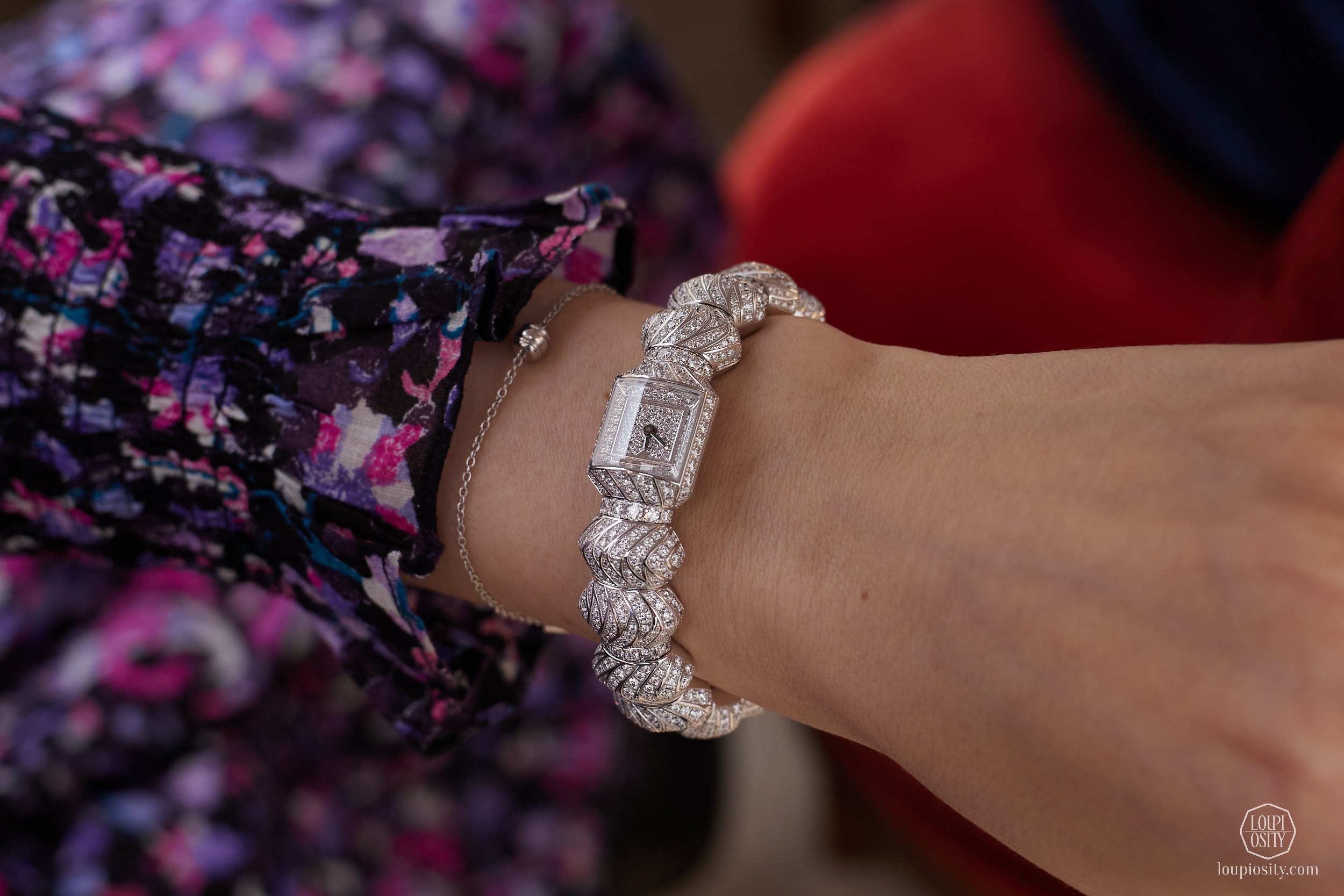
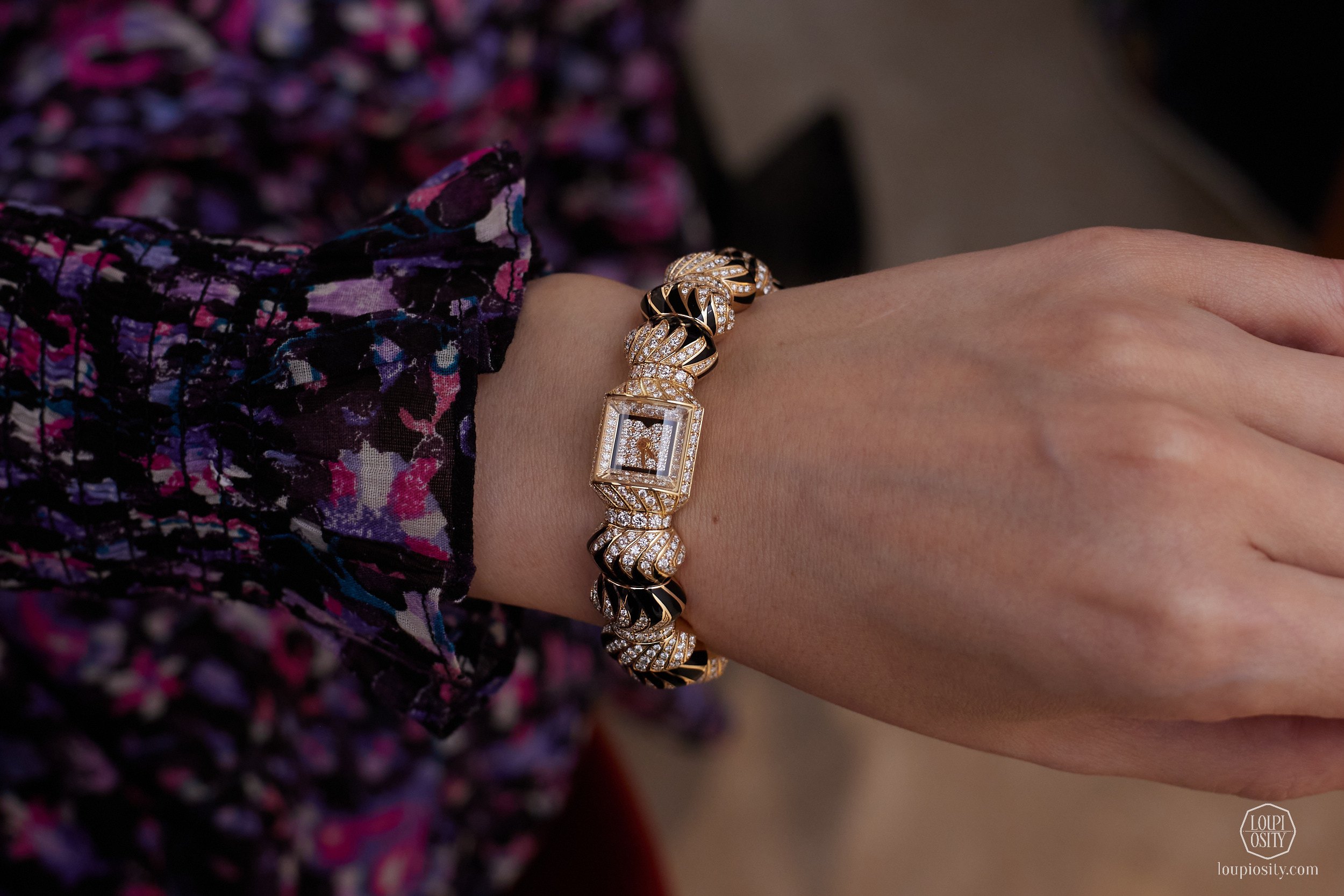
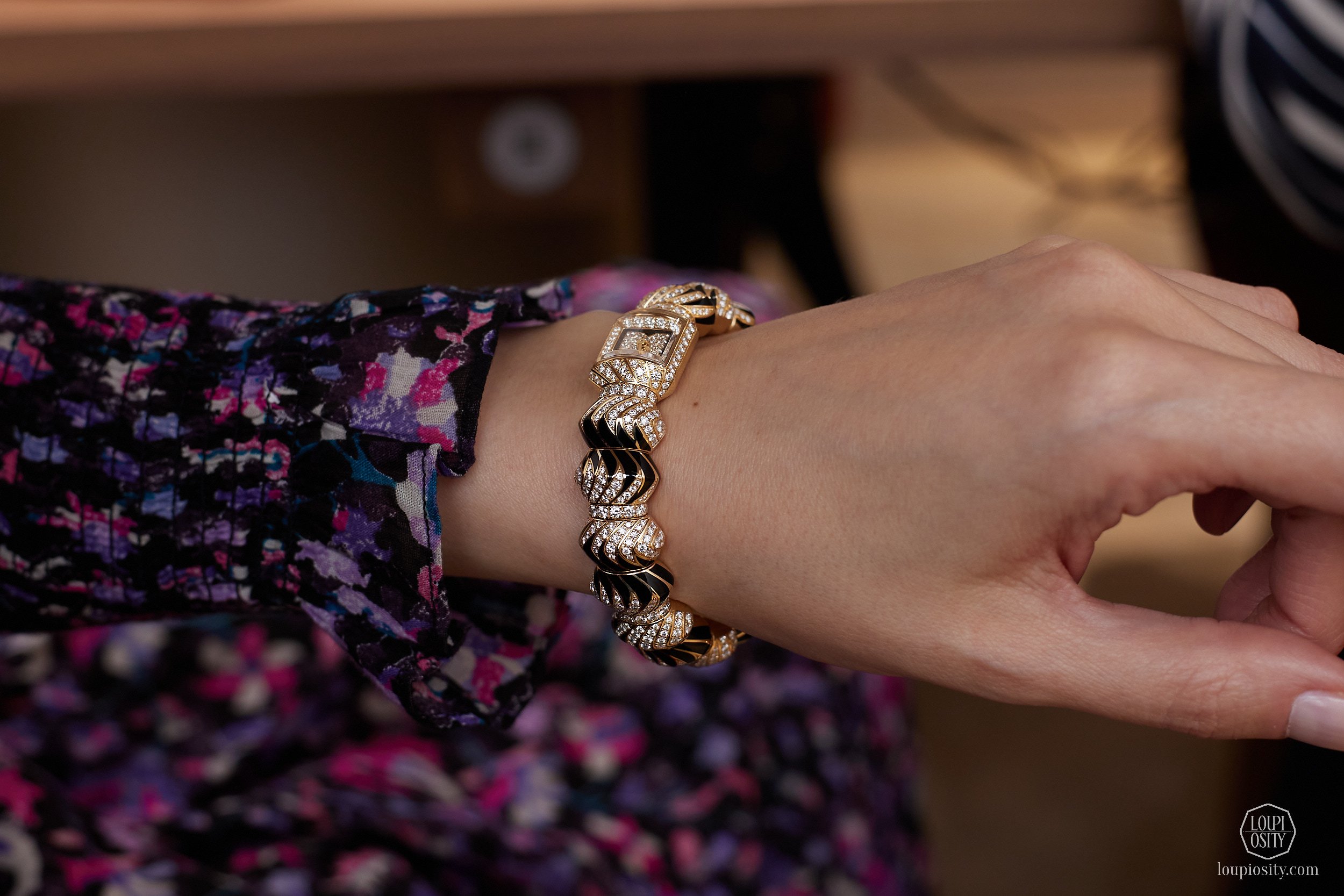
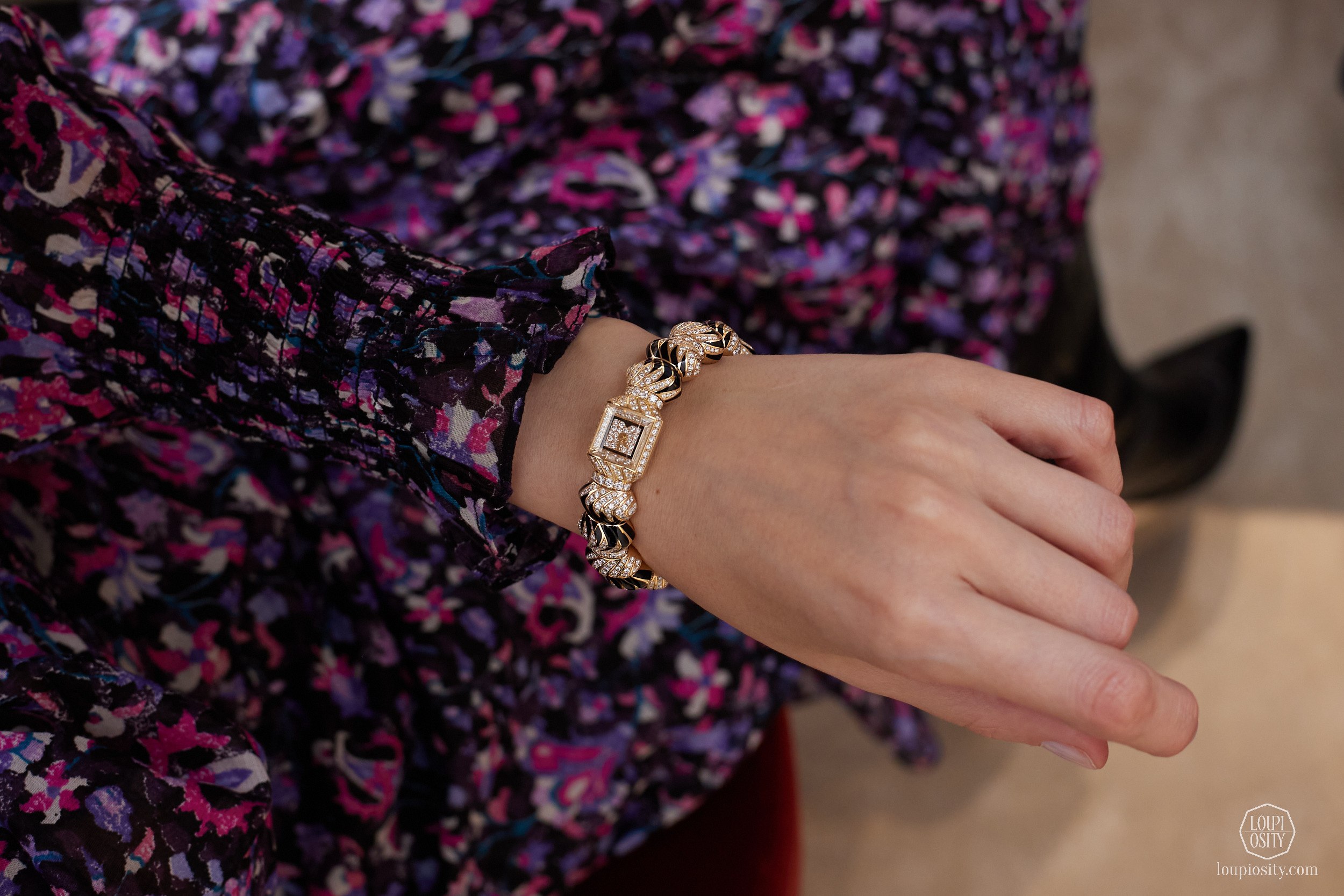
The Myst de Cartier has no clasp. Instead, the elements are strung together like beads, resembling protective talismans or a trompe-l’œil (translates to “trick the eye”) bracelet. This absence of a traditional closure enhances the sense of mystery and protection inherent in the piece. The composition alternates curves with a domed crystal and a geometric pavé dial, framed by a delicate onyx border with triangular hour-markers.
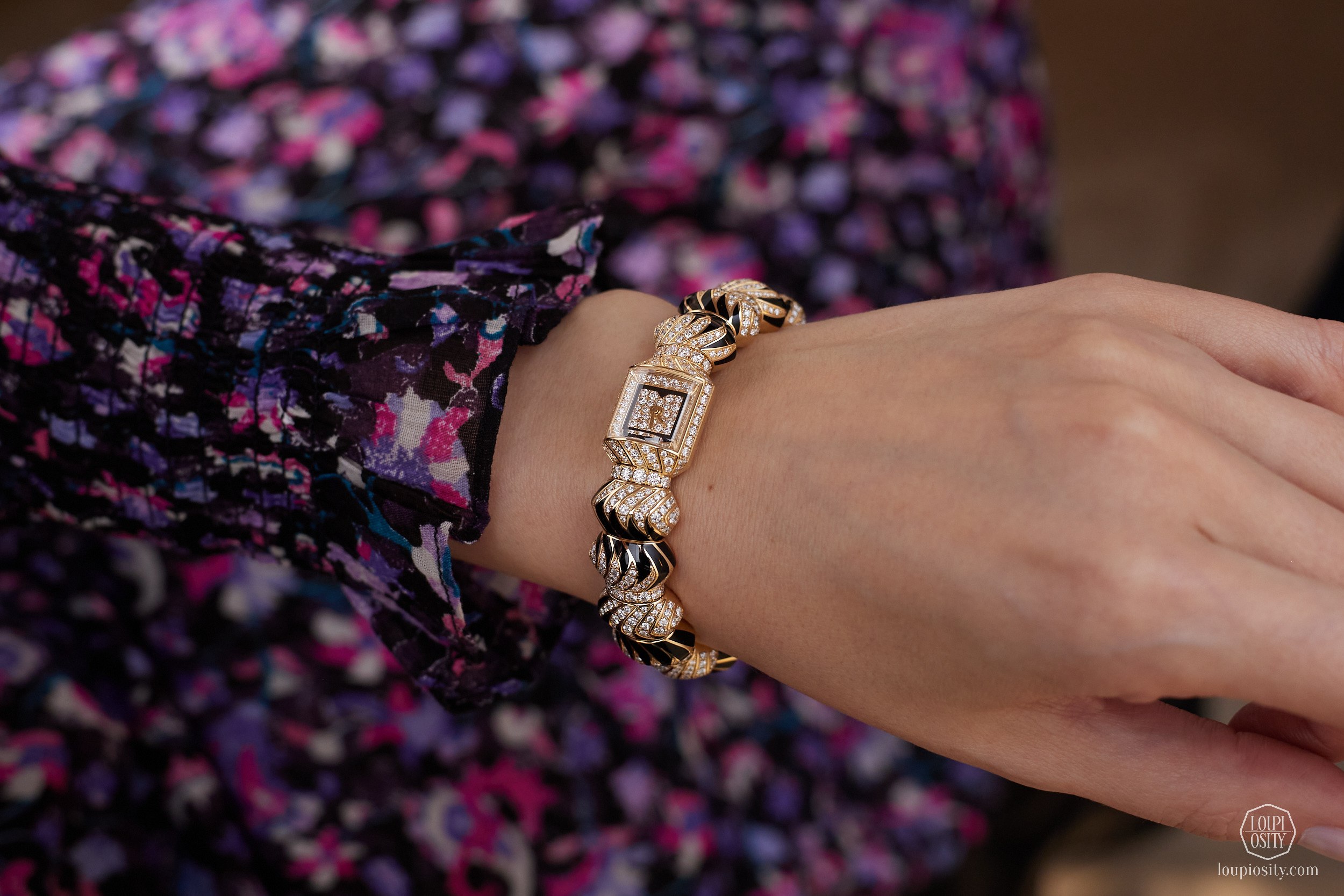
The craftsmanship involved is meticulous. The bead setting for the bracelet uses stones of different sizes to create perspective and volume, a process requiring 30 hours of setting work alone. Furthermore, the lines of black lacquer are hand-painted one by one by artisans at the Maison des Métiers d’Art in Switzerland. This attention to detail creates a striking contrast between the diamonds and the lacquer, enhancing the piece’s visual tension.
Trompe-l’œil, the deliberate omission of a visible clasp to create a “floating” bracelet effect, and the bead-like construction that blurs the line between a functional timepiece and a talisman resonate with Surrealist principles, which was at its heights during the initial career years of Jeanne Toussaint. Just like the Myst de Cartier’s surprising construction, the movement, led by figures like Salvador Dalí and René Magritte, sought to challenge the viewer’s perception of reality and function.
A yellow gold version features 634 brilliant-cut diamonds (6.13 ct) and lacquered details, with a dial paved with 47 snow-set diamonds surrounded by an onyx frame. A white gold version offers a monochrome aesthetic with 986 brilliant-cut diamonds (9.17 ct). The “Ultimate Splendour” of the white gold version lies in its subtlety; the curves and shapes seem to appear and disappear depending on the viewing angle, multiplying the mystery of its inspiration with the endless sparkle of light.
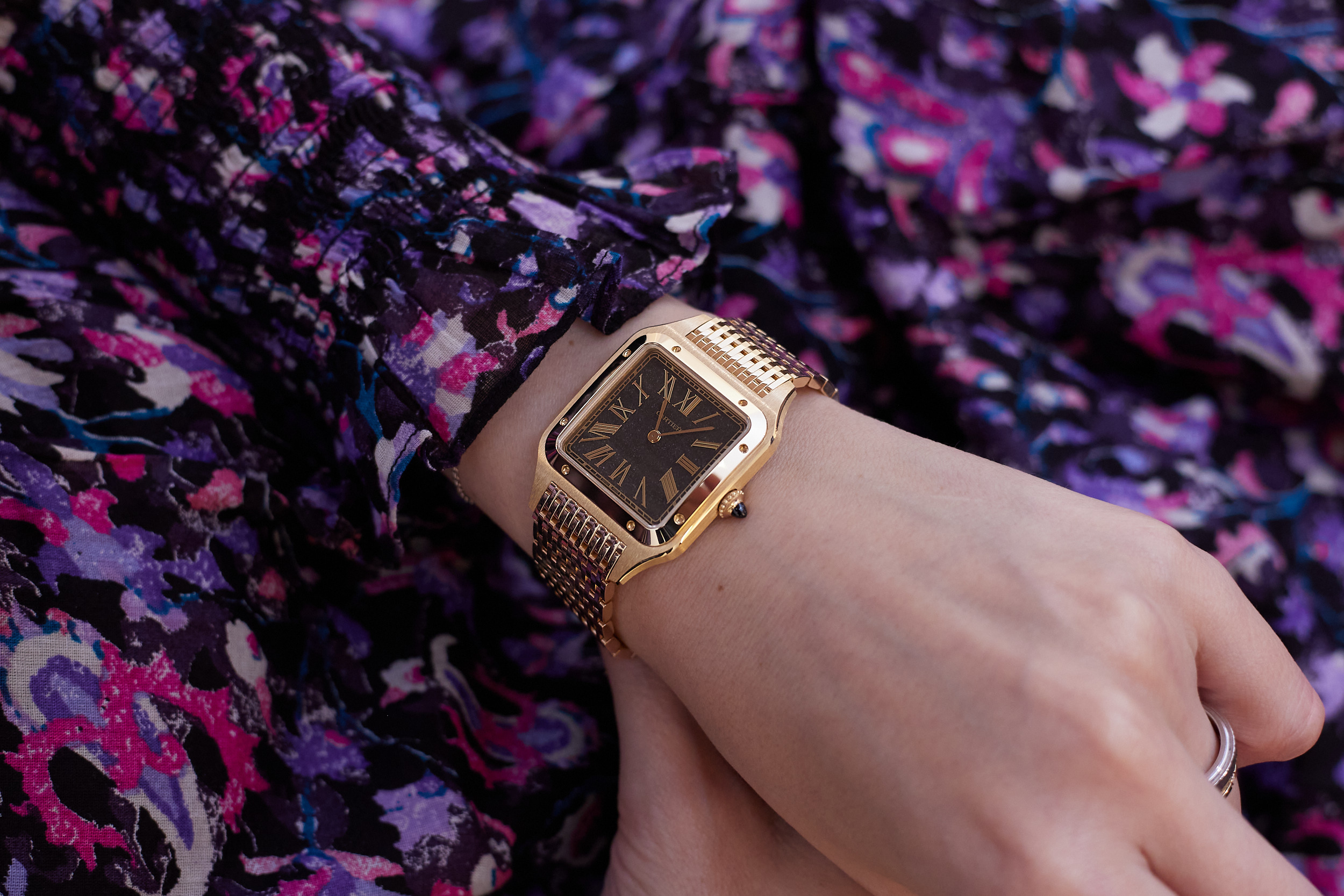
The 2026 novelties from Cartier demonstrate a mastery of both tradition and innovation. By reinterpreting the Baignoire with the Clous de Paris motif and reimagining the Myst de Cartier through a surrealist lens, the Maison continues to prove that a watch can be as much a work of art as it is a tool for measuring time. For those interested in the broader scope of Cartier’s 2026 presentation, we invite you to read our coverage of the Santos-Dumont, the Roadster, and the exceptional Cartier Privé triptych, all of which showcase the Maison’s diverse approach to watchmaking excellence.
Cartier unveiled three new pieces in the tenth edition of the Cartier Privé “Les Opus” collection. The Santos-Dumont received an obsidian dial update, while the Roadster finally returned after a 24-year hiatus. Find out more here.
Photo credits: Loupiosity.com
All registered trademarks are property of their respective owners.
All rights reserved.