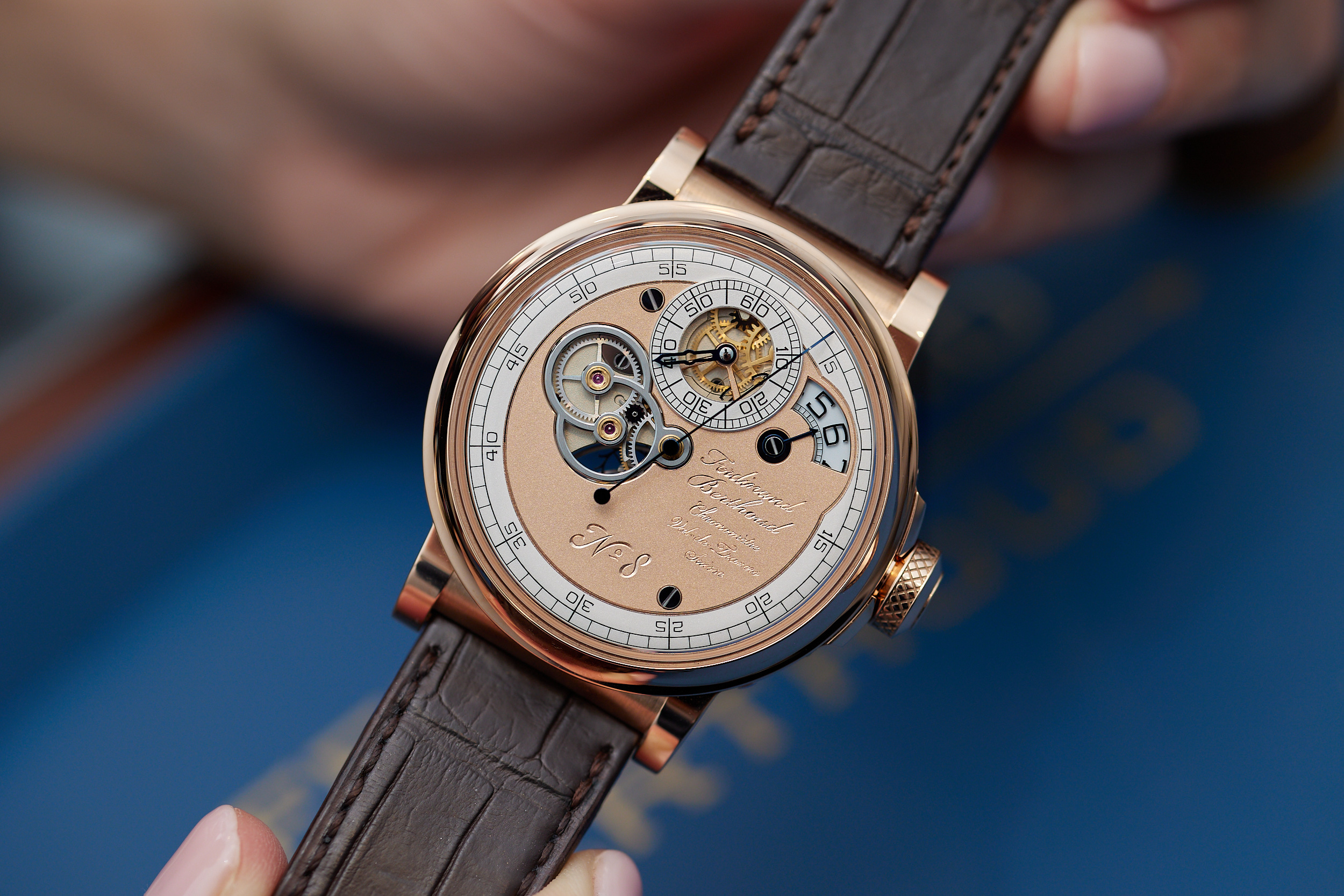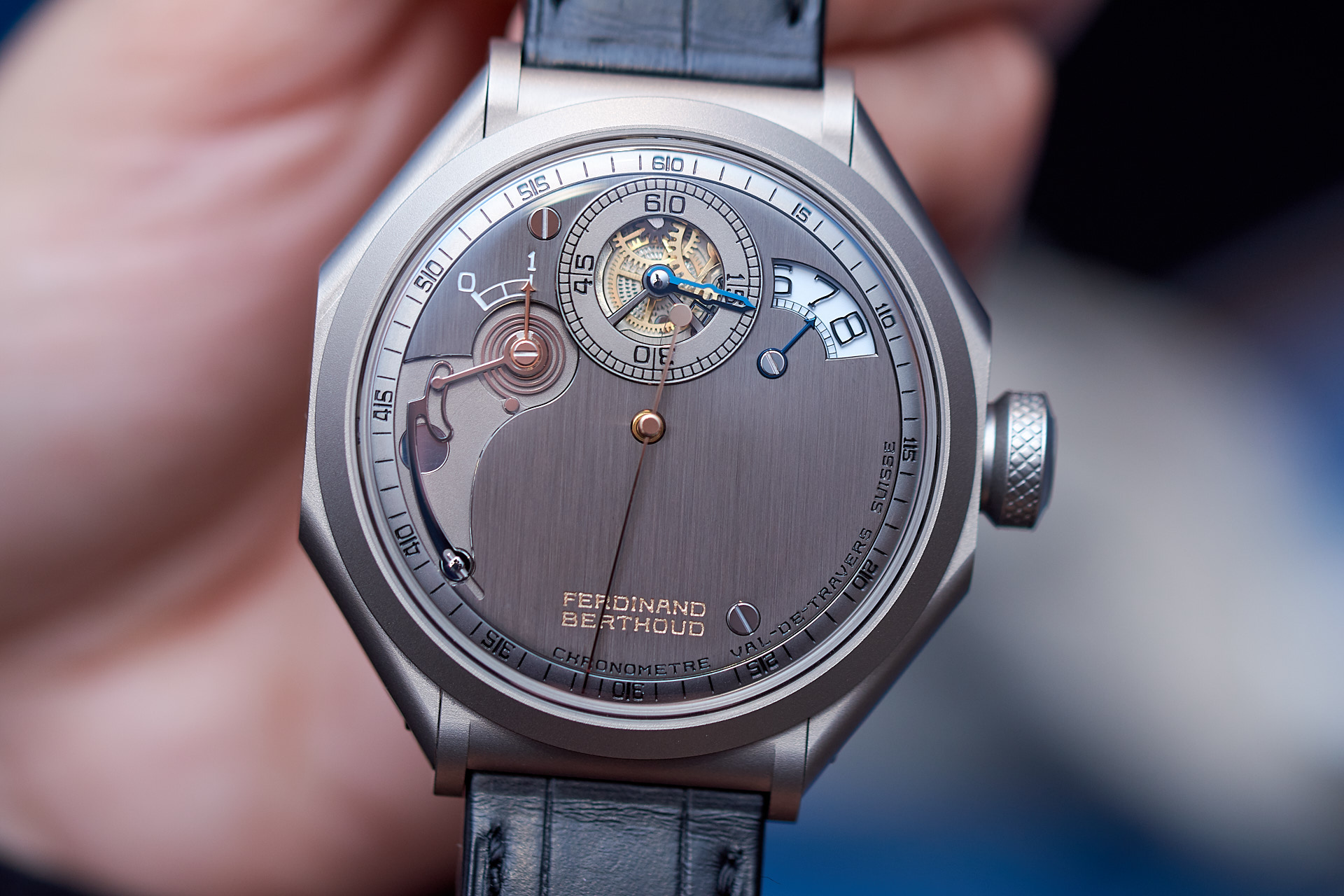
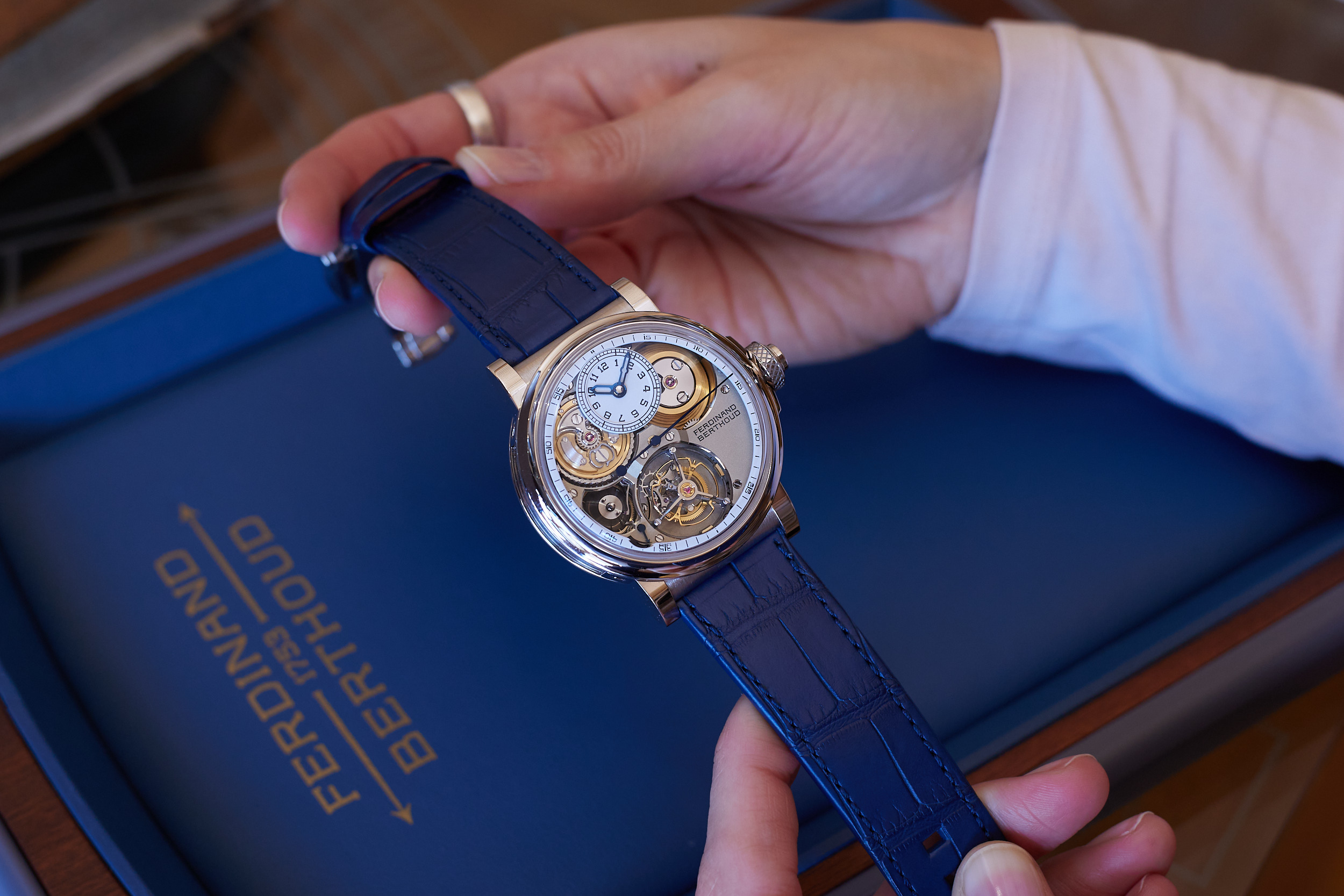
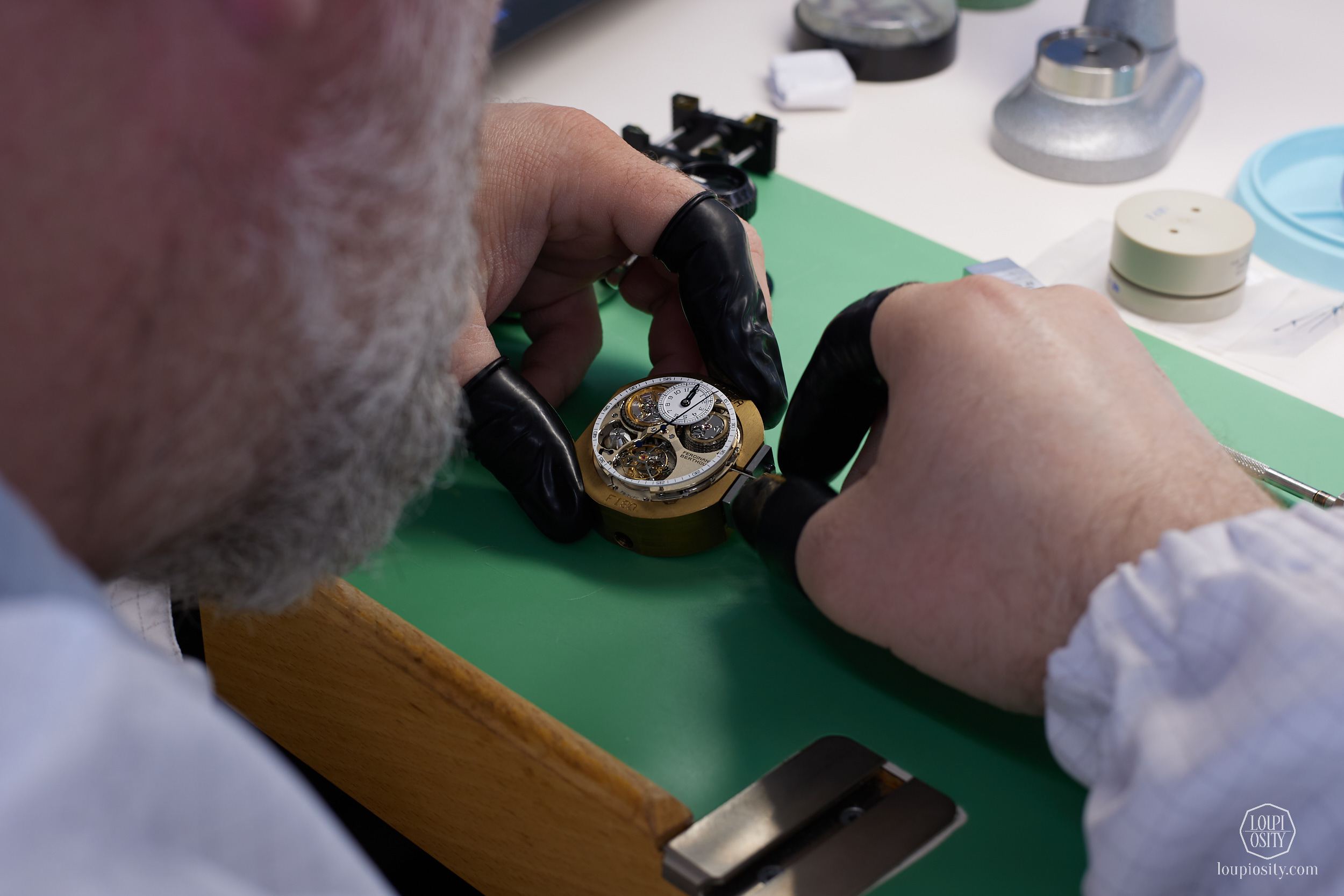
The Manufacture enters the second decade of its modern era with the ‘Mesure du Temps 1787’ collection. The Chronomètre FB 2TV, the collection’s debut model, draws significant inspiration from the architecture of the hand-made Naissance d’une Montre 3. In late March, we visited Ferdinand Berthoud’s Atelier Tradition, the workshop where these timepieces are crafted.
Introduction
The entirely handmade Naissance d’une Montre 3 project has had a profound impact on the Manufacture, influencing not only its recognition and culture, but also laying the foundations for a new architectural approach. Previous Ferdinand Berthoud models tended to conceal their mechanical workings behind beautiful dials, offering only limited apertures to the meticulously detailed movements. This handmade piece changed that dynamic, allowing the movement to take center stage.
As the brand enters the second decade of its modern era, it marks this transition with the launch of the “Mesure du Temps 1787” collection. Structured as a series of chapters, the Chronomètre FB 2TV arrived this spring as the debut model, drawing its name from a seminal 1787 publication by the master himself: “De la Mesure du Temps ou supplément au Traité des horloges marines et à l’Essai sur l’horlogerie […]” (On the Measurement of Time or Supplement to the Treatise on Marine Clocks and the Essay on Horology). During our tour of the on-site museum, we encountered a copy of this foundational text, in which Berthoud meticulously outlined the principles of constructing, executing, and testing marine clocks and pocket watches. His rigorous methodology not only standardized horological practices of the time but also laid the groundwork for the pursuit of precision that defines the Manufacture today.
![The "Mesure du Temps 1787" collection is drawing its name from a seminal 1787 publication by the master himself: "De la Mesure du Temps ou supplément au Traité des horloges marines et à l'Essai sur l'horlogerie [...]" (On the Measurement of Time or Supplement to the Treatise on Marine Clocks and the Essay on Horology)](https://loupiosity.com/wp-content/gallery/ferdinand-berthoud-chronometre-fb-2tv-mesure-du-temps-1787/FerdinandBerthoud_R2A6145.jpg?t=1775461473 "The \"Mesure du Temps 1787\" collection is drawing its name from a seminal 1787 publication by the master himself: \"De la Mesure du Temps ou supplément au Traité des horloges marines et à l'Essai sur l'horlogerie [...]\" (On the Measurement of Time or Supplement to the Treatise on Marine Clocks and the Essay on Horology)")
Calibre FB-TV.FC
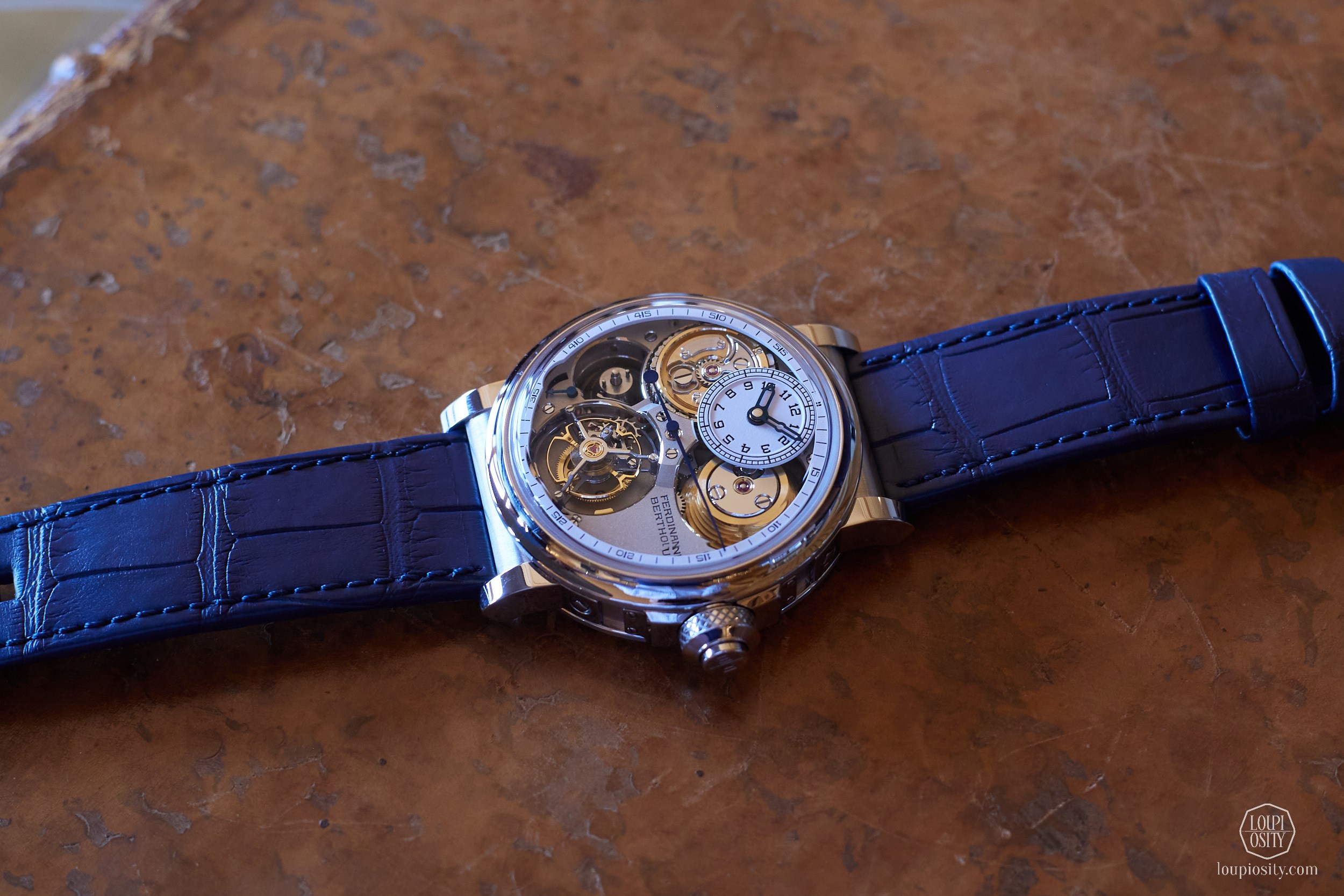
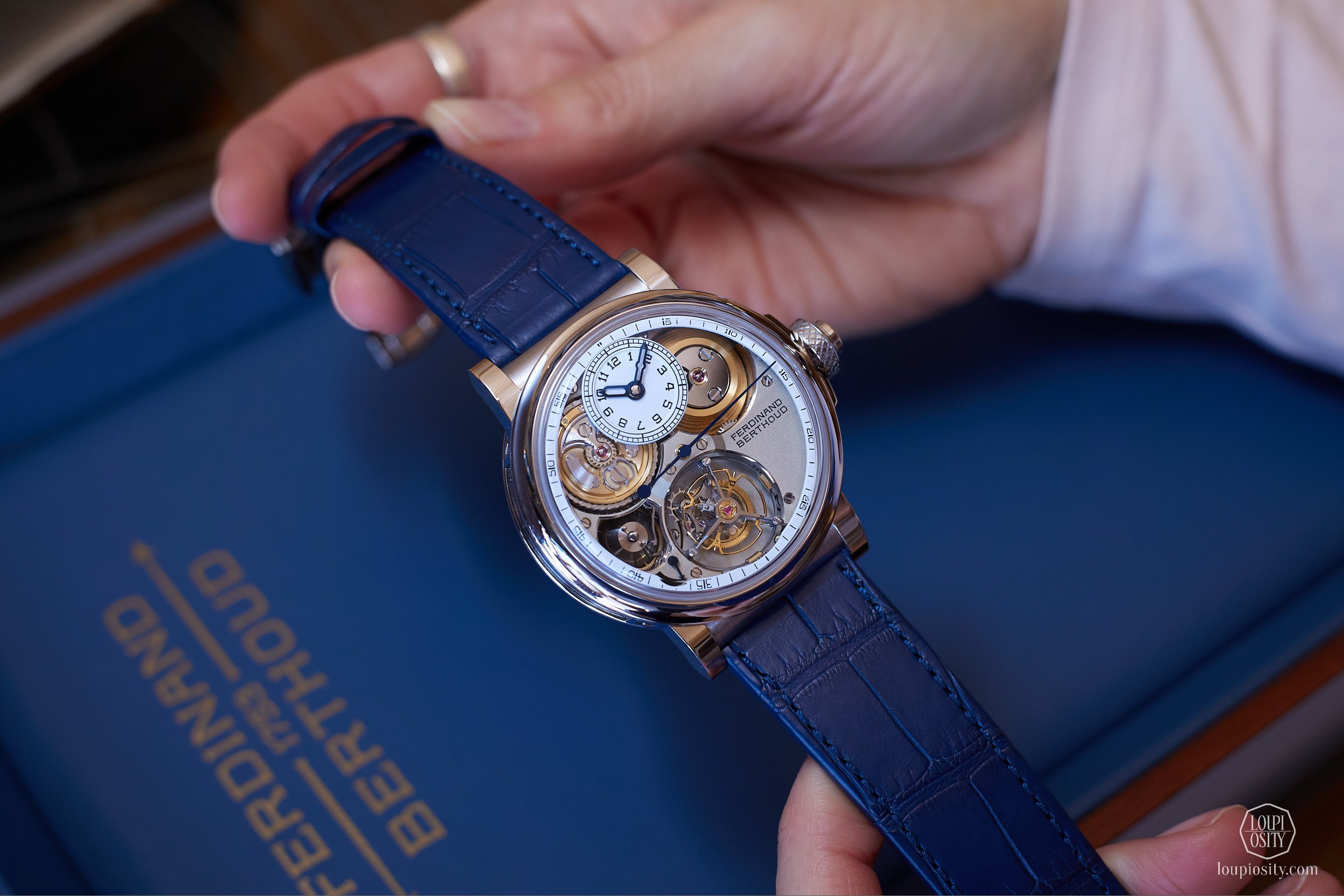
The new Calibre FB-TV.FC represents six years of R&D and marks a significant evolution from the original Calibre FB-T.FC unveiled in 2015. While it maintains the combination of a tourbillon and a fusee-and-chain mechanism, the comparison essentially ends there. The flying tourbillon is supported solely by an intermediate bridge without an upper bridge. Its 15 mm diameter three-spoked profile alternates between flat and sloping sections, echoing the shape of the centre bridge.
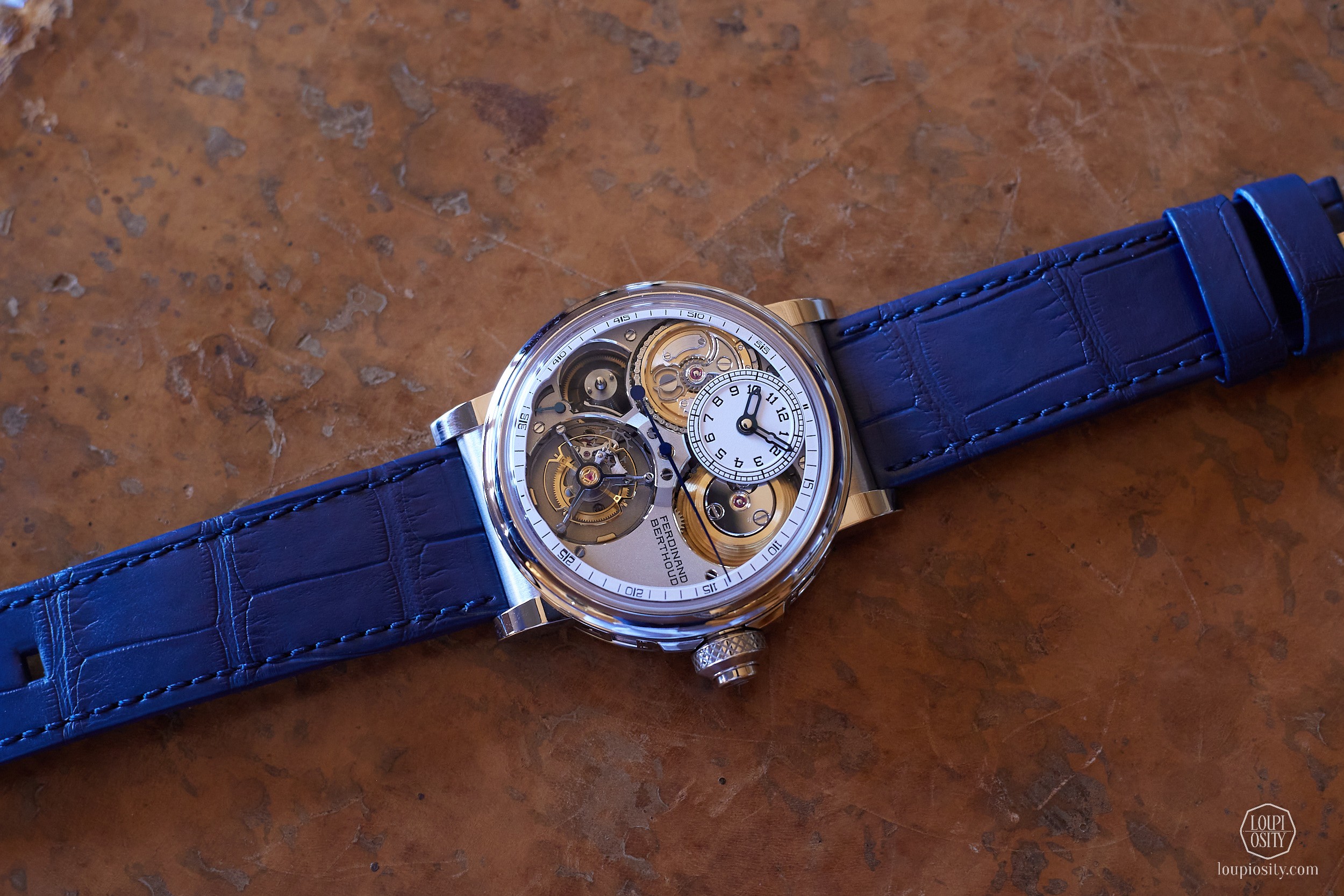
Two complications dedicated to precision timekeeping distinguish this calibre. First, a stop-seconds (balance-stop) mechanism immobilises the seconds hand and the entire movement for time-setting. Second, a flyback-type resetting allows the central seconds hand to return to zero while the movement is running. Though the term ‘flyback’ traditionally refers to chronograph modules, this development incorporates the complication into the flying tourbillon and fusee-and-chain architecture with peerless complexity. A specially shaped cam, more commonly found in perpetual calendars, ensures the titanium filamentary hand returns to zero within a fraction of a second invisible to the naked eye. The activation occurs via a coaxial pusher embedded in the dynamometric winding crown at 3 o’clock.
Several other optimisations enhance the movement. The fusee features a conventional orientation with the smaller diameter facing upwards, unlike the inverted-fusee cone of Calibre FB-T.FC. A double superimposed Maltese cross-type stopwork system with two stopwork fingers reduces winding to approximately 6.25 turns of the crown. The fusee also incorporates a new triple satellite planetary differential system, ensuring the movement continues running even during winding. The flying barrel has been completely redesigned without grooves around its circumference, limiting friction when the chain winds or unwinds. A new pre-winding system with a winding pawl and saw-toothed wheel enables watchmakers to wind the mainspring during assembly. These developments offer three direct benefits: more constant torque, an increase in power reserve from 53 to 60 hours, and faster winding involving ten fewer turns to achieve full winding.
Case and Display
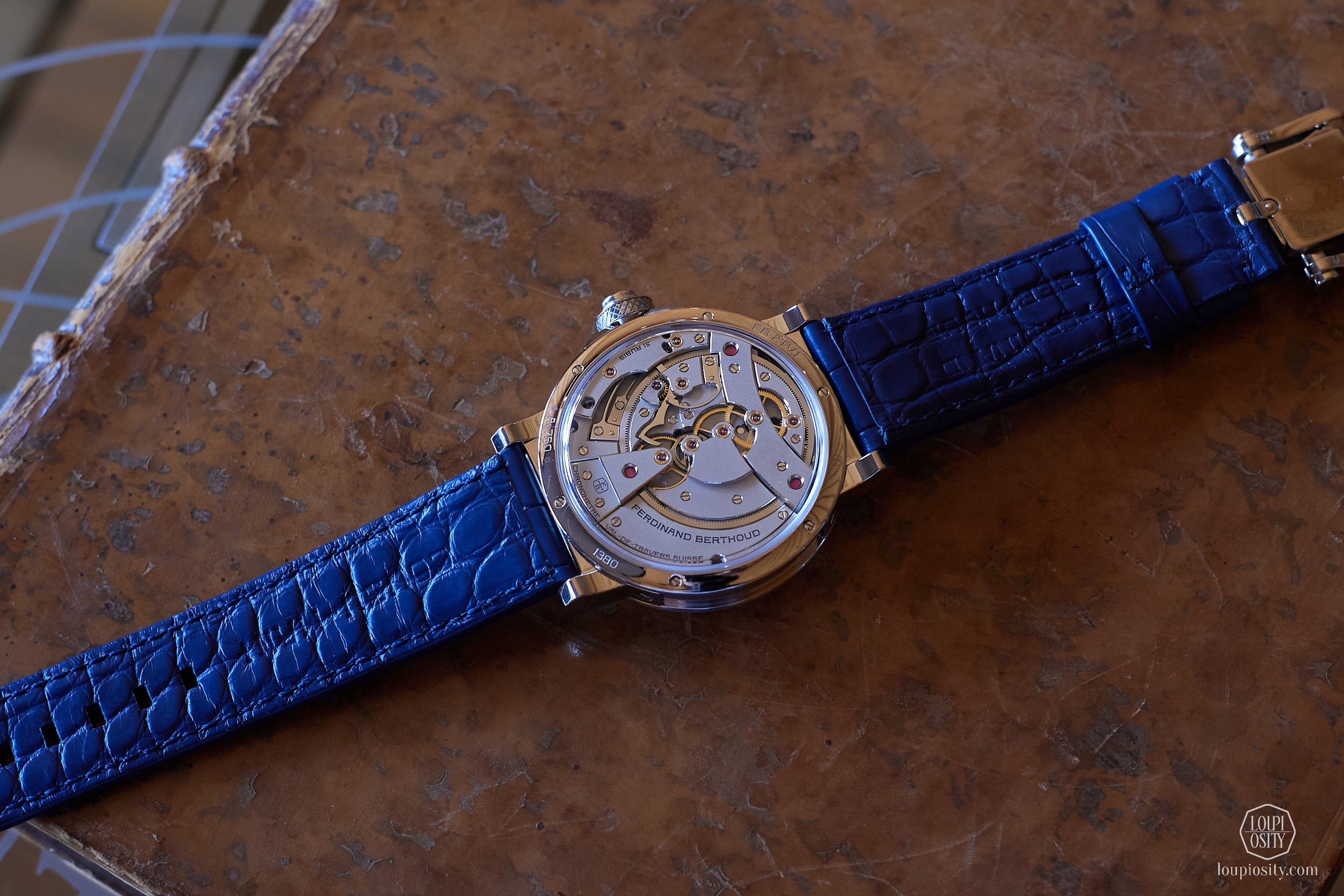
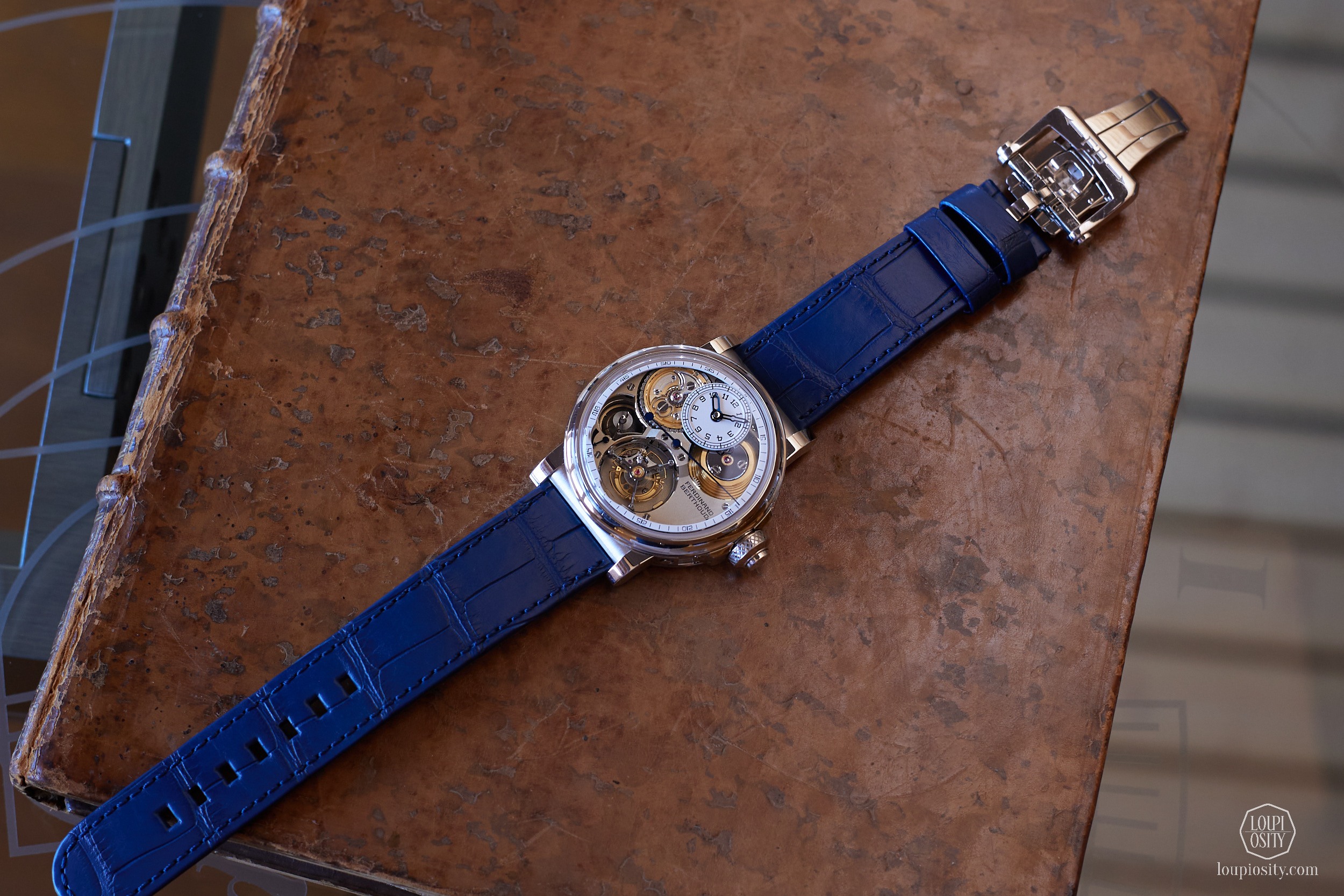
Measuring 44 mm in diameter and 15.46 mm thickness, the round case of Chronomètre FB 2TV echoes the shape of the Remontoir d’Egalité FB 2RE model introduced in 2020. A curved bezel set with a domed glare-proofed sapphire crystal enhances the construction, enabling the interior space to accommodate the movement while leaving the reset and time-setting mechanisms visible on the back. An original solution minimises the visual impact of the increased thickness: the case-back also incorporates a domed crystal glare-proofed on both sides, similar to that used on the front.
At 12 o’clock, an off-centred hours and minutes subdial secured by pillars recalls the aesthetics of the original Chronomètre FB 1. The white varnished dial base and engraved black varnished minutes track, along with faceted, hollowed-out, diamond-polished hands in blue CVD-coated 18-carat gold ensure optimal readability. Around the edge, a thin white lacquered inner bezel ring secured by four pillars enables seconds reading via a 25.80 mm long slender hand. Monobloc and made of blue CVD-treated sandblasted titanium, it sits at the centre of a three-dimensional bridge that is bevelled, engraved, and finely sandblasted by hand. At 7:30, the power reserve is indicated by a blue CVD-treated bronze alloy hand moving across a short engraved, black-varnished segment on the centre bridge.
The timepiece is housed in an 18-carat white gold case enhanced by a hand-sanded natural nickel silver movement (Reference FB 2TV.1), as a nod to Chronomètre FB 1.1 that won the “Aiguille d’Or” Grand Prix at the 2016 GPHG awards. Production is not subject to specific limitations, with availability depending exclusively on the workshop’s capacity, estimated at between 10 and 12 timepieces per annum.
![The "Mesure du Temps 1787" collection is drawing its name from a seminal 1787 publication by the master himself: "De la Mesure du Temps ou supplément au Traité des horloges marines et à l'Essai sur l'horlogerie [...]" (On the Measurement of Time or Supplement to the Treatise on Marine Clocks and the Essay on Horology)](https://loupiosity.com/wp-content/gallery/ferdinand-berthoud-chronometre-fb-2tv-mesure-du-temps-1787/FerdinandBerthoud_R2A6155.jpg?t=1775461358 "The \"Mesure du Temps 1787\" collection is drawing its name from a seminal 1787 publication by the master himself: \"De la Mesure du Temps ou supplément au Traité des horloges marines et à l'Essai sur l'horlogerie [...]\" (On the Measurement of Time or Supplement to the Treatise on Marine Clocks and the Essay on Horology)")
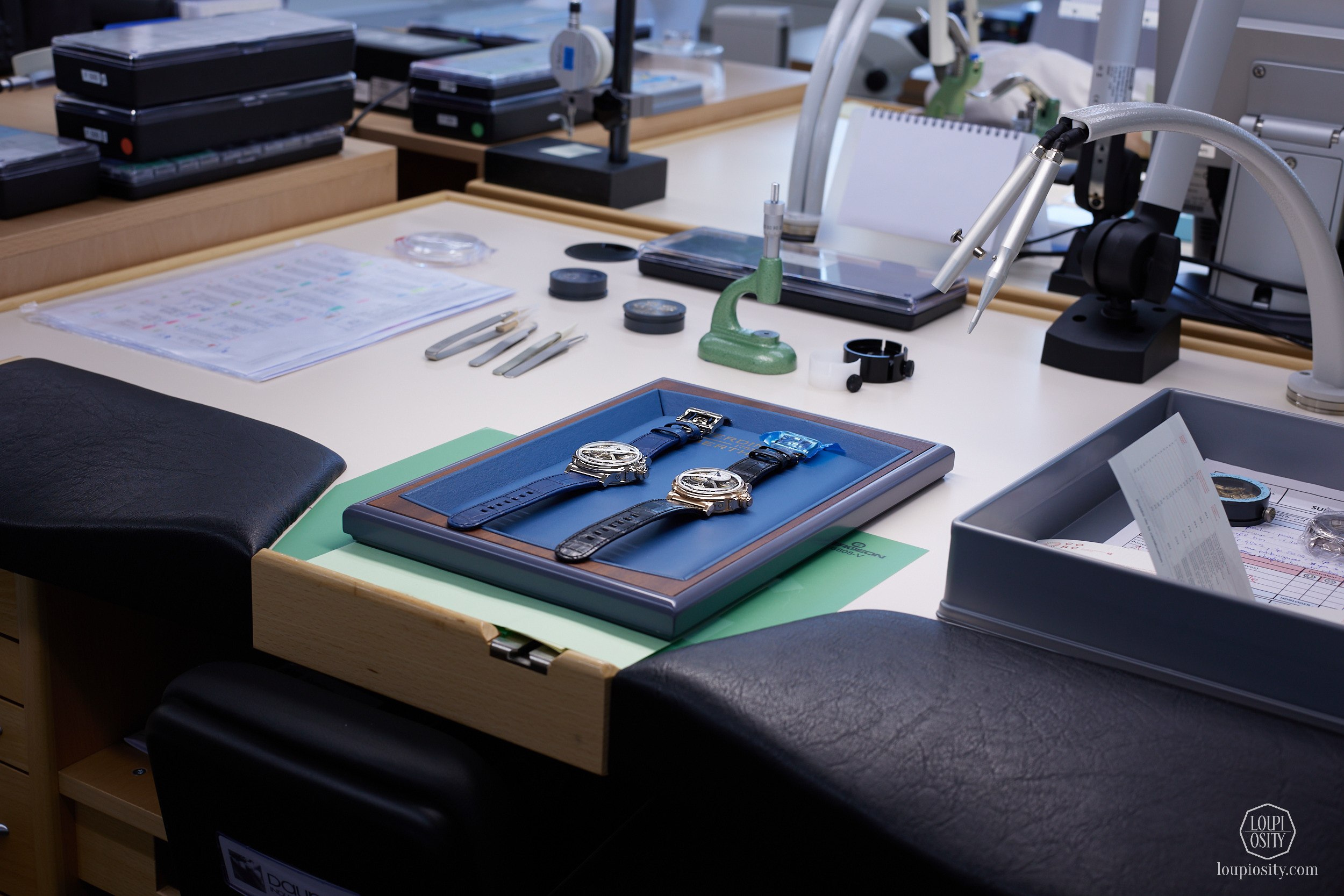
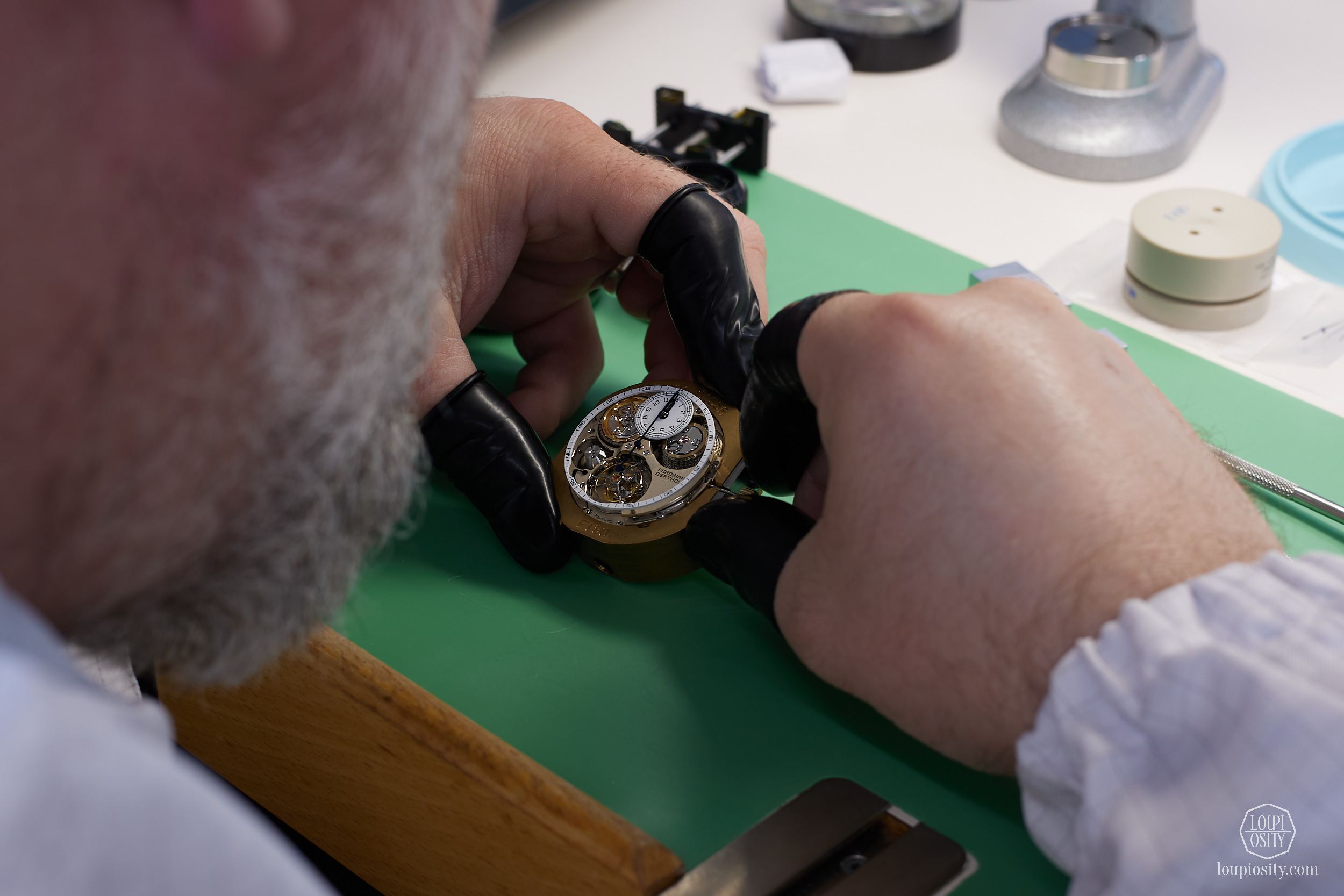
In the book mentioned above, Ferdinand Berthoud set out the principles of construction, execution, and testing of small longitude clocks along with their application to pocket watches. The modern manufacture established in 2015 continues to explore the application of these principles in modern wristwatch size. The great quest resulting the Chronomètre FB 2TV now, is full of rediscoveries of old techniques and further mechanical innovation.
Photo credits: Loupiosity.com
All registered trademarks are property of their respective owners.
All rights reserved.